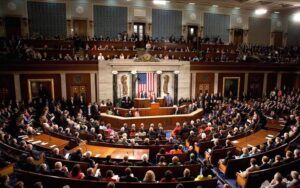
Trump meets his Colombian counterpart in Washington
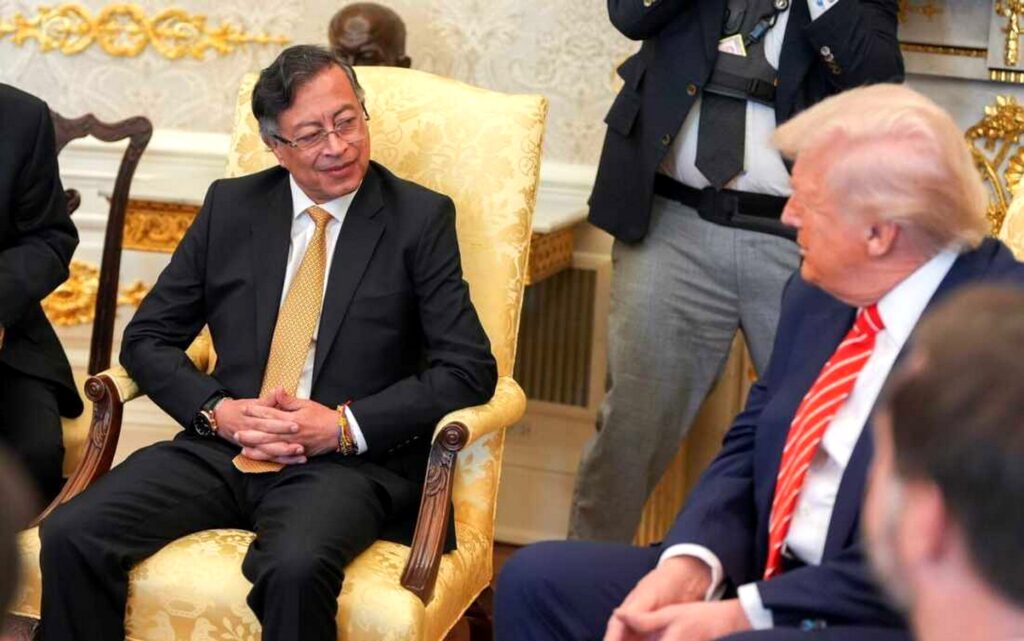
US President Donald Trump and his Colombian counterpart Gustavo Petro appeared to have turned the page on their rift on Tuesday, a year after accusations and insults culminated in Trump’s threat to oust the leftist president, as happened in Venezuela.
“My impression of the meeting that took place a few hours ago is that first and foremost, it was positive,” Petro told reporters after meeting Trump at the White House in a closed-door session.
Trump has expressed his very good fit with the Colombian president, who recently accused him of pumping cocaine into the United States and threatened him with a fate similar to that of Nicolás Maduro in Venezuela.
Hours after their conversation ended, Trump said: “He and I weren’t exactly best friends, but I wasn’t offended because I had never met him… I didn’t know him at all, but we got along well”.
Trump added that the two countries are working to cooperate in the fight against drug trafficking, as well as lifting US sanctions on the South American country.
Fears in Bogotá that Petro would be humiliated in front of the cameras were dispelled after journalists were barred from entering the Oval Office.
The White House only posted two photos of the meeting on X, while the Colombian presidency posted several photos, including one showing a handshake between the Republican president and the former fighter who became Colombia’s president.
Trump wrote “You’re great” while signing Petro a copy of his 1987 book “The Art of the Deal”.
Although they are politically opposites, the Colombian president returned his praise for Trump, saying, “The truth is that I like outspoken Americans, people who say what they feel… We differ a lot without a doubt… But candor comes first”.
The meeting between Trump and Petro was attended by US Vice President Jay de Vance and Secretary of State Marco Rubio, as well as Colombian Defense and Foreign Ministers Pedro Sanchez and Rosa Villavicencio.
The meeting comes just weeks after Trump threatened Petro with possible US military intervention in Colombia, as happened in Venezuela when Washington ousted Maduro, arrested him and transferred him to the United States for trial on drug-related charges.
For months, the two presidents exchanged insults, especially on their social media accounts.
But their tone changed after a phone call arranged between the two men on January 7.
“He’s been very nice over the last month or two,” Trump told reporters in the Oval Office on the eve of their meeting.
“He was a critic before that, but somehow, after the attack on Venezuela, he became very nice… I look forward to seeing him”.
Petro’s visa ban will be lifted during the visit, which comes after months of US sanctions, funding cuts and threats to strike targets in Colombia.
Colombia took a positive step ahead of the meeting by agreeing on Friday to accept US-organized flights to deport irregular migrants.
There are significant differences between the two men; The Colombian president is a fierce leftist and a former combatant who tends to talk too much, while Trump doesn’t like to share the spotlight with anyone, however, they are also sharply opposed on ideological grounds.
Petro has long been a defender of Maduro, who shares the same ideologies, and he has remained so when the United States was pressuring Caracas in the run-up to the attack on Venezuela and has called Trump a racist and authoritarian.
Meanwhile, Trump has stated that the attack on Venezuela is only the beginning of the United States’ reaffirmation of its two-century claim to domination of its backyard, which includes Colombia.
In a gesture of goodwill, the Colombian president deported a drug lord to the United States at dawn on Tuesday.
For decades, Colombia has been Washington’s closest partner in Latin America, with billions of dollars pouring into Bogotá to bolster the country’s anti-narcotics military and intelligence services.
But under Petro, coca production and cocaine exports rose dramatically.
The visit comes ahead of Colombia’s presidential election in May, with leftist candidate Ivan Cepeda leading polls to succeed Petro.
Ivan Cepeda recently accused the United States of trying to influence the election.