The US Senate approves a bill to repeal two Syria Accountability Acts
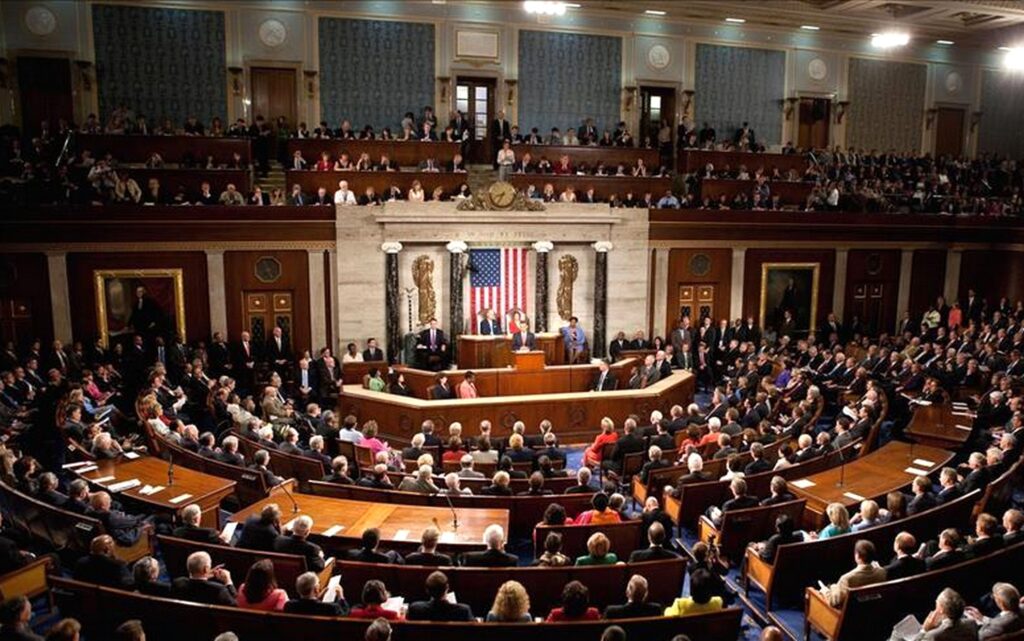
Washington has taken a significant step toward revising its legislative policies toward Damascus, following the unanimous approval by the Senate Foreign Relations Committee of a bill to repeal the 2003 and 2012 Syria Accountability Acts.
According to Mohammad Ghanem, Director of Political Affairs at the Syrian American Council, the bipartisan proposal has officially moved to the next stage of the legislative process in Congress, paving the way for a final vote.
The Syria Accountability and Lebanon Sovereignty Restoration Act of 2003, passed by Congress and signed by former US President George Bush, is one of the most prominent legal frameworks upon which Washington’s sanctions on Damascus have been based over the past two decades.
The Act included a range of punitive measures, including: Imposing restrictions on US exports to Syria, especially dual-use civilian and military materials, restricting the operations of American companies within the country, and freezing Syrian assets in the United States.
The US administration was granted powers to reduce the level of diplomatic relations and impose restrictions on the movement of Syrian diplomats.
The Syria Human Rights Accountability Act of 2012 was passed after the outbreak of protests in Syria, and allowed for the expansion of sanctions to include officials and entities linked to human rights violations, in addition to imposing restrictions on dealings with the Syrian Central Bank and the oil sector.
This decision comes in the context of a broader review of US policies towards Syria, following the political changes that Damascus witnessed in late 2014.
Since the fall of the Assad regime, relations between Washington and the new Syrian leadership have witnessed a remarkable rapprochement, including high-level meetings and the lifting of some sanctions through presidential waivers.
Senator Jeanne Shaheen (Democrat – New Hampshire) introduced the bill in November 2025, with the support of Senators Joni Ernst (Republican – Iowa) and Marquin Mullen (Republican – Oklahoma), following their visit to Damascus and meeting with Syrian President Ahmed al Sharaa.
Economically, it opens the door to expanding trade and investment relations with Syria and removes a major legal obstacle to reconstruction.
Legally, it eliminates the legal basis for sanctions imposed on the Syrian state and its institutions, while maintaining the authority to impose sanctions on individuals involved in human rights violations.
Investment-wise, it provides greater legal guarantees for international companies and institutions to engage with the Syrian market without fear of the re-imposition of sanctions related to these two laws.
Repealing these two Acts doesn’t mean though, lifting all sanctions on Syria, and other legal mechanisms remain, such as the Caesar Act, which was previously repealed by the National Defense Authorization Act, in addition to individual designations under laws like the Global Magnitsky Act.
The current bill also preserves the power to impose sanctions on “bad actors” and individuals involved in serious human rights violations, meaning that sanctions will shift from being broad state sanctions to targeted sanctions against specific individuals and entities.
The bill is still in the early stages of its legislative process. After its approval by committee, it will move to: Debate and vote in the Senate plenary session.
It was referred to the House of Representatives for discussion and voting, and the president’s signature makes it effective.
The process is expected to involve intensive consultations between the two parties, especially given the presence of dissenting voices within Congress raising security and political concerns related to the new Syrian leadership.