Newsweek: 5 Challenges Trump faces on his way to dealing on hot spots
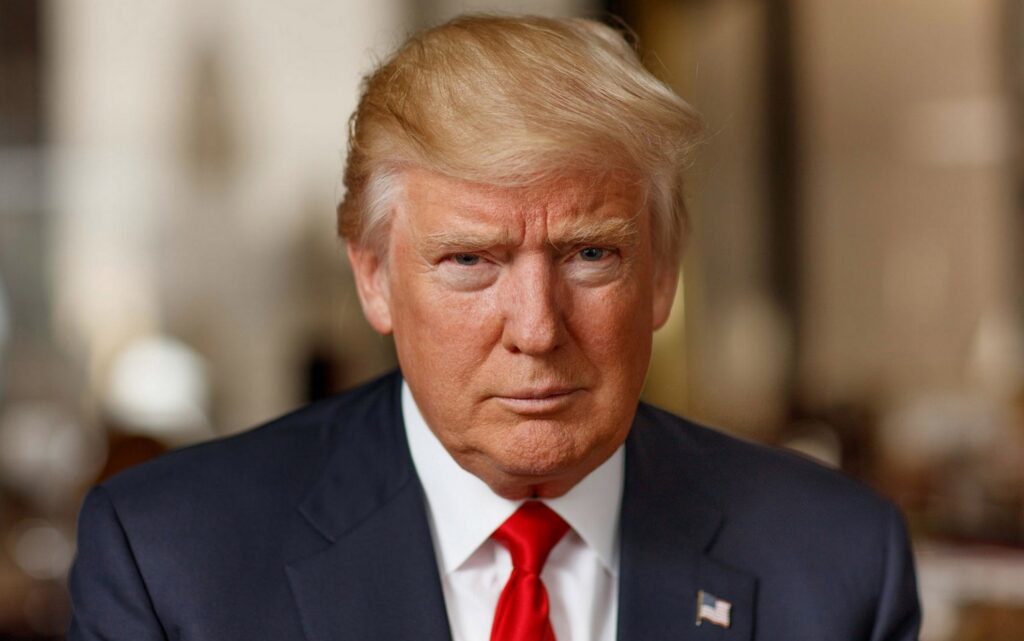
Former foreign affairs editor and Newsweek correspondent Michael Hirsch writes an article on the changing global environment that the US president-elect will face.
President-elect Donald Trump will face a changing global environment that is less hospitable to his usual deal making style.
While Trump may be at odds with Washington, he is still keen to make peace with the rest of the world.
The 47th president of the United States, Donald Trump, is filling his incoming Cabinet with hardline hawks and troublemakers who Trump’s critics say could threaten to destroy the entire federal government.
Yet some officials who know the president-elect say that while he has a reputation as a crisis-maker, he is also a master of the “art of the deal,” a skilled negotiator who sought to cut deals even with America’s adversaries around the world during his first term and wants to do so again this time.
“I said to the president early in my tenure, ‘You’re going to be known as the peacemaker,’ and I think that’s been his vision so far,” said Robert O’Brien, who served as Trump’s national security adviser during his first term and is considered a leading candidate for a senior position in the new administration.
So what’s the problem?
Trump, even in his first term, failed in his efforts to reach successful agreements with China, Iran, and North Korea.
But now, since he left the Oval Office four years ago, the world has changed in ways that mean he faces a tougher international environment than it did last time, one that makes it unlikely that the wars in Ukraine and the Middle East, which have exhausted all sides, will end anytime soon.
Here are five ways global conditions have changed, almost certainly ensuring that Trump will have a harder time achieving his goals this time around:
First: Russia escalates the war in Ukraine
Trump already faces the prospect of breaking his biggest campaign promise.
He has repeatedly vowed to end the war “before I become president”.
Last summer, he said he would do so “within 24 hours,” likely by declaring a ceasefire on current fronts and then striking a deal in which Ukraine would cede territory, and future NATO membership, in exchange for peace.
But any such deal requires the fronts to be stable, and in a phone call two days after the election (which the Kremlin has denied), Trump reportedly warned Russian President Vladimir Putin against escalating his two-and-a-half-year invasion.
But the Russian president has done the opposite: He is still massing forces in southeastern Ukraine in what appears to be preparations for a new offensive, and over the past week Putin has launched some of his most intense missile attacks on Ukraine in months.
Meanwhile, Ukraine is running low on troops, and President Joe Biden has sought to give Kiev more leverage before he leaves office by supplying long-range missiles, which Kiev promptly used to attack Russian territory, and Russia has responded by once again threatening nuclear war.
Biden’s move prompted Trump’s new national security adviser, Michael Waltz, to comment, “This is another step up the escalation ladder, and who knows where this is going”.
True, this may seem like Trump’s moment, In his campaign speech, he repeatedly said that the greatest threat facing the United States was “World War III,” and that he alone could prevent it, and Putin has indicated a willingness to discuss a ceasefire, but neither Putin nor the Ukrainians are playing along so far.
At the same time, the Republican Party still has a larger number of staunch pro-Ukraine supporters, including Trump’s incoming secretary of state, Senator Marco Rubio.
If Trump were to listen to them, he might be reluctant to start his presidency by showing weakness by simply ceding large parts of Ukraine to Putin.
Second: Israel’s threats of annexation may prolong hostilities
When it comes to Israel’s two-front war in Gaza and Lebanon, the president-elect has signaled to Israeli Prime Minister Benjamin Netanyahu and top negotiators in Qatar that he supports Netanyahu’s military plans, but wants to see him “finish things off” by the time Trump is inaugurated on Jan. 20.
While Netanyahu is expected to be more willing to bow to Trump than he was to Biden, the Israeli prime minister is in a stronger political position, and more able to resist American pressure, than he has been since the October 7, 2023, attacks by Hamas.
Following Israel’s successful campaigns against Hezbollah and Hamas, Netanyahu has consolidated support in his government, making it more likely that he will be able to remain in power for at least another year.
Indeed, the Israeli army has been saying for some time that its military objectives in Gaza have been achieved, and the Washington Post reported that Israel is preparing to reach a ceasefire agreement with Hezbollah as a “gift” to Trump when he takes office in January of next year.
However, this agreement, in reality, is meaningless.
Netanyahu said a week later that Israel would continue to operate militarily against Hezbollah despite any cease-fire.
Netanyahu’s government is openly discussing annexation of the West Bank, which could win support from pro-Israel hawks on Trump’s team, including Rubio, UN Ambassador-designate Elise Stefanik, and Israel’s ambassador-designate Mike Huckabee, but would almost certainly prolong hostilities and indefinitely delay a proposed Saudi-Israeli normalization agreement that is seen as the crux of a broader regional peace deal.
Third: Iran is much closer to possessing nuclear capability
Trump also faces new obstacles in fulfilling another campaign pledge: to persuade Iran to abandon its nuclear program.
Trump plans to renew his “maximum pressure” campaign by dramatically increasing sanctions on Iran and choking off its oil sales, according to reports.
At the same time, Iran’s new, relatively moderate president, Masoud Pezeshkian, has signaled a willingness to negotiate, saying, “Whether we like it or not, we will have to deal with the United States in the regional and international arenas”.
The problem for Trump will be that Tehran has new motivations to go nuclear.
Iran’s conventional defense force has suffered a major setback against Israel in recent months, and Israel has all but eliminated the top leadership of its proxies Hezbollah and Hamas, including by striking inside Iran.
Earlier this year, a senior commander in Iran’s Revolutionary Guard suggested that Iran should review its nuclear doctrine in the face of Israeli threats.
Iran is now much closer to a nuclear weapon than it was in 2018, when Trump rejected the nuclear deal negotiated by his predecessor, Barack Obama.
One thing that could change Iran’s calculations in favor of accelerating its nuclear program is confirmation by US and Israeli officials that Israel’s retaliatory strike on Iran last month destroyed an active nuclear weapons research facility.
Hardliners in Iran have publicly warned that such a degree of strategic vulnerability is unacceptable to them.
“We’ve the capability to produce weapons and we have no problem with that,” Kamal Kharrazi, an adviser to Iran’s supreme leader, Ayatollah Ali Khamenei, said on November 1.
Fourth: North Korea’s Kim has a new love: Putin
Nor can Trump count on any kind of disarmament deal with North Korea.
In his first term, Trump embarked on what he called a “special friendship” with North Korean dictator Kim Jong Un, who enthusiastically reciprocated in a bizarre exchange of letters, describing their relationship as “deep and special”.
But Kim has advanced his nuclear and intercontinental ballistic missile programs dramatically since Trump left office.
He has also embraced a new military alliance with Russia that has made Pyongyang less dependent on American aid.
A mutual defense pact between Russia and North Korea, announced in June, means Kim will receive food aid, cash, oil and potentially military technology that previously could only be provided through a deal with Washington.
“We’re not going to get the deal that we got in the first Trump administration, and it’s going to take a lot of effort to get North Korea away from the Russians,” said the Carnegie Endowment foreign policy strategist.
Fifth: Xi Jinping has become more hawkish
Trump will find it harder to get China to play fair on trade and back off its threats to Taiwan, because Chinese President Xi Jinping has become more hawkish on these issues than he was four years ago.
Trump will also have to confront the fact that the deepening ideological partnership between Beijing and Moscow, built on their shared opposition to American hegemony, doesn’t fit his transactional approach to geopolitics.
But China’s economy is clearly slowing down dramatically, and Xi relies in part on exports to propel it.
Xi’s mismanagement of the economy has led to mounting debt, declining foreign investment, and capital flight.
So, Trump’s threats of new 60% tariffs could hit China hard.
But while Trump has promised a trade war with Beijing, he has also signaled his desire to avoid an actual war over Taiwan.
That hint of softness on Taiwan, combined with Xi’s grand plan to transform China into a self-reliant global superpower, could make the Chinese leader less willing to change Beijing’s core trade practices, including illegal corporate subsidies and widespread intellectual property theft, than he was when Trump last took office.
“It didn’t work last time, and I don’t see why it won’t work this time,” says former US undersecretary of commerce William Reinsch, now at the Center for Strategic and International Studies.
The country’s ability to navigate these shifts will depend largely on the people Trump brings into his administration.
Even under his iron rule, the Republican Party is locked in an ideological battle between traditional hawks who seek to project power abroad and oppose negotiation, and “hardliners” and “realists” who seek to avoid foreign conflicts and embrace a more isolationist, “America First” outlook.
Right now, hawks appear to be filling the top jobs, including Rubio at the State Department, Waltz as national security adviser, and, most surprisingly, former Fox News host and veteran Pete Hegseth as defense secretary.
But there are already counterforces emerging in the new administration that will be more inclined to offer advice on adaptation, particularly when it comes to China.
Trump has rejected veteran China hawks like Arkansas Senator Tom Cotton and his former secretary of state, Mike Pompeo, who said earlier this year that it was time to recognize Taiwan’s independence.
Trump’s new inner circle includes a number of businessmen who may take a more diplomatic approach.
They include his likely chief adviser, Elon Musk, whose Tesla manufacturing success in China has depended on Beijing’s favor and who once described himself as “probably pro-China”.
Trump campaign co-chair Howard Lutnick, who has been nominated for commerce secretary, has told Trump he will “drive his agenda on trade and tariffs”.
Lutnick’s Wall Street financial services firms, Cantor Fitzgerald and BGC, also have significant business interests in China.
Other former Trump administration officials who are likely to take up senior positions in the new administration, such as former defense official Elbridge Colby, have blamed Taiwan for being a security intruder, suggesting that Trump would not be as quick to defend the island as Biden.
As Trump himself said in a July interview with Bloomberg Businessweek: “Taiwan has to pay us for defense… Taiwan doesn’t give us anything”.
“They think we can’t risk sinking the Pacific Fleet for a country that doesn’t want to help itself, so China policy may end up being more lenient than people think,” says one national security expert close to the Trump transition team.
Indeed, the incoming president is already sending out tentacles of peace to foreign adversaries, even as he embarks on what can only be described as a hostile takeover of the federal government and a domestic war against the “deep state”.
As Trump said at a rally in Colorado last October, “The enemy within is a greater enemy than China and Russia”.
“I won’t start wars, but I will stop wars,” Trump declared in his victory speech the night of November 5.
In meetings with foreign delegations at Mar-a-Lago, Trump said he was “looking to end all these conflicts,” even when it came to Iran, and even though Tehran had plotted to assassinate him, according to a diplomatic official familiar with one of those conversations.
Trump himself began backroom mediation with Iran after ordering the Jan. 3, 2020, killing of Iranian General, Qassem Soleimani, the official said.
Musk reportedly met secretly with Iran’s ambassador to the United Nations after the election to defuse tensions.
The drive to leave a legacy as the great peacemaker is central to Trump, says Gwenda Blair, author of “The Trumps: Three Generations of Builders and a President” (2000).
“He really wants to be the dealmaker of the ages, using the deal making DNA that propelled his grandfather through the Gold Rush, his father who built a housing empire, and his career in real estate, casinos and reality TV to close new deals,” Blair said.
But Blair warned that “everyone at the table is as self-interested as he is, and less susceptible to lies, exaggerations and distortions… In a global landscape of diminishing American hegemony, some may be forced to demand a larger share for themselves than the other side is prepared to offer”.
Perhaps Trump is listening to his own advice on this.
As he wrote in his 1987 book, “The Art of the Deal,” “The worst thing you can do in a deal is to appear desperate to make it… That makes the other side smell blood, and then you’re done… The best you can do is to act from a position of strength, and having the will to act is the strongest thing you have”.
The real question here is whether Trump, with his apparent eagerness to make deals, will have the leverage he believes he needs.
Without it, he could find himself engaged in a series of one-sided negotiations in his second term, from which he may once again come up empty-handed.