Trump accuses the Iranian leadership of being dishonor” as the details of the alleged agreement leaked
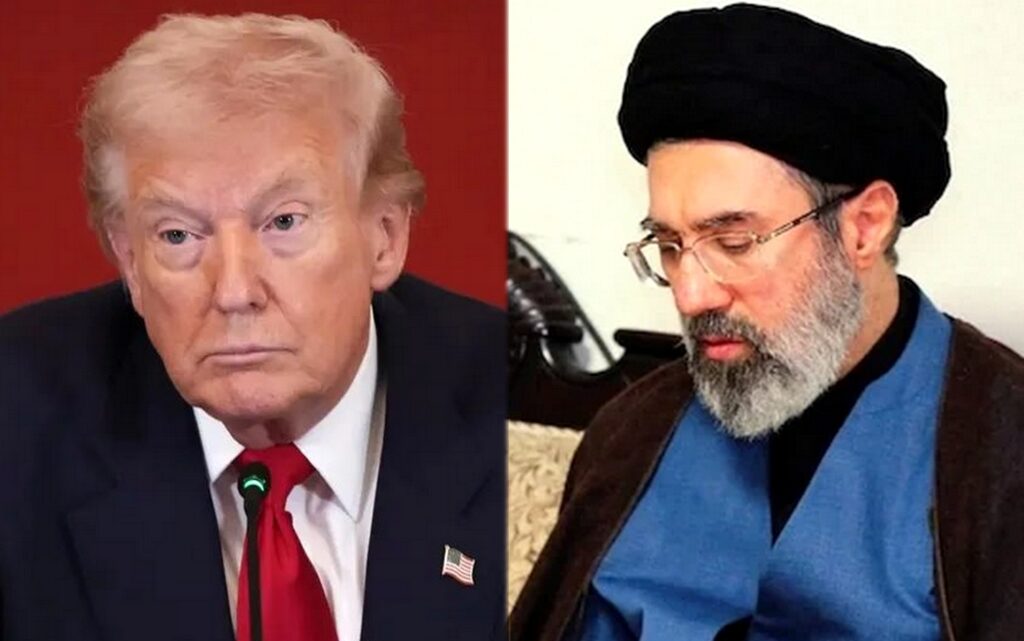
US President Donald Trump launched a scathing attack on the Iranian leadership, accusing it of dishonor and bad faith in the negotiations, against the backdrop of media leaks about the terms of an alleged agreement.
In a fiery statement, Trump said, “The terms that Iran leaked to the fake news media have absolutely nothing to do with the terms that were agreed upon in writing”.
He added, criticizing the Iranian position, “What they said, including their weak and insulting statement about the existence of an agreement, is completely false… They are dishonorable people”.
The US president stressed the impossibility of reaching real understandings with the Iranian side under these circumstances, saying: “They don’t have anything called negotiating in good faith… Amazing!”
in a clear indication that the path of indirect negotiations between the two countries has reached a dead end.
Trump didn’t ignore though the recent security tensions in international waters, referring to the drone attack that targeted Indian ships leaving the Strait of Hormuz.
He said: “The drone attack, which was completely repelled last night, is totally unacceptable… They must exercise restraint, and quickly”.
These statements come amid escalating tensions on two fronts:
In the diplomatic track: Washington and Tehran are engaged in arduous indirect (or secret) negotiations aimed at easing tensions over Iran’s nuclear program and regional issues.
Media track: Iran often resorts to leaking copies of draft agreements to the media, with the aim of creating a fait accompli, exerting psychological pressure, and demonstrating diplomatic victories.
In his response, Trump is trying to block this narrative, asserting that what is being circulated in the media is radically different from the written and agreed-upon texts.
In a development that contrasts sharply with the intensity of the attack, Trump announced Thursday evening that a “fair settlement” had been reached regarding the war with Iran, indicating that the agreement would be signed in Europe within the next few days, in the presence of his Vice President, J D Vance.
He added that the Strait of Hormuz would be officially opened as soon as the agreement is signed.
Between harsh accusations and the sudden announcement of an imminent agreement, the Iranian-US landscape remains fraught with contradictions.
Only the next few days will reveal whether a genuine deal exists or if the media escalation is merely the other side of the negotiating table.
Meanwhile, the Iranian Mehr news agency posted the full text of a draft agreement between Iran and the United States, comprising 14 articles aimed at establishing a comprehensive framework for ending the military and economic conflict in the region.
The text has generated widespread reaction, despite Iran’s insistence that it still requires further review.
A permanent ceasefire… and Iranian demands for American guarantees.
According to a source close to the Iranian negotiating team, the draft stipulates the following:
A permanent and immediate ceasefire on all fronts, including in Lebanon.
Non-interference in Iran’s internal affairs, and full respect for its sovereignty.
The naval blockade will be completely lifted within 30 days, and withdrawal of US forces from the vicinity of Iran.
The Strait of Hormuz will be reopened within 30 days under Iranian arrangements.
Suspending sanctions on the sale of oil and petrochemical products, and enabling Iran to have full access to its financial resources.
America and its allies have put forward plans to rebuild Iran worth at least $300 billion.
60 days of negotiations to reach a final agreement, including the nuclear issue and the complete lifting of sanctions.
Iran reaffirms its commitment to the Treaty on the Non-Proliferation of Nuclear Weapons (NPT) and not to produce nuclear weapons.
During the negotiation period, the US pledges not to add troops to the region and not to impose new sanctions.
$24 billion of frozen Iranian funds to be released within 60 days, with half the amount made available before negotiations begin.
Establishing a monitoring mechanism to implement the agreement.
The final agreement will be ratified by a resolution of the UN Security Council.
Final negotiations won’t begin until half of the frozen funds are released, oil sanctions are suspended, and the naval blockade is lifted.
Two points were excluded from the agreement, and several issues remain open.
According to the same source, the issues concerning the Iranian missile program and support for Tehran regional factions were definitively removed from the agreement’s terms.
In contrast, the final agreement will focus on the fate of fertilized materials and fertilization, lifting the sanctions, the Iranian economic reconstruction program.
The spokesperson for the Iranian Ministry of Foreign Affairs confirmed that this text hasn’t yet received final review and approval from the relevant institutions in Iran, which means that the draft is still subject to amendment or discussion.