Yedioth Ahronoth: Turkish-Saudi trade corridor through Syria raises Israeli concerns
The Israeli Yedioth Ahronoth newspaper revealed that Türkiye and Saudi Arabia are pushing for the establishment of a new land and trade corridor linking the Gulf states to Europe via Syrian and Jordanian territory, in a project seen as a direct competitor to the economic corridor supported by Israel to link India to Europe via the Middle East.
According to the Israeli newspaper, the project aims to transport goods between Asia and Europe via Saudi Arabia, Jordan and Syria, reaching Türkiye, without passing through Israel or relying on the port of Haifa, which represents one of the main pillars of the competing project promoted by Israel.
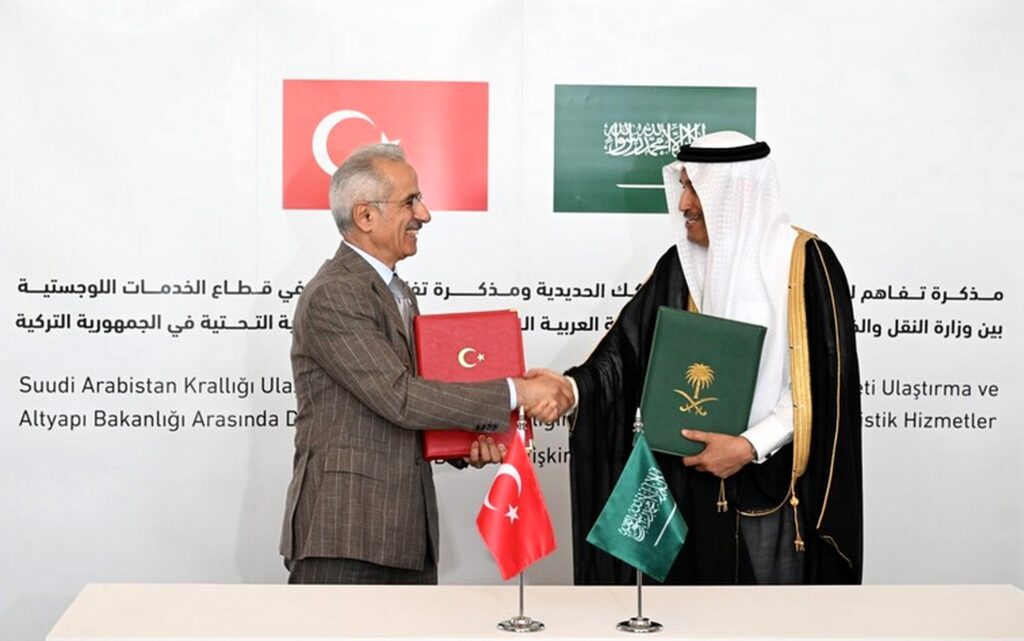
The project received a new boost this week after Turkish Minister of Transport and Infrastructure Abdulkadir Uraloğlu and Saudi Minister of Transport and Logistics Saleh al Jasser signed two memoranda of understanding in the fields of railways and logistics during a meeting held in Riyadh, with the aim of enhancing trade links and developing transport infrastructure between the two countries.
The project is based in part on reviving parts of the historic Hejaz Railway, which has linked Damascus to Medina since 1908, while developing it to become part of a modern freight transport and supply chain network between the Gulf, Türkiye and Europe.
Yedioth Ahronoth also noted that Syria is working to strengthen its position as a logistics hub linking the Gulf with Türkiye and the Mediterranean, in parallel with agreements and memoranda of understanding signed by Damascus with both Ankara and Amman in recent months in the fields of transport and railways.
Yedioth Ahronoth believes that the success of this corridor may reduce the role that Israel seeks to establish as a major hub for trade between Asia and Europe, especially in light of the security tensions in vital maritime routes such as the Strait of Hormuz and Bab al Mandab, which pushes countries in the region to look for more stable land alternatives for transporting goods.
The competition between the two projects reflects an escalating race to redraw the map of regional and international trade, amid rapid geopolitical and economic transformations in the region.