Israeli report: The new Syrian army will be a regional threat!
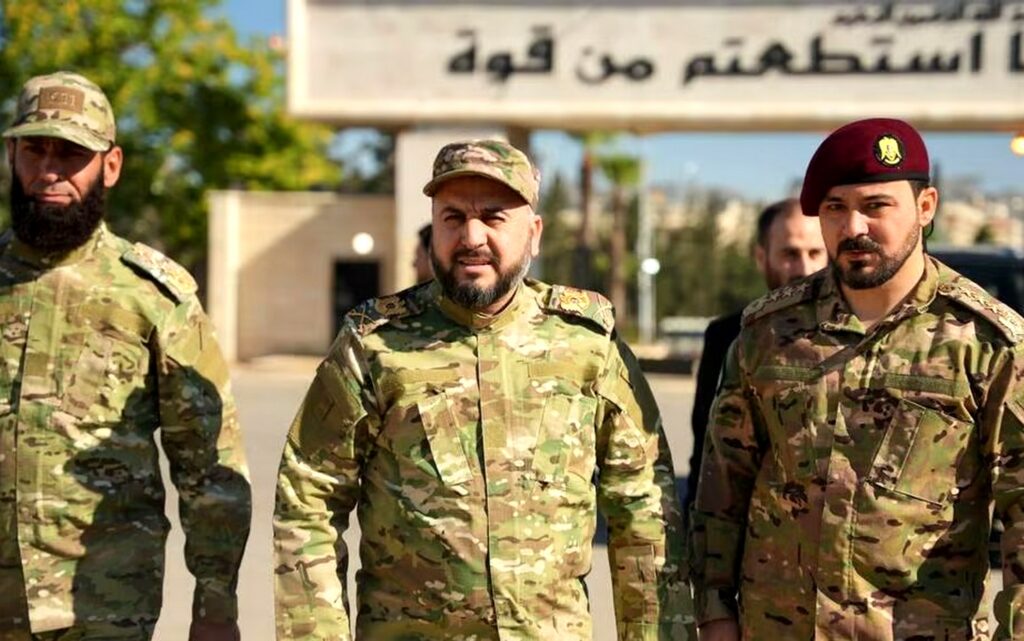
A recent report by the Israeli Alma Institute revealed disturbing details about the new Syrian army that Syrian transitional President Ahmed al Sharaa is restructuring.
The Israeli report explained that the ideological trends prevalent among some members of the army pose a real threat to internal stability in Syria and the region, and also weaken Sharaa’s effective control over state institutions.
According to Israeli Maariv newspaper, the Syrian regime, led by Sharaa, began implementing a comprehensive military restructuring plan last December.
This plan involves integrating former opposition fighters with officers from the former regime’s army, with the goal of establishing a massive military force comprising approximately 300,000 soldiers divided into 20 military divisions.
The new regime focuses on building an integrated military structure, including training and recruitment.
However, the biggest challenge lies in the fact that many of the armed factions that ostensibly joined the army haven’t actually been dissolved, but rather have retained their previous internal structures and modus operandi, threatening the army’s cohesion and undermining the government’s authority over the military establishment.
The report notes that this structure may provide temporary stability, but it carries significant future risks, not only for the Syrian regime but also for regional security as a whole, due to the widespread penetration of factions espousing extremist jihadist ideologies within the new army.
Among the most serious aspects of the report is the integration of groups classified as close to ISIS, which includes foreign fighters, including Chinese Uyghurs, Turkmen, and fighters from the Caucasus region.
Many of these fighters’ harbor ambitions of establishing an “Islamic caliphate” in Syria and are considered extremists even within jihadist circles.
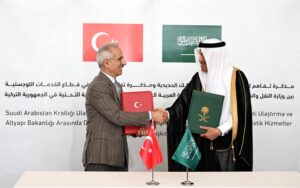
Externally, the report highlights Türkiye’s growing support for the new regime.
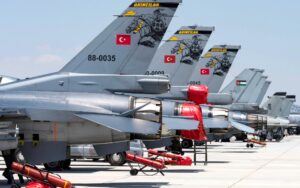
Ankara is believed to be providing growing political, economic, and possibly military support, leveraging its advanced military industry to become the primary supplier of weapons needed by the new Syrian army.
However, the army suffers from a severe shortage of advanced weapons, as a result of repeated Israeli airstrikes targeting arms depots and military manufacturing facilities in Syria, destroying ballistic missiles, aircraft, helicopters, and advanced weapons systems.
On the leadership front, the report details the appointment of Major General Murhaf Abu Qasra, a former field commander in Hay’at Tahrir al Sham, as Minister of Defense, and Major General Ali Nour al Din al Na’asan as Chief of Staff.
In addition, figures close to Sharaa have been appointed to key positions, such as the heads of the intelligence services, the Republican Guard, and the Air Force.
The report also provides a detailed overview of the twenty military divisions formed, along with the names of their leaders, their ideological orientations, and their locations.
Among the most prominent of these divisions are Division 84, which comprises a majority of foreign fighters, and Division 82, led by one of the most extremist commanders.
From a political and social perspective, the report warns of the ambiguity surrounding the new regime’s direction, despite Sharaa’s attempts to present himself as a moderate and pragmatic leader.
The report also notes that the violent events witnessed in provinces such as Latakia and Sweida over the past months raise concerns that the regime may adopt a more radical Islamist ideological approach in the future.
In conclusion, the report warns that the process of restructuring the army and integrating armed factions within it could become a significant burden on the regime in the medium and long term, and lead to worrying shifts in the regional balance of power, particularly for Israel and Jordan, which could face increased security challenges on their northern borders if this new situation in Syria takes hold.