Trump to visit China next week amid escalating tensions in the region
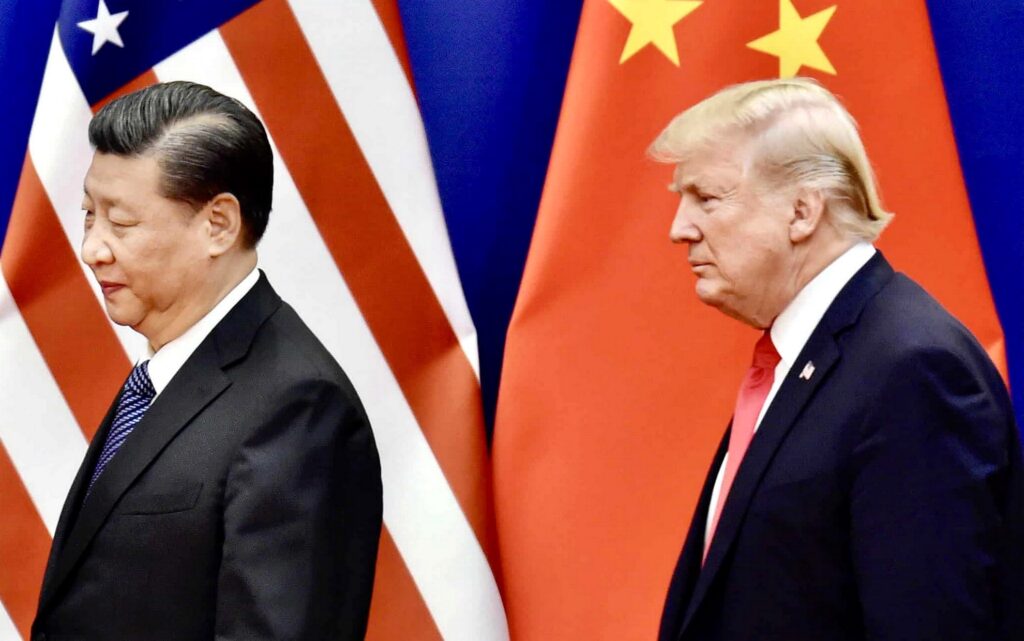
US President Donald Trump is heading to China next week to meet with his counterpart Xi Jinping, at a summit between the two superpowers where the Iran war and its repercussions on energy markets are expected to be a key item on the agenda.
Trump is expected to receive a warm welcome in Beijing during his visit, which was planned for March but postponed because of the war that began with an US-Israeli attack on Iran on February 28.
He is also expected to discuss, during his first visit to China since 2017 during his first presidential term, reducing trade tensions between the world’s two largest economies, and the Taiwan issue, which is a major point of contention between Beijing and Washington.
The US president had previously stated that he would discuss the war with Iran, a key energy supplier to China, with his counterpart.
After Trump affirmed that Xi Jinping had acted “very respectfully” during the conflict, China might seek concessions from him on several issues, while simultaneously leveraging its influence with Tehran to facilitate a settlement that would end the war, as part of the efforts underway for weeks.
Before Trump’s arrival, Iranian Foreign Minister Abbas Araghchi visited Beijing this week, where he heard from his counterpart Wang Yi a Chinese desire for a complete and immediate end to the war, including the reopening of the vital Strait of Hormuz for energy exports and maritime trade.
“The reality is that Iran is pivotal to the United States, and the Chinese know that,” said Edgar Kagan, a researcher at the Center for Strategic and International Studies, and they will therefore try to exploit this point to their advantage.
However, Beijing is keen to avoid any involvement in this war and to distance itself from any pressure that Trump might exert.
Kagan considered Araghchi’s reception this week an indication that China recognizes that this is looming.
The world is eagerly awaiting the Trump-Xi summit during the upcoming visit on May 14 and 15.
However, the uncertainty surrounding the details and the lack of preparation suggest that the meeting will yield limited tangible results.
For Trump, captivated by great-power diplomacy and the aura of leadership and personality, the priority will be the photos he takes with Xi, the strongman who has held the reins of power for more than a decade.
Trump has frequently praised his very good relationship with his counterpart, who is seven years his junior.
The two presidents had previously met in South Korea last October on the sidelines of the Asia-Pacific Economic Cooperation forum.
While Trump expected to receive a warm welcome from Xi, he also hoped to return with major deals that would strengthen his position and that of his Republican party before the midterm elections in November, which Republicans are entering while under criticism for high oil prices due to the war in the Middle East.
The US administration plans to invite the heads of major companies, including Apple, Exxon, Nvidia, and Boeing, to accompany Trump on his visit.
Meanwhile, talk of a potential major deal with Boeing for aircraft manufacturing.
However, some senior industry officials said that no formal invitations have yet been extended.
Trump also hopes to strike deals related to artificial intelligence, strategic minerals, and fentanyl; a substance used in the manufacture of narcotics.
In contrast, China hopes to secure, in particular, an extension of the trade war truce with the United States, which Trump and Xi agreed to in October for a year.
However, Beijing has shown its prepared to respond to any action taken by Washington, and in May it confirmed that it would not comply with US sanctions on companies targeted for their dealings with Iran’s oil sector.
“The (trade) truce doesn’t seem to be as solid as we had hoped,” Sean Stein, president of the US-China Business Council said.
China is seeking stability in a world bewildered by Trump, and will try to bet on the passage of time as the US president’s second, and constitutionally final, term nears its midpoint.
Beijing is likely to exploit Trump’s weak position to its advantage wherever possible… “Beijing has a lot of leverage that it can use,” said Patricia Kim, a foreign policy researcher at the Brookings Institution in Washington.
She added, “Trump is looking for a victory, isn’t he? I mean, he hasn’t had many victories in recent weeks as the war in Iran continues”.
Analysts believe Xi may also seek to extract concessions from the US regarding Taiwan, the self-governing island backed by Washington, which Beijing considers part of its territory and hasn’t ruled out using force to unify with the mainland.
These concessions could include, for example, US arms sales to Taiwan.
Given Trump’s history of taking positions on this issue that deviate from traditional US policy, Washington’s allies in the region will be watching closely, fearing that any firm Chinese stance could lead to a US retreat.
At the same time, Beijing is likely to play on Trump’s love of appearances, extravagance, and praise, and its awareness that he will cause trouble if he feels insulted or angry.