Bloomberg: Saudi Arabia is reaping unexpected gains from the Iran war

While the war with Iran disrupts energy flows and fuels global economic volatility, Saudi Arabia is reaping billions of dollars in additional oil revenues as it pushes forward with its ambition to become a global trade and logistics hub.
Although the war slowed economic growth and increased defense and logistical spending, rising oil prices and contingency plans boosted Saudi revenues.
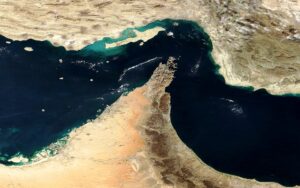
Meanwhile, the kingdom’s Red Sea coastline emerged as a vital bypass for the Strait of Hormuz, which has been virtually closed to trade since the war began.
Hisham Alghannam, a Riyadh-based researcher at the Malcolm Xerx Carnegie Middle East Center, said: “Saudi Arabia has proven to be the primary safety valve for the Red Sea”.
This transforms the kingdom into a major hub for supply chains across the Arabian Peninsula, potentially bolstering the country’s $1.3 trillion economy, spearheaded by Crown Prince Mohammed bin Salman.
These gains come amid competition from the development of alternative trade routes along the UAE’s east coast and in Oman, while the UAE and Qatar continue to increase their energy imports.
Saudi Arabia’s oil export revenues surged to their highest level in over three years, reaching $24.7 billion during the first full month of the Middle East conflict.
This was partly due to a decades-old contingency plan: The East-West pipeline, which allowed the kingdom to bypass the Strait of Hormuz.
At the same time, Saudi Arabia’s extensive highway network has enabled thousands of trucks to transport fertilizers and consumer goods across the Gulf through the kingdom’s Red Sea ports, however, growth in non-oil sectors has slowed.
In April, the International Monetary Fund lowered its forecast for the Kingdom’s economic growth by 0.9 percentage points to 3.1% in 2026, the second-lowest reduction among the Gulf countries after only Oman.
Senior US officials said on Sunday that the United States and Iran are nearing an agreement to reopen the Strait of Hormuz, despite President Donald Trump’s insistence that he won’t rush to reach a deal.
For Saudi Arabia, each month of fighting costs about 1.5% of GDP in the form of additional spending, and for most of its neighbors, the cost is likely to be higher.
The UAE, the region’s second-largest economy, is investing in an alternative export hub on its east coast and accelerating the construction of a pipeline to the port of Fujairah on the Gulf of Oman, aiming to double its crude oil export capacity.
A UAE spokesperson cited statements by officials highlighting the pipeline expansion and efforts to strengthen other areas, including supply chains.
In the vicinity, Oman launched a new trade corridor with the UAE’s emirate of Sharjah.
Omani ports, benefiting from shipping traffic across the Arabian Sea, have also gained greater importance to the Gulf region.
At the same time, Saudi Arabia is repurposing parts of the NEOM project in the northwest of the kingdom.
The new strategy may include expanding NEOM’s logistical role, promoting its port as a hub for European companies to access the UAE, Kuwait, and Iraq, according to people familiar with the matter.
In recent years, the NEOM project has begun scaling back its original plans to build a giant desert city.
The Saudi sovereign wealth fund, valued at $1 trillion, is also exploring the consolidation of transportation and supply chain assets to create a logistics giant capable of attracting foreign investment.
According to Albert Vidal-Reby, an analyst at the International Institute for Strategic Studies, the war is accelerating Saudi Arabia’s plans to become a major logistics hub between Asia, Africa and Europe, a title that Dubai’s Jebel Ali port has held unchallenged for decades, knowing that Jebel Ali Port in Dubai is among the largest container ports in the world.
The main Saudi stock index has risen by about 3% since the war broke out on February 28, compared with declines of about 10% in Dubai and 7% in Abu Dhabi.
This has boosted confidence among companies wishing to list within the Kingdom, as several companies continue their preparations for the initial public offering, even though this year has seen relatively limited activity in the Gulf’s IPO market.
Despite benefiting from its geographical location, Saudi Arabia has been preparing for decades for the possibility of the Strait of Hormuz being closed.
The East-West pipeline came into service during the Iran-Iraq War in the 1980s, when ships in the strait were attacked.
However, these efforts may not be sufficient to counter all the regional threats that have emerged in recent years.
Access to Red Sea ports isn’t without risks, as the Houthis in Yemen have carried out attacks that have disrupted shipping in the region in recent years, however, they have avoided targeting Saudi Arabia during the war with Iran.
Rudolph Lohmeier, senior partner at the consulting firm Kearney, believes that some trade flows to Saudi ports may continue in the long term because Iran will retain its ability to disrupt shipping through the Strait of Hormuz.
He added, “This diversification away from the Strait of Hormuz will continue”.