DW: Monitoring the activities of German intelligence… What is the fate of the secret G10 committee?
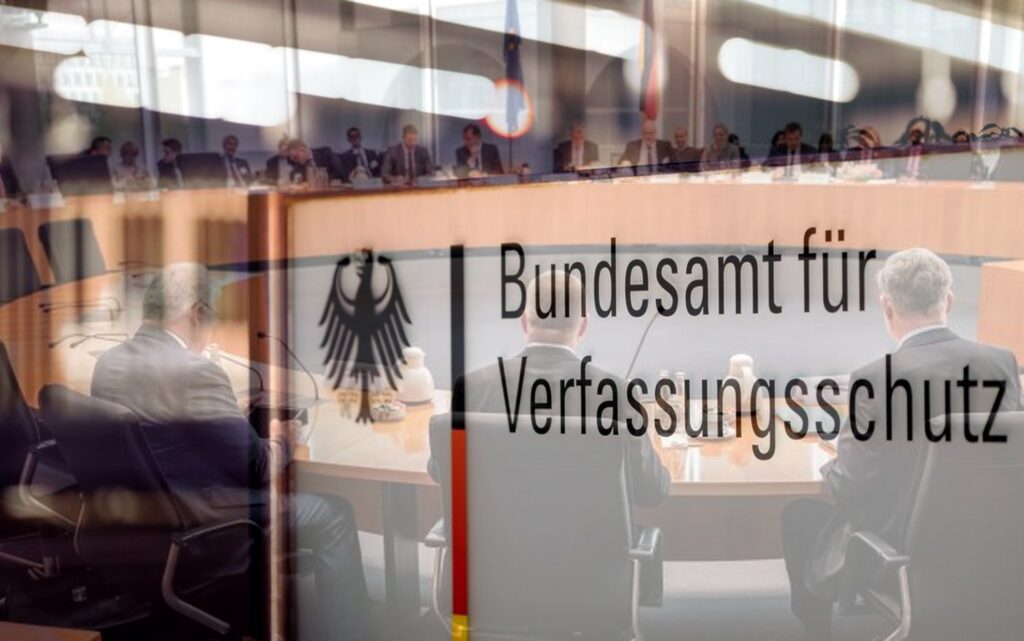
Berlin wants to transfer key powers from the G10 committee to an independent oversight board.
The G10 is one of Germany’s most secretive bodies, as the monthly meeting in a secure room within the German parliament, it makes sensitive decisions regarding whether German intelligence agencies have the right to wiretap calls, read emails and chats, or even postal mail.
It’s the body that currently grants permission to agencies such as the Federal Intelligence Service (BND), the Federal Office for the Protection of the Constitution (BfV), and the Military Counterintelligence Service (MAD) to violate the confidentiality of correspondence and communications enshrined in Article 10 of the German Constitution, but only for limited periods and under prior review.
According to the German news Tagesschau website, this arrangement may soon change.
Citing security sources, the site reports that the German government plans to transfer the responsibilities of the G10 committee, appointed by parliament, to the UKRat, an independent oversight body.
This high-level federal agency, established in January 2022 and composed of former judges, has thus far been tasked with monitoring the strategic foreign intelligence activities of the BND, such as large-scale internet surveillance.
According to the news report, the Chancellor’s Office wants this council to also assume, starting next year, the responsibility of prior reviewing individual surveillance operations against German or foreign targets within Germany, as well as against German citizens abroad.
To this end, a new department is expected to be established within the council, and the necessary powers will be granted to it through legislation currently being drafted by the government.
The ongoing debate in Berlin isn’t limited to restructuring the oversight mechanisms of the intelligence services, but also extends to a broader reform of the law governing these agencies.
The website quoted the German Chancellery as saying that the coalition agreement stipulates a comprehensive overhaul of the intelligence law in order to strengthen national sovereignty and the operational capabilities of the agencies.
However, it remains unclear whether this will entail granting the intelligence services specific new powers; rather, it focuses primarily on expanding the role of the independent oversight board, which may in the future be responsible for prior approval of surveillance of individuals both inside and outside Germany, and possibly also for the use of human sources.
The report links this move to a ruling issued by the Federal Constitutional Court in October 2024, which called for greater professionalism in the prior review of intelligence surveillance procedures.
The Tagesschau also quoted the German Chancellery as saying that the coalition agreement stipulates a comprehensive reform of the Intelligence Services Act to strengthen national sovereignty and the agency’s specific capabilities, while also providing more effective and precise oversight structures, including through the Bundestag (Federal Parliament), and in accordance with the Constitutional Court’s standards.
The independent oversight body itself simply stated that it does not comment on considerations related to potential legislative projects.
Germany is among the European countries with the strictest oversight of its intelligence services.
In addition to the G10 committee, there is the parliamentary oversight body PKGr, through which members of the Bundestag partially supervise the work of the agencies.
Furthermore, an independent oversight board grants prior approval for the BND’s strategic foreign espionage operations and its cooperation with foreign intelligence agencies in the field of technical espionage.
The G10 committee, for its part, is currently responsible for requests to monitor German and foreign nationals within Germany.
This multiplicity of oversight bodies reflects the sensitivity of the issue in a country where the relationship between security and fundamental rights remains under intense scrutiny.
According to the report, supporters of the plan believe that transferring the powers of the G10 committee to the independent oversight board could be a necessary step towards more professional oversight.
The Tagesschau website quoted the head of the parliamentary oversight body, Marc Henrichmann of the Christian Democratic Union, as saying that the independent oversight board could provide a necessary comprehensive view, and that he expects the restructuring to bring greater efficiency, security, and capacity for international cooperation.
From their perspective, consolidating powers within a more specialized body, composed of former judges, could make the oversight process more professional and less reliant on the voluntary work that currently characterizes the G10 committee.
This committee, as the report explains, consists of a chairperson, four assistant members, and their deputies, all of whom serve on a voluntary basis, with the requirement that at least three of them be qualified to hold a judicial position.
It is currently chaired by former Christian Democratic Union politician Michael Große-Brömer.
But the plan is not without its critics. Some opposition members warn that the restructuring could weaken oversight rather than strengthen it.
The website quoted Konstantin von Notz, deputy chairman of the Green Party’s parliamentary group, as saying that linking powers to an independent oversight board might be a viable option, but this must be accompanied by expanded collaboration and exchange with the parliamentary oversight body, and improved professional diversity within the oversight system.
The reservations aren’t limited to the political dimension, as the report said that some are also raising security concerns.
Security circles believe that this reorganization could lead to the concentration of the most sensitive information about the work of the agencies within a single external body, the Independent Oversight Board.
Currently, the Board already handles highly sensitive technical details related to surveillance.
However, if its powers are expanded in the future to include prior review of the use of human sources or trusted individuals, this accumulation of information could become a more attractive target for hostile intelligence agencies, potentially increasing the risk of espionage and making it more difficult to recruit sources who fear being identified.
It should be noted that criticisms were leveled last year regarding structural weaknesses in the G10’s oversight mechanism, with some arguing that the selection process for its members sometimes reflected a form of political power-sharing among parliamentary blocs.
These criticisms pointed out that the committee is predominantly composed of older men, some of whom—according to the aforementioned criticism—are practically past the age limit for holding judicial positions.