Widespread controversy after the Syrian Foreign Ministry posting a map of Syria without the Golan Heights

Posting a map of the country celebrating lifting Caesar Sanctions, devoid of the Golan Heights on the Syrian foreign Ministry account on X sparking a wave of controversy.
Social media activists and bloggers accused the Syrian transitional government of tacitly ceding the Golan Heights to the Israeli occupation, while others considered it nothing more than a technical mistake in design.
This controversy comes despite repeated assurances by Syrian transitional President Ahmed al Sharaa that the Golan is “occupied Syrian territory,” which he has stressed on more than one occasion.
Sharaa recently appeared in a video from the top Qasioun Mount in which he announced that Syria had entered a new phase after the lifting of sanctions, saying that this was achieved “thanks to the patience of the Syrian people over the course of 14 years”.
However, the video itself hasn’t been spared from skepticism, with activists questioning the location of its filming, claiming the use of a Green screen modified background, citing the absence of Israeli warplane sounds that residents are used to hear in the area.
Israeli media were quick to capitalize on the controversy, as the “Israel Hayom” website republished the Syrian Foreign Ministry’s tweet, considering that the removal of the Golan from the map coincided with the lifting of sanctions, despite official Syrian statements describing the Golan as occupied territory.
In the same context, the Israel Broadcasting Corporation revealed that Tel Aviv tried to pressure the Trump administration to prevent the full lifting of sanctions on Syria, with the aim of keeping part of it as a future negotiation.
Two Israeli sources said the efforts were rejected, with US promises to provide “compensation” to Israel, without revealing its nature.
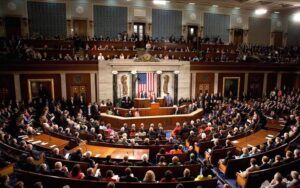
This comes at a time when the US president, in an official ceremony at the White House, signed the National Defense Authorization Act of 2026, including a clause that cancels sanctions imposed on Syria under the Caesar Act, making the decision to lift the sanctions officially effective.
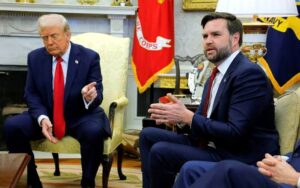
A few days ago, Trump spoke about the importance of maintaining a “strong and genuine dialogue” with Damascus, as part of US efforts to reduce tensions between Syria and Israel and reach security understandings that prevent escalation.
Despite US mediation, any progress in the negotiation process between Damascus and Tel Aviv remains contingent on complex sovereign and security factors.
Israel links its actions to what it describes as security threats and seeks to establish demilitarized buffer zones stretching from the Damascus periphery to Mount Hermon.
On the other hand, Syria stresses that any future understanding must be based on respect for national sovereignty and the withdrawal of Israeli forces from the occupied territories, refusing to recognize Israel, which has expanded its control over Syrian territory since the end of 2024.
The US Congress passed the Caesar Act in December 2019 to punish the former regime’s leaders for serious violations against civilians.
Its cancellation is expected to open the door to the return of foreign investment and aid to support a new phase in Syria, amid a regional landscape that is still open to multiple possibilities.