While the mayor of Istanbul arrest crisis continues… 15 million Turks sign petition to support İmamoğlu’s presidential bid
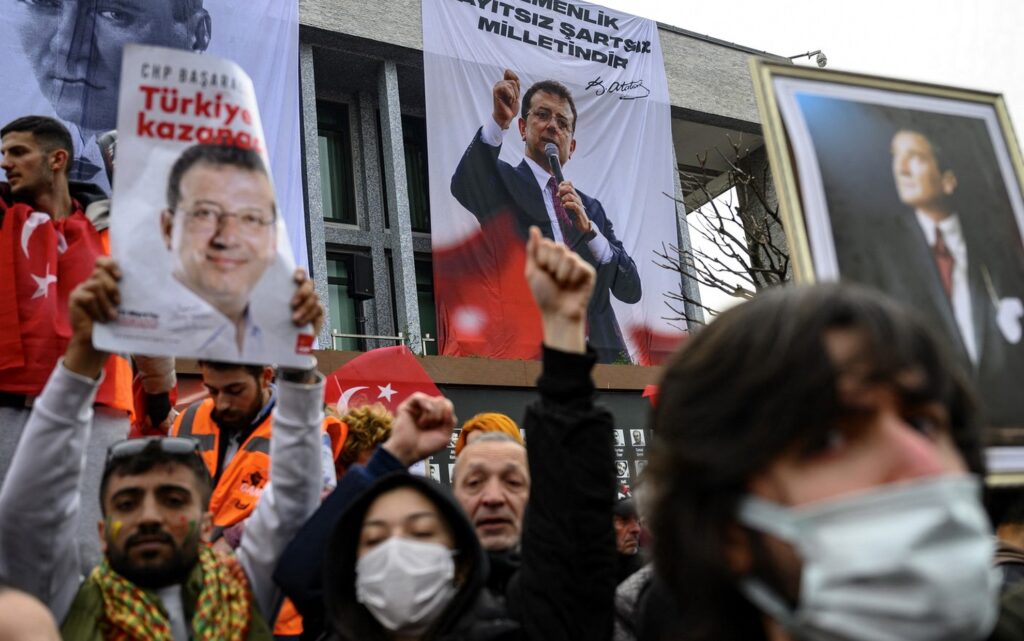
The meeting held in Türkiye to renew the term of Istanbul Mayor Ekrem İmamoğlu, who is under investigation, and to nominate him for the upcoming 2008 presidential elections was premature and had a political and propaganda framework before any other vision.
Supporters of İmamoğlu, who is currently under arrest on multiple charges, voted at a special conference in favor of his early presidential candidacy.
However, experts and observers said that the elections, which the opposition alliance had talked about to select and nominate a president in its name, were intended to conduct an election campaign in which only İmamoğlu himself was running, and in a personal capacity.
Meetings were held during which İmamoğlu’s candidacy was announced, regardless of the current status of the investigation against him.
The effort appears to have been purely propaganda, but later on Monday morning, the Turkish press announced that 15 million citizens had signed a petition supporting Mayor İmamoğlu’s candidacy for the upcoming presidential elections.
However, the legal value of the petition for this nomination doesn’t appear to be productive or effective, especially since the process falls outside the legal electoral system entirely, including holding a conference to approve İmamoğlu’s candidacy and signing a petition that has no legal value and no specific meaning, according to legal experts.
What’s striking about this recent effort is that the candidate who was supposed to compete with İmamoğlu in the decisive internal elections, former Ankara mayor Mansur Yavaş, abstained from participating in the campaign throughout the past week, which means that İmamoğlu was the sole candidate and thus wasn’t challenged by the second most prominent figure in the opposition alliance in the Turkish presidential race.
The complexities of the general political landscape surrounding the election controversy and the ongoing situation surrounding İmamoğlu’s arrest and detention have been compounded by the fact that the case has become increasingly complex and is now under the control of the judiciary and public prosecution, particularly given that at least 60 other individuals have been arrested alongside him.
Most of them are his supporters or senior officials in the Istanbul municipality, and the complaints are largely from opposition parties rather than rival parties.
The case has branched out into more than one area, with some accusations linked to administrative and financial corruption, while others relate to supporting terrorism due to a series of monitored communications with Kurdish opposition figures, some of whom reside abroad.
It’s quite clear that this issue has ignited early competition for the presidential elections scheduled for 2028, both in the media and through the Turkish press, and at the leadership level and in political debate among political parties and forces.
Although these elections are at least three years away, considerations have multiplied under the banner of early electoral competition.
It’s not yet known though, whether early presidential elections are planned, while the Justice and Development Party, the dominant ruling party supported by the long-established nationalist movement, hasn’t revealed its plans for the upcoming presidential elections.
The Turkish government maintains that justice and the law are taking their course and that the arrest and detention of the mayor of Istanbul was based on specific complaints and a decision by the independent judicial prosecution authorities.