Violent clashes in Bolivia between police and protesters against President Rodrigo Paz Pereira
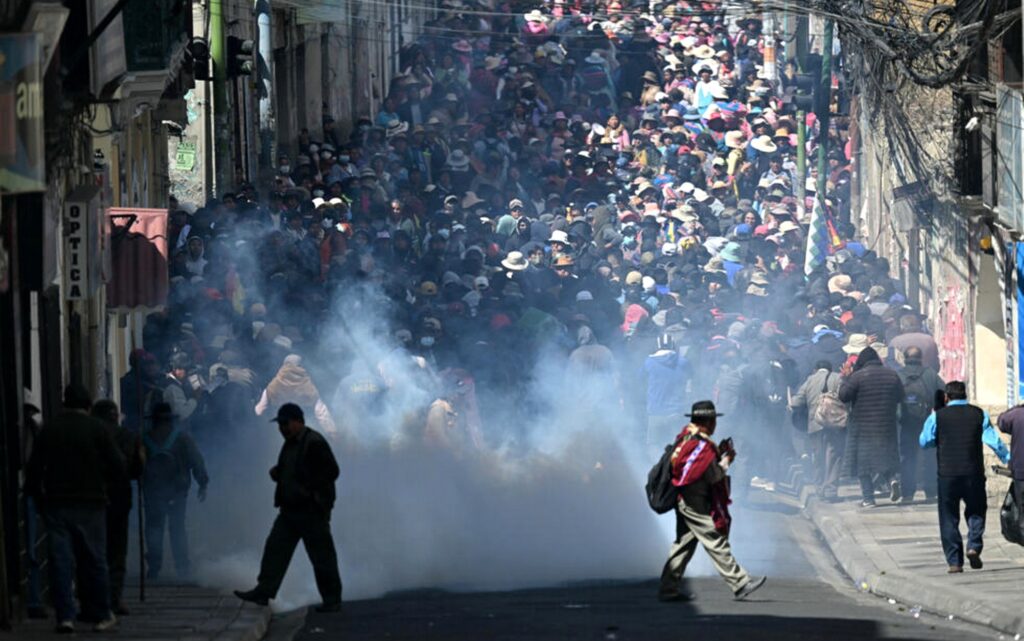
Protests against Bolivian President Rodrigo Paz Pereira intensified Monday in La Paz, just six months after he took office, with violent clashes erupting between police and demonstrators in the capital, which was cut off from the rest of the country by roadblocks.
The center-right president is facing increasing pressure from farmers, workers, miners and teachers against the backdrop of Bolivia’s worst economic crisis in four decades.
Protesters armed with homemade explosives, sticks and stones tried to reach Murillo Square where the presidential palace is located, but hundreds of riot police repelled them using tear gas.
The public prosecutor’s office announced that it had issued an arrest warrant for Mario Arguello, who heads the largest labor union and is considered one of the most prominent protest leaders, on charges including public incitement to commit crimes and terrorism.
The government accuses former socialist president Evo Morales, who was in power between 2006 and 2019, of being behind the unrest.
Economy Minister Jose Gabriel Espinosa told Bolivian Red Uno television that the protesters were political tools of Morales in his attempt to return to power.
For more than two weeks, the protests have been accompanied by roadblocks that are paralyzing access to La Paz.
On Saturday, police and army forces managed to temporarily reopen some roads leading to the capital, after clashes with protesters, but the protesters regained control of a number of them on the same day.
These roadblocks cut off the administrative capital from the rest of Bolivia, leading to shortages of fuel, food, and medicine.
The government announced it would resume efforts to reopen the blocked roads on Tuesday.
The Bolivian capital, La Paz, also witnessed several anti-government demonstrations last week in protest against fuel shortages and soaring inflation rates.
Bolivia is experiencing its worst economic crisis since the 1980s, having exhausted its dollar reserves to finance fuel subsidies that were eliminated in December, and annual inflation reached 14% in April.