Russia and China moving forward to expand economical relations with African Sahel countries
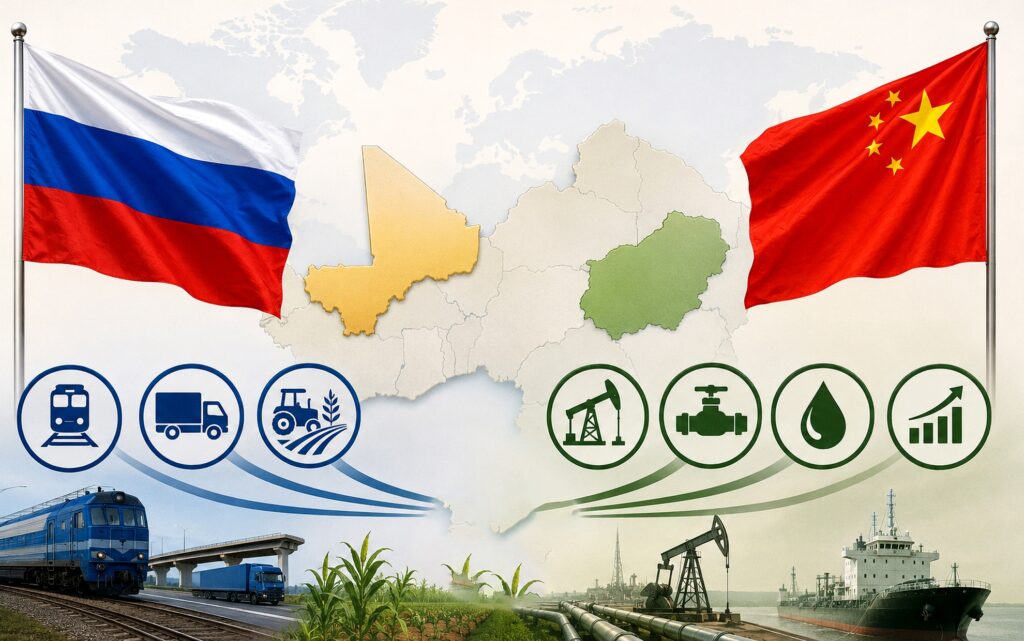
Russia and China have strengthened their economic presence in the Sahel region through a series of major agreements signed separately with Mali and Niger, focusing on infrastructure, transport, energy, agriculture, and oil production.
At the conclusion of the second session of the joint governmental committee between Mali and Russia in Kazan, Mali signed three memoranda of understanding with Moscow covering transport infrastructure, vehicle supply, and agricultural cooperation.
The first memorandum focuses on cooperation between the transport ministries of both countries, particularly in the development of railway infrastructure and technological exchange. Malian Transport Minister Dembele Madina Cissoko stated that the agreement would support the implementation of priority railway projects across the country.
The second memorandum was signed with the Russian company Kamaz and concerns the supply of vehicles for transporting goods, liquids, solids, and passengers across several sectors.
The third agreement targets the oil and agricultural sectors. Malian Minister of Industry and Trade Moussa al Hassan Diallo explained that the partnership is based on long-term structural cooperation, improving agricultural supplies according to Mali’s farming calendar, and strengthening local agricultural production capacities through technology transfer.
Mali has significantly deepened its partnership with Russia since relations with its former colonial power, France, deteriorated following the military coups of August 2020 and May 2021.
Cooperation between Bamako and Moscow has increasingly focused on security coordination and broader economic collaboration, including energy and fertilizer projects.
Meanwhile, neighboring Niger signed a set of agreements with China aimed at expanding crude oil production and exports after nearly a year of negotiations.
The agreements include the relaunch of the “Dinga Deep” and “Apollo-Yogo” oil projects with investments approaching one billion dollars. According to Nigerien Foreign Minister Bakary Yaw Sangare, the projects are expected to raise national oil production from 110,000 to 145,000 barrels per day by the end of 2029.
The new arrangements also reduce oil transport costs through the export pipeline from $27 to $15 per barrel, potentially saving Niger around $106 million annually.
As part of the deal, Niger will acquire a 45% stake in WAPCO, a subsidiary of the China National Petroleum Corporation that operates the major crude oil pipeline linking Niger to neighboring Benin. Authorities said the agreements are expected to create approximately 450 jobs for Nigerien citizens by 2030 and increase opportunities for local businesses.
The agreements were signed during an official ceremony attended by senior Chinese and Nigerien officials, including Prime Minister Ali Mahamane Lamine Zene.
The developments reflect a broader shift in the Sahel region, where military-led governments in Mali and Niger are increasingly pursuing partnerships with non-Western powers as part of policies emphasizing political and economic sovereignty.