Washington: Lobbying efforts hinder the repeal of the Caesar Act

While Syrians aspire to lift the economic sanctions imposed on Syria under the Caesar Act after the fall of the Assad regime, the path to repealing this law remains fraught with challenges, even though the bill passed through the US Senate on October 10, 2025.
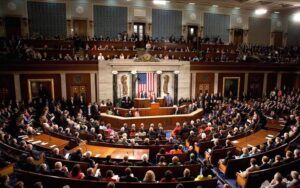
Currently, the bill requires a vote in the US House of Representatives, followed by negotiations before being submitted to President Donald Trump for his signature.
However, the bill continues to face differing opinions within the White House.
While the White House is lobbying Congress hard to repeal the Caesar Act, some pro-Israel groups and organizations in Washington, opposed to the regime in Damascus, are demanding that sanctions against Syria be maintained.
They argue that keeping the sanctions in place is essential to ensuring Israel’s security and protecting minorities such as the Alawites and Druze.
On the other hand, some Syrian-American organizations are seeking the immediate lifting of sanctions, demanding that international companies be allowed to resume economic activity in post-war Syria.
The effort to repeal the Caesar Act has made significant progress after the Senate passed the measure as part of the US Department of Defense budget last October.
However, the bill still faces pressure, particularly from pro-Israel organizations, before its brought before the US House of Representatives.
According to a senior congressional aide, the White House and the State and Treasury Departments have made their position clear on this issue: the complete lifting of sanctions.
However, some pro-Israel organizations are calling for the sanctions on Syria to remain in place due to concerns about a potential threat to regional security, particularly to minorities.
Some officials in the US administration, such as US envoy to Syria Tom Barrack, have stated that they are pushing for the lifting of sanctions, and Syrian Foreign Minister Asaad al Shaibani met with a number of senators and representatives last September to discuss this issue.
On September 15, 2025, US Senator Lindsey Graham introduced an amendment to the bill that opposes lifting sanctions without conditions.
The amendment requires the Syrian government to commit to a number of criteria, including joining the international coalition against ISIS, combating terrorism, and protecting the rights of religious and ethnic minorities.
As the repeal bill passed the Senate, these conditions became non-binding, but there is a clause that allows for the automatic reimposition of sanctions if these conditions are not complied with in the future.
Supporters of lifting the Caesar Act include the Trump administration, some members of Congress from both the Democratic and Republican parties, and Syrian-American organizations such as the Syrian American Council.
Conversely, many pro-Israel members of Congress, along with prominent Israeli organizations, oppose lifting the sanctions.
On the economic front, lifting sanctions is expected to boost investment in Syria, particularly in the energy and electricity sectors.
International capital could flow into the Syrian market, bolstering its recovery and reconstruction efforts.
However, some sanctions remain in place, preventing international companies from freely engaging with Damascus.
Depending on the course of the law, there are several possible options regarding lifting the sanctions:
- Full and unconditional cancellation: where sanctions are lifted immediately without any conditions.
- Conditional cancellation with ongoing monitoring: where the law is cancelled with the requirement of periodic reports on the progress of implementing the conditions.
- Temporary suspension with a review mechanism: where the law is temporarily suspended with a time period set to evaluate the performance of the Syrian government.
- The Minorities and unrest in some areas poses real challenges.
External pressures, including from the Israeli lobby, also complicate the decision-making process regarding sanctions.