Turkish resources: A Turkish reading of the reconciliation project with Syria
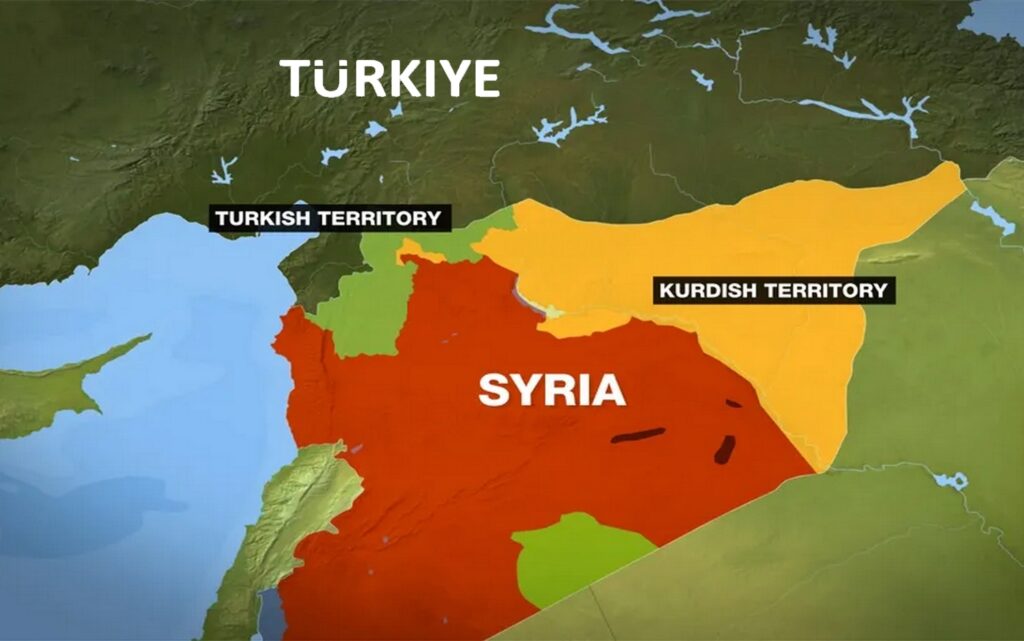
Turkish President Recep Tayyip Erdogan seems in a hurry about restoring relations with Syria, as his statements in this regard are racing against time, from announcing his readiness to meet with Syrian President Bashar al Assad, to talking about an invitation that could be extended to Russian President Vladimir Putin and Assad to visit Türkiye, and finally his talk about waiting for Syria’s step to meet with a similar one, to meet with Assad, in private.
While waiting for the disclosure of the nature of the hoped-for Syrian step, which may be Damascus’ approval of Ankara’s proposal to pledge verbally, with a Russian guarantee, to withdraw from Syria, after the written pledge was the precondition set by Assad to meet Erdogan, Turkish analyses continue on the normalization issue between the two countries, which stores many regional and international complexities, and at the same time hopes of gradually dismantling it.
According to an article at the Turkish Cumhuriyet newspaper, which leans to Turkish opposition, that for years, There have been calling for the withdrawal of Türkiye from Syria and the defense of Syria’s territorial integrity, but others have been saying that the territories that Türkiye entered there have become his, and a local administration has been established there, and postal services have been provided, while the mergers continue and there is no need to withdraw.
In other word, Erdogan’s attempts to expand Türkiye were impossible.
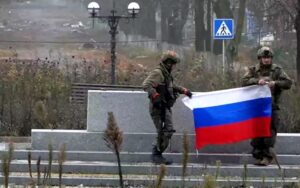
Erdogan supported armed groups and comically turned the Free Syrian Army into a Syrian National Army, and he still pays them salaries, but they are hostile to the Turks, and now they are burning their flag!
As for Ahmet Davutoglu, Syria is “the rest of the Ottomans”.
Davutoglu was living in the imperial era, ignoring the era of the nation-state and the existence of the United States and Russia, and Erdogan believed that the United States was working to divide Syria, and believed that Türkiye would take its share of the partition process.
They didn’t pay attention to the objection of Russia and Iran to the policy of the United States and Türkiye, because all the minds of the AKP (Justice and Development Party) saw only the US, which is the force capable of doing what it wanted, at a time when it was establishing a Kurdish entity.
Now, 13 years later, Erdogan comes from Germany to say that he wants to go back to the way relations were, and meet Assad as a family!
Isn’t it too late, Mr. President?
Hostility has become a name for big losses.
Waking up from the dream and starting to return to realpolitik is undoubtedly good.
The Turkish-Syrian normalization issue is surrounded by many regional and international complexities, and at the same time hopes for its gradual dismantling.
After the recent events in Northern Syria, the Turkish government blamed the Syrians for the events against the Turkish army in the Syrian opposition areas is misleading, because the government is responsible for all the events that have occurred and could occur in Türkiye, regarding the refugee problem.
What are the fatal mistakes that the Turkish government had made, according to Cumhuriyet newspaper?
1- The Turkish government opened the borders, sent jihadists to Syria, and brought refugees to Türkiye.
2- The Turkish government prevented refugees from continuing on the road to Europe and made Türkiye a warehouse for them in exchange for money from the EU.
3- The Turkish government consistently rejected the opportunities for normalization that it had with Damascus.
Thus, Erdogan’s goal was clear: to use the refugees as part of the Turkish nation project, recruit them into the Free Syrian Army and establish a Turkish sphere of influence in northern Syria.
This was done in full cooperation with the imperialist policies of the United States and the European Union.
The Turkish government’s recognition of the source of the problem, rather than its consequences, can save us from the trap, through serious work on normalization, which will lead to:
1 – Syria’s control over all its territory, and the elimination of the possibility of a Kurdish state there.
2- Liquidating the jihadist organizations sent to overthrow Assad.
3- Dissolving the Free Syrian Army.
4- The return of refugees to Syria.
After the beginning of the Arab Spring, the Turkish government thought that it will gain a massive influence in the middle east, especially Syria, by removing Assad, and bring certain wing to establish a new Syrian governments leans follow Ankara’s orders, and all that was with US and EU approval.
However, things got out of control, by the emergence of ISIS, followed by the Kurdish militias taking control vast area in north east Syria, including large share of the Syrian-Turkish boarders, with all its resources, backed by the US.
Thus, Türkiye, had to deal with a big threat to its national security.
On the other hand, Russia and Iran were an umbrella to protect the exhausted Assad.
Returning to the current situation, some exports thinks that the reconciliation attempts now is because Russia doesn’t want to have direct clash with the US in Syria, and Assad on the other hand, only sees Türkiye just a neighboring country occupying lands in Syria and Assad wants Türkiye to withdraw from the areas where its soldiers are.
Also, it’s worth to say that the Russian mediation is a maneuver aimed at distancing Türkiye from the west and in particular NATO, which is the work that Russia was trying to do for long.
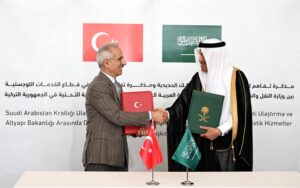
In conclusion, the Turkish-Syrian relations are complex, and it’s not like the reconciliation that Türkiye reached with Egypt, Saudi Arabia and the UAE.
Also, there is a fact that, forces at the east of the Euphrates, and Syrian opposition, and area like Idlib, all wants to disrupt any reconciliation efforts.
Erdogan said, “the shuttle of relations between Türkiye and Syria is great, but we must start from somewhere”.
He is considering that Assad is between two options: either continue the current balance of terror, or start normalizing relations quickly.
Also, with the current Israeli threat which is increasing day by day, from Gaza to Lebanon and then Syria, Moscow fears that things will slip out of control in Syria in the event of a full-scale war.
Of course, the reconciliation between Türkiye and Syria will ease the blockade that Syria faces, and it will help to rebuild the country.
Türkiye and Syria need to cooperate on many issues, some related to Damascus, and others related to Ankara, most importantly preventing the establishment of a Kurdish entity.
If Erdogan and Assad take a step in this regard, they will form a new equation, and the creation of a new Syria will begin.