The Sukhoi 35 deal: Has Iran become a full ally of Russia?
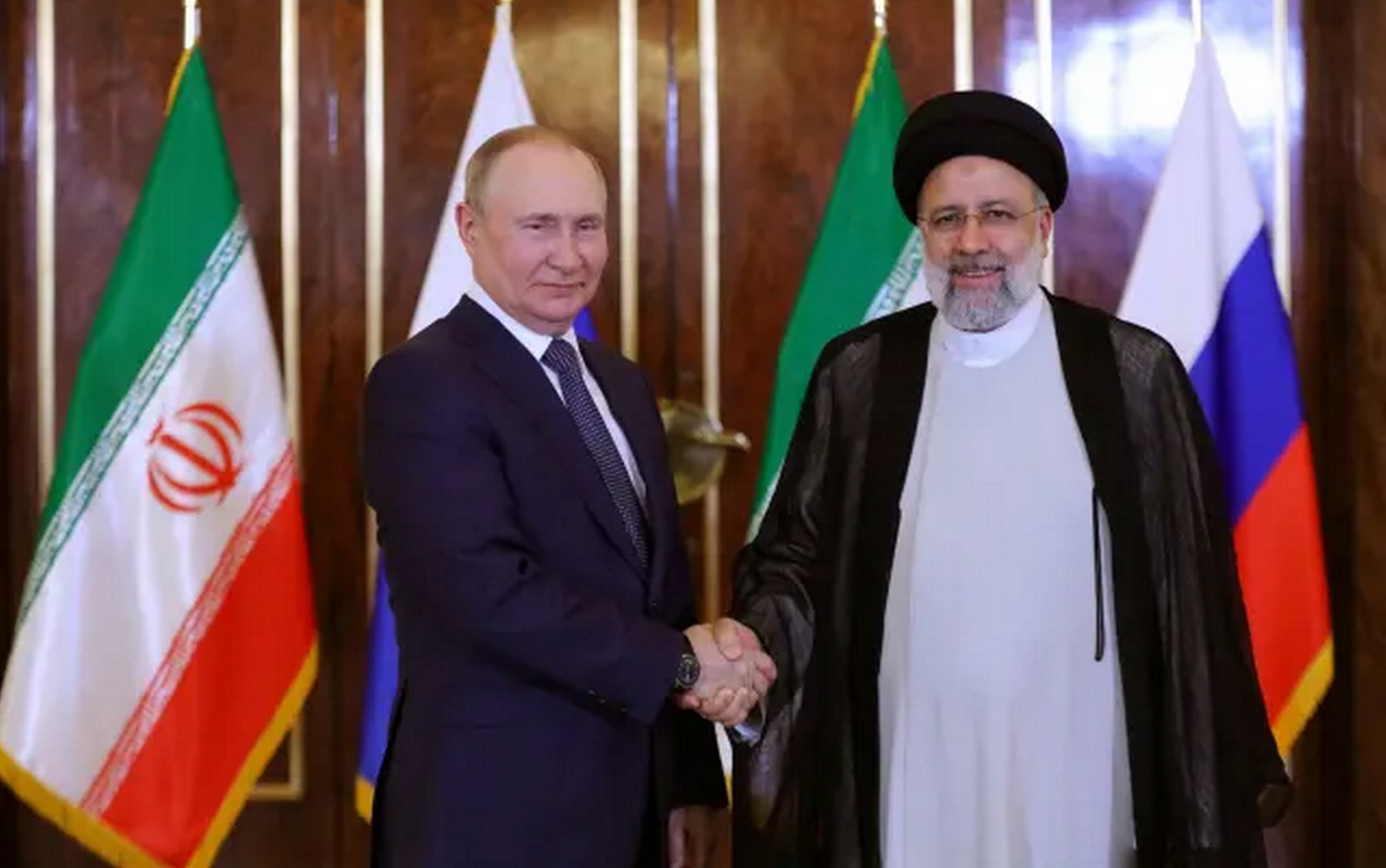
The Russian-Iranian Sukhoi 35 deal has re-emerged, amid reports about the possibility of Tehran importing these advanced Russian aircraft in exchange for supplying them to Moscow with drones and ballistic missiles.
This deal raises questions about its impact on the military balance in the region between Iran and between the Gulf states and Israel, as well as the possibilities of establishing Russian-Iranian military alliance.
Russia’s best fighter jets, the Su-35 Flanker-Es, could become part of the Iranian Air Force in a swap deal with Iranian drones and missiles, the US says.
According to US officials, Iranian pilots received training on the Su-35 in Russia in the spring, suggesting that Iran may begin acquiring the aircraft within the following year.
The exercise is part of what the United States has described as an unprecedented level of military and other technology support flowing from Moscow to Tehran.
The United States has said Moscow is providing Iran with a range of weapons systems, including unidentified helicopters, air defense systems and other support systems, such as the Sukhoi-35 training.
The Russian government is allegedly seeking hundreds of Iranian short-range ballistic missiles as part of this trade and more kamikaze drones.
Moreover, Moscow wants to work with Iran to build weapons, and one possible cooperative project is to establish a production line of unmanned aircraft in Russia.
The latest allegations are supported by US intelligence assessments, according to White House National Security Council spokesman John Kirby, who also stated that Russia is providing Iran with unprecedented military and technology assistance that is reshaping their relationship into a full defense partnership.
A senior administration official said the partnership poses a threat not just to Ukraine but to Iran’s neighbors in the region: “We’ve shared this information with partners in the Middle East and around the world”.
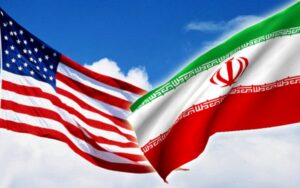
The US accusations are a deliberate attempt by the Biden administration to isolate Russia on the global level.
In this case, it may be directed at the Arab countries, especially the Gulf countries, which were keen to maintain their relations with Russia after its invasion of Ukraine, which angered Washington.
Hence, it may seek to intimidate the Gulf countries from a Russian-Iranian alliance, to distance them from Moscow, according to a report by the Eurasian Times.
However, regardless of the fact that the potential US statements may aim to drive a wedge between Russia and the Gulf states because the latter maintains its relationship with Russia despite Western sanctions, the rapprochement between Tehran and Moscow seems natural given that both countries are under a suffocating Western blockade.
Kirby stated that the United States will use the resources at its disposal to detect and stop these activities; because the arms transfers were against UN Security Council resolutions.
(Although, in effect, the sanctions imposed on Iran regarding arms exports have ended).
Recently, the Biden administration announced sanctions against Iranian companies and organizations involved in shipping Iranian drones to Russia for use in Ukraine.
Iranian drones are of particular importance to Moscow in light of its delay in this field, in addition to being cheap and thus reducing the consumption of expensive and technologically complex ammunition and missiles, of which Moscow is believed to be in short supply.
The White House has accused Iran of supporting Russia’s war effort, but hasn’t given up hope of reviving the 2015 Iran nuclear deal, which the Trump administration scrapped in 2018.
The Joint Comprehensive Plan of Action, often known as the Joint Comprehensive Plan of Action, is supposed to exempt Tehran from billions of sanctions in exchange for Tehran agreeing to reduce its nuclear program to the levels specified in the 2015 agreement.
Possible Iranian Su-35 deal, has it changed the balance of power in the Middle East?
The United States is concerned about the potential Iranian Su-35 deal, as these fighters will significantly upgrade the air combat capabilities of the Iranian Air Force.
The Iranian Air Force is outdated, with the exception of a few Russian MiG-29 Fulcrum fighters purchased in the 1990s, Iran has not purchased any new combat aircraft.
As a result, its Air Force relies primarily on US-made Cold War-era F-4 Phantom II, F-14 Tomcat, and F-5E/F Tiger II and locally modified versions of those aircraft.
Iran acquired some Dassault Mirage F-1 planes of the former Iraqi Air Force, which Saddam Hussein transferred to the country during the Desert Storm operation, the Kuwait Liberation War in 1991 to protect them from US bombing, then Tehran seized them and considered them compensation for the losses of the Iran-Iraq war.
Thus, Iran’s air inventory includes many outdated Soviet, French and Chinese aircraft, and Tehran finds it difficult to repair and operate these aircraft depending on its own capabilities.
Russia may offer to Tehran the Sukhoi contracted by Egypt
Last September, Iran first indicated that it might buy new planes from Moscow.
At the time, Gen. Hamid Vahidi, the supreme commander of the Iranian Air Force, admitted that his country was in active talks with Russia about purchasing new fighter jets.
He didn’t name the specific aircraft but referred to them as 4++ generation types.
The Russian government may be able to expedite the transfer of such aircraft given that a batch of Su-35SEs originally built for Egypt has been in Russia due to threats of US sanctions blocking the Egyptian deal.
These combat aircraft can be transferred to the Iranian Air Force.
Babak Taghvi, a defense analyst of Iranian origin who lives in the West, previously said that Iran and Russia will sign a 20-year security and defense cooperation agreement worth $10 billion in January 2022, which will include the purchase of Su-35 fighters and S-400 missiles.
The Iranian Mehr Agency repeated the same reports, citing Western websites.
According to the information mentioned by this defense analyst, the agreement will include the purchase of at least 24 Su-35SE heavy fighters, many of which have already been manufactured; because it was part of an incomplete order by Egypt.
Despite all this, it is unclear to what extent the regional balance of power in the Middle East would change even if Iran acquired the 24 Su-35SEs previously slated for Egypt.
The Middle East region often makes headlines because some of its countries have some of the most advanced aircraft in the world.
For example, Israel has fifth-generation F-35I Adir fighters, which routinely perform maneuvers simulating the bombing of Iranian sites, in addition to a large fleet of American F-15s and F-16s.
On the other hand, Saudi Arabia has a large number of F-15SA Advanced Eagles.
Also, the ban on Iran’s purchase of military equipment nearly two years ago has expired, and there is little evidence that Iran is actively pursuing any major arms purchases, except for Western reports that may be in the context of propaganda against Tehran and Moscow.
Military aviation expert Tom Cooper (who has written extensively on the Iranian Air Force) explained in 2016 how Iran’s regime, and relations between the IRGC and the regular armed forces, impede Tehran’s conclusion of large arms deals, especially potential aircraft purchases such as the Iranian Su-35.
The reason for this may be the desire of the Revolutionary Guards not to increase the weight of the air force, which is characterized by a nationalist rather than an Islamic character in the Iranian power system.
Rivalries would make such major acquisitions highly unlikely, including a possible Iranian purchase of Sukhoi jets originally built for Egypt, according to Forbes magazine, citing the American expert.
There is also another reason that reduces the chances of Iran purchasing the Su-35 aircraft, which is that the Iranian military doctrine focuses on what can be called asymmetric warfare.
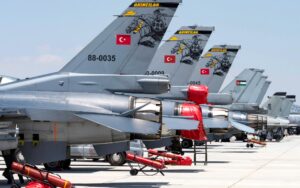
In the face of much better armed enemies and neighbors in the field of aircraft and tanks in particular, such as the Gulf states, Israel and Türkiye, Iran doesn’t enter into competition in the same areas of armament, but rather focuses on various deterrent weapons such as ballistic missiles, the use of Shiite militias, lightning naval attacks, and most recently, drones.
The need for an asymmetric war pattern in the face of US increases, as no matter how many planes and tanks Tehran buys, it will not withstand US planes and tanks, and its fate may be a horrific massacre, as happened to Iraqi planes and tanks in the war to liberate Kuwait in 1991.
On the other hand, the fortification of military installations, in a manner that makes it difficult for the Americans to target them, and the concealment of forces among civilian targets, the deployment of missiles in camouflaged ways, and the use of small boats, Shiite militias, and the Revolutionary Guard in guerrilla attacks, on land and sea, are all methods that may be more effective in confronting the overwhelming US military superiority, and even Israeli supremacy.
The Lebanese Hezbollah succeeded in employing this strategy in the 2006 Lebanon War against Israel, despite Lebanon’s huge human losses in that war, and Iran is betting on it, preferring it to be in a low-intensity war or skirmishes.
Because the outcome may be different in any open confrontation with the US.
However, the Iranian Su-35 deal may be part of a broad attempt to modernize the country’s military forces with Russian support in the long term.
It may also be a launch for a Russian-Iranian military alliance, or at least in the fields of military industries and equipment.
The United States talk about the Iranian Su-35 deal may be a tool to put pressure on Iran and pave the way for a military strike on it by Israel or the United States.