The Kremlin: There are no discussions about a general mobilization to support the country’s military campaign in Ukraine
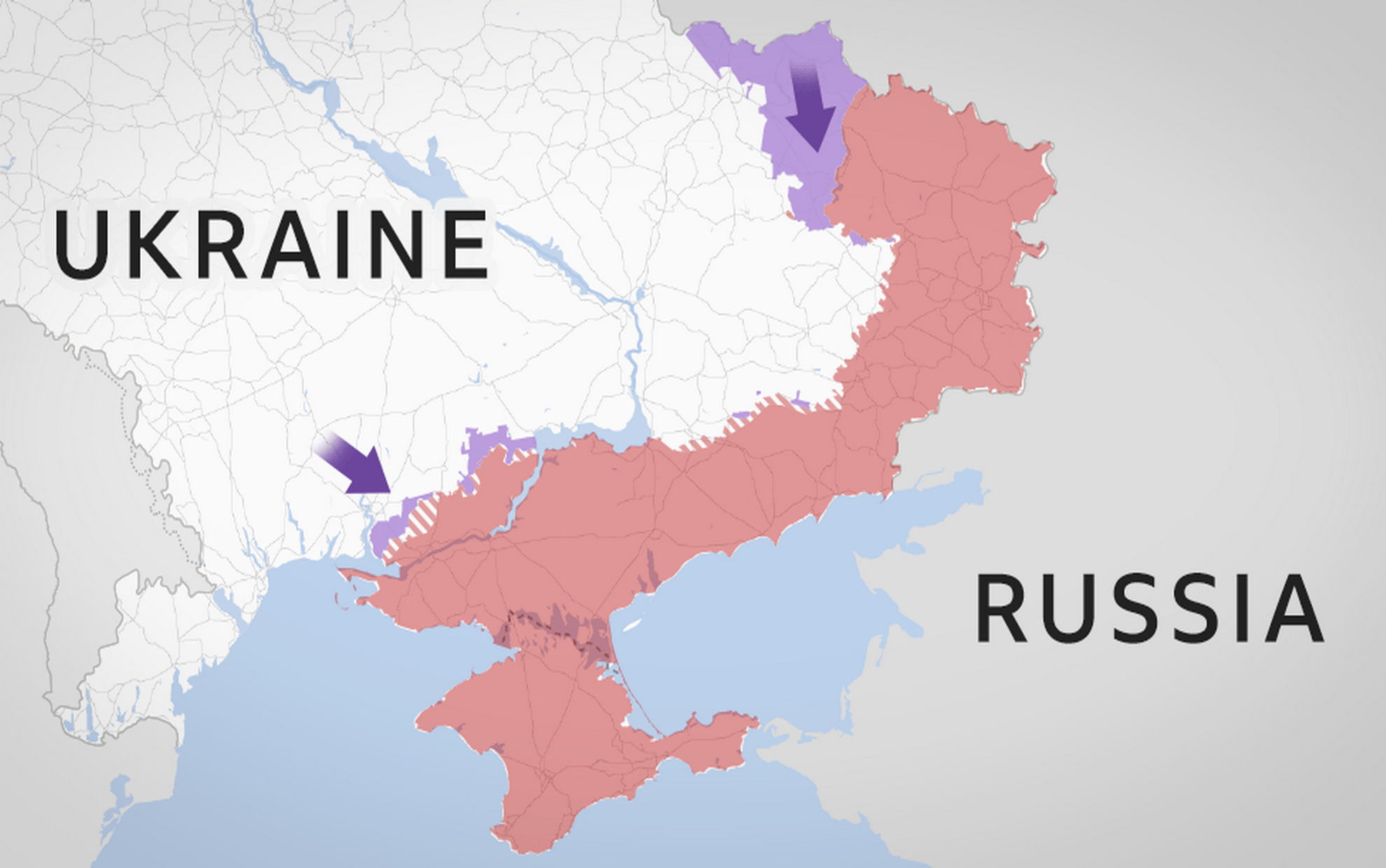
The Kremlin said on Tuesday there was no discussion there of declaring a general mobilization to support the country’s military campaign in Ukraine, days after a surprise Ukrainian attack forced Russia to withdraw from almost all of the Kharkiv region.
“At the moment, no, there is no discussion of that,” Kremlin spokesman Dmitry Peskov told reporters in response to a question about a member of the Russian parliament saying that he was calling for a mobilization declaration.
Asked about nationalist commentators’ criticism of the country’s leadership on the Internet and their demand for mobilization, Peskov said that this is an example of “pluralism” and that Russians as a whole continue to support President Vladimir Putin.
“The Russians support the president, and this is consistent with the attitude of the people,” he added. “People are sympathetic to the decisions of the head of state”.
He continued, “With regard to other views, critical views, as long as they are within the limits of the law, this is pluralism, but the thread is very, very fine, one has to be careful here”.
Military commentators who usually support the campaign reacted angrily after the Russian Defense Ministry said on Saturday it was carrying out a withdrawal from the Kharkiv region as part of what it called a regroupment of forces, which followed a surprise counter-attack by Ukrainian forces last week.
Many pointed out that only a comprehensive general mobilization would correct the situation.
For its part, the Russian army announced on Tuesday that it was launching “intense strikes” on all fronts in response to a counter-attack by the Ukrainian forces, which the Kremlin accused of committing atrocities in the areas it regained control, while Kyiv blames “up to two hundred war crimes a day” by the Russians.
So far, the Russian bombings have killed eight people and wounded 19 within 24 hours among the residents of the Kharkiv (northeast) and Donetsk (east) regions, according to the Ukrainian presidency.
For its part, the Ukrainian Army Chief of Staff confirmed that “Ukraine records up to two hundred war crimes committed every day by the Russians” on its territory, adding that the occupiers “planted mines in more than 70,000 square kilometers in ten Ukrainian regions”.
On the other hand, Russia accused the Ukrainian soldiers of revenge against civilians in the areas that they regained control in recent days.
“According to our information, numerous punitive measures have taken place against the residents of the Kharkiv region, people are subjected to torture and ill-treatment,” Kremlin spokesman Dmitry Peskov said, “This is appalling”.
“The Russian air, ballistic and artillery forces are carrying out massive strikes on units of the Ukrainian armed forces in all areas of operation,” the Russian Defense Ministry announced on Tuesday.
She noted bombing operations near Sloviansk, Konstantinovka, and Bakhmut in eastern Ukraine, in the Mykolaiv and Zaporizhia regions in the south as well as in Kharkiv in the northeast, where Ukraine led a violent counterattack, forcing Russian forces to withdraw from most of the region.
The Kremlin had previously confirmed on Monday that the Russian offensive, which began on February 24, will continue “until its objectives are achieved,” noting that there are “no prospects for negotiations now” between Moscow and Kiev.
On Monday, Ukraine talked about new military successes, stressing that it had reached the Russian borders and regained the equivalent of seven times the area of Kyiv in one month.
The Ukrainian army first announced a counterattack in the south, before making a lightning breakthrough in the northeast.
“Since the beginning of September, our soldiers have liberated 6,000 square kilometers of territory in eastern and southern Ukraine,” Ukrainian President Volodymyr Zelensky said Monday evening, stressing that they “continue to advance.” On Sunday, Kyiv did not talk about more than three thousand square kilometers “liberated”.
The Institute for the Study of War, based in the United States, clarified on Tuesday that the Russians “are unable to consolidate the new front line after the Ukrainian gains in the eastern Kharkiv region, and they flee in large numbers from the region or spread again on other axes”.
The institute said, “Scenes spread on social media showing queues of cars stretching for kilometers near Stastia and Stanitsya Luhanska”, on the borders of the “Luhansk People’s Republic” declared unilaterally by pro-Russian separatists in 2014, and near the Russian border.
On the entire front, the Ukrainian army announced on Monday that it “succeeded in expelling the enemy from more than twenty sites” within 24 hours.
On Monday evening, the Director of the Ukrainian Presidential Office Andrei Ermak published a video recording explaining that “the 14th Mechanized Brigade has arrived at the border of the Kharkiv region with Russia.
This is the village of Ternova, located five kilometers from the Russian border.
“Obviously we’ve seen a lot of progress from the Ukrainians, particularly in the northeast,” US Secretary of State Antony Blinken told a news conference Monday in Mexico City, but “it’s too early to know exactly where that’s going”.
He noted that “the Russians deploy very large forces in Ukraine, equipment, weapons and ammunition, and continue to use them indiscriminately not only against the Ukrainian armed forces, but against civilians and civilian infrastructure”.
Also in the Kharkiv region, the Ukrainian Prosecutor’s Office announced Monday that the bodies of four civilians bearing “traces of torture” were discovered in the village of Zalznychny, which the Ukrainian army recently recaptured from the Russians.
He added, “The preliminary investigation indicates that the Russian soldiers killed the victims during the occupation of the village”.
Russian forces have repeatedly been accused of abuses in Ukraine.
On the international scene, Finnish Prime Minister Sanna Marin called on Tuesday for the unity of the European Union and for the imposition of new sanctions against Russia in the face of the “blackmail” it practices in the field of energy.
European Union energy ministers will meet on September 30 to assess emergency measures proposed by the Commission aimed at curbing the rise in gas and electricity prices caused by the war in Ukraine.
For its part, Ukraine pledged on Tuesday to liberate its entire territory after expelling Russian forces in the northeast of the country and raising flags over the battle-torn towns.
It called on the West to speed up its arms deliveries to support its important advance.
Since Moscow abandoned its main stronghold in northeastern Ukraine on Saturday, in its worst defeat since the early days of the war, Ukrainian forces have recaptured dozens of towns in a stunning shift of power on the battlefield.
Ukraine’s Deputy Defense Minister Hana Maliar said from Balaklia, an important military supply center that Ukrainian forces seized late last week that 150,000 people have been liberated from Russian rule in the region.
She was speaking in the central square where the Ukrainian flags were raised.
She told Reuters earlier that fighting was still raging elsewhere in the northeastern Kharkiv region, but that Ukrainian forces were making significant progress because they were highly motivated and their military operation was well-planned.
“The goal is to liberate the Kharkiv region and beyond, that is all the territories occupied by the Russian Federation,” Maliar said on the road to Balaklia, which is 74 km southeast of Ukraine’s second largest city, Kharkiv.
In a village northwest of Balaklia, tears filled Tetiana Sinovuz’s eyes as she explained how Ukrainian forces liberated them from the seven-month occupation.
“We thought nothing would be left of the village, but we went out and the village was complete!
“She was speaking in front of what she said was the only building destroyed in what looked like a brutal battle, the school controlled by the Russians.
The trees on the road leading to the village and a cement factory witnessed the battles.
There were abandoned Russian vehicles, including a military truck with a shattered windshield.
Ukrainian President Volodymyr Zelensky said in a video speech that the West should speed up the delivery of weapons systems, calling on Ukraine’s allies to “strengthen cooperation to defeat Russian terrorism”.
Ukraine’s Foreign Ministry pointed to Germany, saying in unusual, strongly worded language that it was disappointing that Berlin didn;t provide Leopard tanks and Mardier infantry fighting vehicles.
On Monday, German Defense Minister Christine Lambrecht refused to send tanks unilaterally.
Some felt that these statements leave the door open to the possibility that Berlin will do so within the framework of a European consortium.
The German Foreign Ministry did not immediately respond to a request for comment.
Since the Russian invasion on February 24, Washington and its allies have supplied Ukraine with billions of dollars in weapons that Kyiv says have helped limit Moscow’s gains. Russian forces control about a fifth of the country in the south and east.
Ukraine is now on the offensive in both regions.
Maliar said Ukrainian forces are consolidating their gains by checking out subversive groups.
The military said Russian forces were bombing parts of recaptured Ukraine in the Kharkiv region and launching attacks further south in the Donetsk region, which Moscow is trying to capture for separatist proxies.
The report of the Ukrainian General Staff stated that Ukraine had repelled the attacks of the Donetsk region, while Denis Pushilin, the president of the separatist Donetsk People’s Republic, said that his forces were repelling the Ukrainian attacks and that he believed that the situation would improve.
A senior US military official said earlier that Russia had largely given up territory near Kharkiv in northeastern Ukraine and had withdrawn many of its soldiers across the border.
A video recording issued by the Ukrainian border guards showed what it said were Ukrainian soldiers liberating the town of Vovchansk near the country’s border with Russia, burning flags and tore a poster that read “We are one with Russia”.
A Moscow-based diplomat said progress in the Kharkiv region was encouraging, but expressed caution about the next steps.
“We shouldn’t be racing ourselves,” added the diplomat, who asked not to be identified.
He said the main questions were whether Ukrainian forces would be able to move into the Luhansk region, adjacent to Kharkiv, and the impact on Russian morale in the south, where Ukraine’s progress remains slow.
Serhiy Gaidai, the Ukrainian governor of the Moscow-controlled Luhansk region, said he expected a major Ukrainian attack there.
US Secretary of State Antony Blinken said on Monday that Ukrainian forces had made significant progress with Western support to ensure they had the equipment they needed.
Zelensky said Ukraine had reclaimed about 6,000 square kilometers of territory, twice what officials said on Sunday.
The area of Ukraine’s territory is about 600,000 square kilometers, which is roughly equivalent to the combined area of the West Bank and Gaza Strip.
Kremlin spokesman Dmitry Peskov also said that there was no discussion of a general mobilization within Russia to bolster the operation in Ukraine, which he said would continue until it achieved its goals.
Peskov told reporters that nationalist online commentators’ criticism of the Russian leadership and their demand for mobilization is an example of “pluralism,” adding that Russians on the whole continue to support Putin.