The Israeli army establishes 9 permanent military sites in Syrian territory
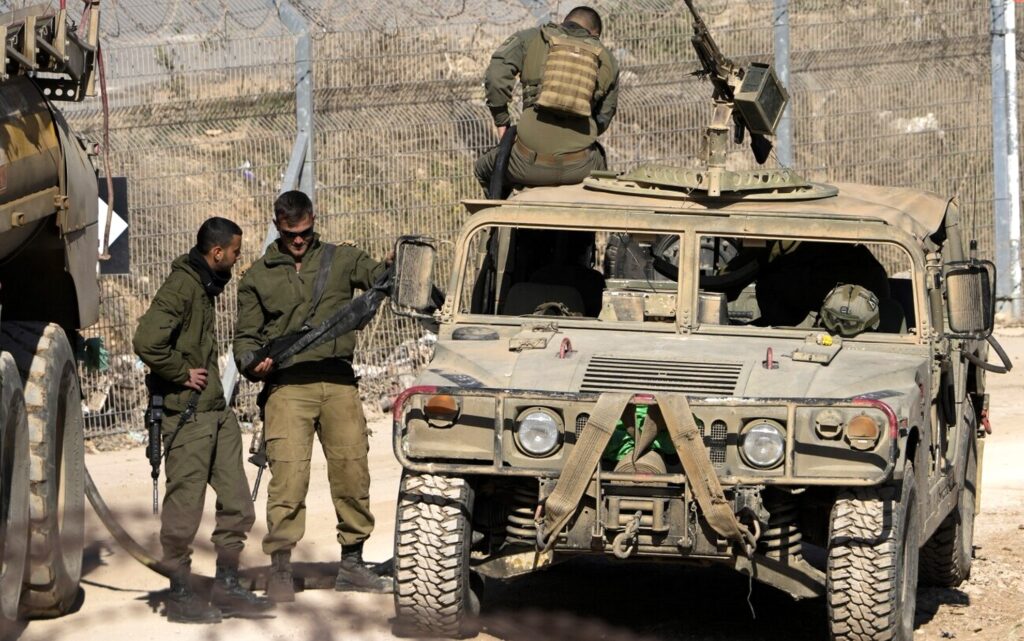
The Israeli army has established 9 permanent military positions inside Syrian territory as part of Operation Arrow of Bashan, which was launched about two months ago in Syria.
These positions are concentrated in an area extending from the Syrian Mount Hermon to the border triangle south of the Golan.
This move came after the Israeli Air Force bombed hundreds of Syrian targets, including aircraft, the naval fleet, air defense systems and missiles, which reduced Syrian military capabilities by up to 80%.
According to Israeli military sources, the new sites have been equipped to accommodate the presence of Israeli forces for long periods, as they have been provided with all the necessary means to confront the difficult weather conditions, especially during the winter.
The sources confirmed that the Israeli army is ready to remain in the area as long as necessary, without specifying a clear time period.
During a visit to Syria’s Mount Hermon about six weeks ago, Israeli Prime Minister Benjamin Netanyahu indicated that the military presence in the area would continue until at least the end of 2025.
He added that this step is part of an early action strategy, especially in light of the deteriorating situation in Syria and the ambiguity about the identity of the parties that might pose a threat to Israel.
The military sites were distributed among two main areas: two of them in the Syrian Mount Hermon, and seven in the occupied Syrian Golan.
Reports indicate that these sites were designed as observation and security points for the buffer zone between Syria and the Golan, providing protection for the northeastern region of Israel.
In addition to military missions, the Israeli forces seek to build relationships with the residents of nearby Syrian villages, while minimizing direct contact as much as possible.
The Israeli forces’ daily tasks include searches and raids in areas previously controlled by the Syrian army, as well as collecting weapons from nearby villages.
Some residents have voluntarily surrendered their weapons, while the forces are still collecting smaller quantities two months after the start of operations.
The Israeli army tries to avoid entering Syrian villages as much as possible, to avoid creating tensions similar to those in the West Bank.
The forces also seek to minimize disturbances to the local population, and to maintain their normal lives without imposing severe restrictions.
Despite the calming messages sent by Syrian President Ahmed al Sharaa to Western countries, Israeli forces are still maintaining a state of alert to confront any potential threats, especially with the presence of ISIS elements in the region, which increases the possibility of attacks.
Despite the lack of accurate intelligence about imminent attacks, the Israeli army confirms that it will continue to maintain its readiness and remain in the buffer zone until the nature of the potential threats becomes clear.