The Hill: Trump rushes to rebuild tariff wall after Supreme Court rejects powers

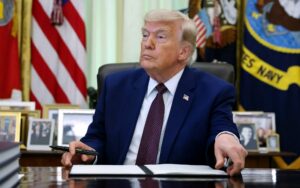
US President Donald Trump is rushing to rebuild the tariff wall after the Supreme Court ruled that his use of the International Emergency Economic Authorities Act to impose tariffs on US trading partners was illegal.
The Court affirmed that the International Economic Emergency Powers Act allows the president to prohibit or restrict certain aspects of foreign trade, but doesn’t give him the right to set tariffs, which fall within Congress’s exclusive constitutional authority with respect to taxes and spending.
But the court’s decision comes as Trump prepares to deliver his State of the Union address for the first time in his second term, and is therefore a major legal blow to the president, and a victory for companies that may become eligible to refund previous fees.
Still, Trump still has the power to impose new tariffs, and he has warned his trading partners not to celebrate the decision, stressing that he will confront any country that tries to play with the ridiculous Supreme Court decision by increasing the tariffs further.
Trump plans to use other provisions such as Section 122 of the 1974 Trade Act to impose tariffs of up to 10 or 15% on imports, as well as invoking Section 301 for unfair trade practices and Section 232 on national security, which gave him broad powers to expand tariffs on cars, metals, furniture, and even oil, gas and medicine.
Experts point out that the new tariffs are likely to be upheld in court, because courts usually avoid interfering with the president’s national security assessments, but Trump’s moves to reimpose tariffs increase uncertainty in global trade, as some countries may face higher tariffs, while others benefit from a temporary tariff reduction, which could increase tension and volatility in international trade flows.
Edward Alden, a senior expert at the Council on Foreign Relations, noted that the long history of the 301 tariffs means that Trump’s new tariffs are likely to continue, even if he challenges them in court, adding, “I don’t see the courts questioning the executive branch’s judgment under Section 301”.
Trump appears to be continuing to strengthen his protectionist policies despite the recent legal hurdle, relying on broader powers that allow him to control tariffs and continue his confrontations with US trading partners.