Syrian authorities form the first parliament after Assad’s ouster
The process of selecting Syria’s first parliament after the overthrow of Bashar al Assad ended Sunday, amid criticism of the mechanism that gives transitional President Ahmed al Sharaa the power to appoint and hire its members and excludes representation from three provinces for security reasons.
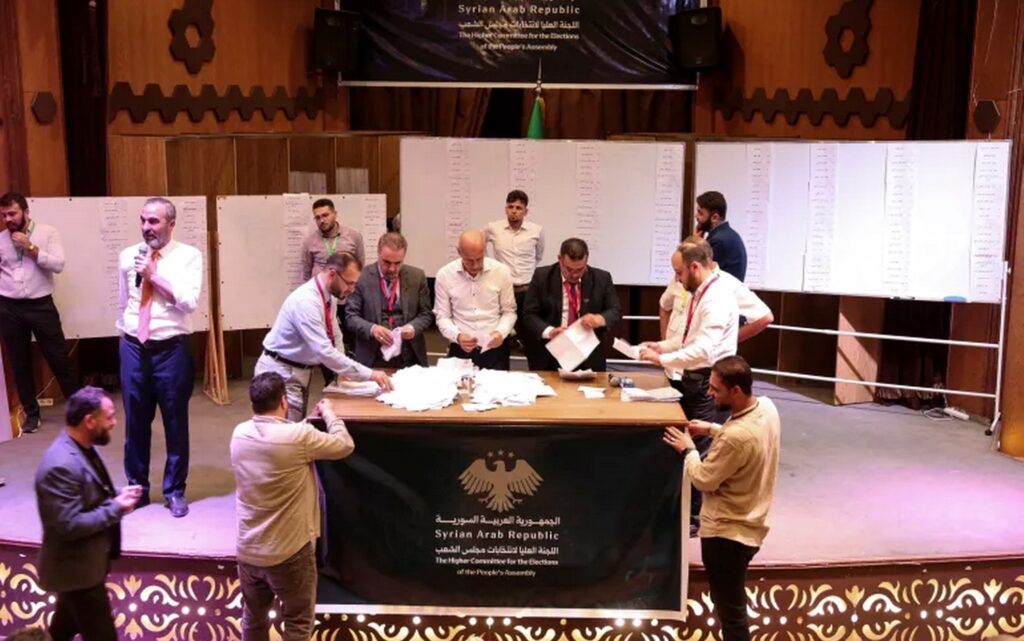
Nawar Najma, spokesperson for the Supreme Committee for People’s Assembly Elections, announced that “voting has concluded in all Syrian governorates, and the vote counting process is still ongoing”.
Preliminary results are expected to be announced later Sunday, and the final list on Monday.
Following the ouster of Assad on December 8, the government took a series of steps to manage the transitional period.
These included dissolving the People’s Assembly and signing a constitutional declaration that defined the transitional period as five years and stipulated a mechanism for selecting a council to exercise its powers until a permanent constitution was drafted and elections were held on its basis.
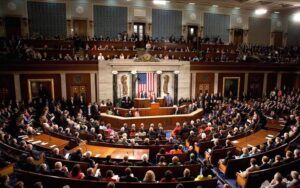
The parliament, whose term is renewable for thirty months, will be formed based on a mechanism specified in the Constitutional Declaration, rather than through direct popular elections.
Under the mechanism, regional bodies formed by a higher committee whose members are appointed by Ahmed al Sharaa will elect two-thirds of the council’s 210 members, while the president will appoint the remaining third.
In number, 1,578 candidates, 14% of whom were women, competed for council seats, according to the High Elections Committee.
Syrians have openly criticized the process of forming the new parliament.
Civil society organizations have also denounced the fact that Ahmed al Sharaa assumes all powers, despite the lack of representation of the country’s ethnic and religious communities.
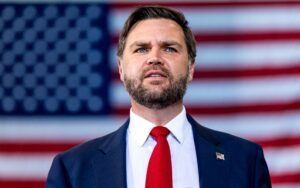
“It’s true that the electoral process is incomplete,” Sharaa said in a speech at the National Library to members of the electoral committee in Damascus on Sunday.
“But it’s a moderate process that is consistent with the current situation and circumstances in Syria, and is also consistent with the transitional phase,” he added.
Sharaa had previously considered the elections “a temporary step until the security and political environment is in place for direct elections in which all Syrians participate,” which isn’t possible due to “lost documents” and the presence of many Syrians abroad without documentation.
Human rights activists have criticized Sharaa’s powers in forming the People’s Assembly, which will undertake broad tasks including proposing and amending laws, ratifying international treaties, and approving the general budget.
In a joint statement last month, 14 Syrian organizations argued that the mechanism enables the president to “form a parliamentary majority of individuals he personally selects or whose loyalty he guarantees, which could transform the council into a body with a single political color and undermine the principle of pluralism”.
They argued that this renders the elections a formality.
Approximately six thousand people participated in the selection process, distributed among the electoral bodies.
The council’s formation mechanism has drawn criticism, particularly in the northeast of the country, where the Kurdish autonomous administration has areas of influence that differ from those of the Damascus authorities regarding the sharing of powers and the integration of institutions.
The same applies in the southern province of Sweida, a stronghold of the Druze minority, which witnessed violence in July that claimed more than 1,600 lives, the majority of whom were Druze, according to the UK based, Syrian Observatory for Human Rights.
In August, the Supreme Committee announced the postponement of the selection of council members in the provinces of Sweida, Raqqa, and Hasakah due to security challenges.
However, in September, it formed sub-election committees in some areas under the control of the authorities in Raqqa and Hasakah.
The temporary electoral system stipulates that the candidate must not be a supporter of the former regime or a caller for division or secession.
The transitional authority is blaming the Kurdish administration for its demands for expanded decentralization, and a Druze authority in Sweida is demanding Israeli intervention to protect the community, after the violence caused a major rift with Damascus.