German Chancellor: Ukraine must accept territorial losses in exchange for access to the European Union
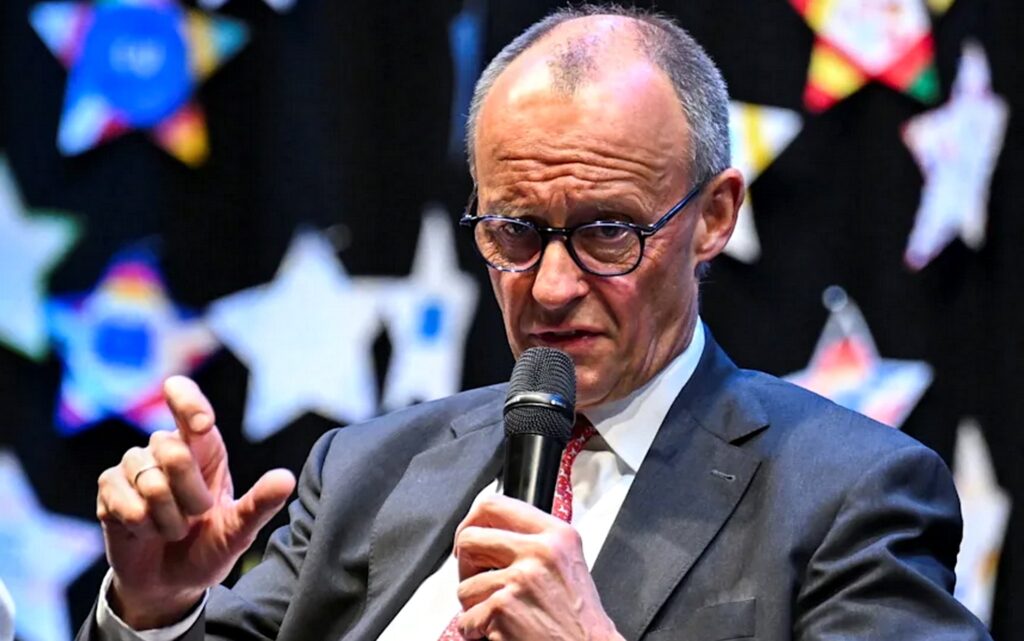
German Chancellor Friedrich Merz suggested that Ukraine might have to accept parts of its territory remaining outside its control as part of any peace agreement with Russia, linking this to opening the way for its accession to the European Union.
Friedrich Merz stated that any viable pathway toward ending the war in Ukraine may require difficult compromises, including the possibility that Ukraine temporarily relinquishes control over parts of its territory in exchange for deeper integration with the European Union.
His remarks reflect a growing debate within Europe over how to balance geopolitical stability with long-term strategic commitments to Kyiv.
Merz framed the issue as part of a broader settlement scenario following a ceasefire with Russia, suggesting that a durable peace agreement could involve de facto territorial adjustments.
He emphasized that such a step would ultimately require the political leadership of Volodymyr Zelensky to secure public support domestically, given the sensitivity of sovereignty and national identity in the context of ongoing conflict.
He dismissed expectations that Ukraine could join by 2027 or 2028 as unrealistic, citing both the continuation of hostilities and the rigorous accession criteria.
These include strengthening democratic institutions, ensuring judicial independence, and intensifying efforts to combat corruption—benchmarks that all candidate countries must meet before full membership is granted.
Within the EU, discussions are ongoing about interim frameworks to deepen cooperation with Ukraine.
One proposal under consideration is granting Kyiv an “observer” or enhanced partnership status, allowing closer alignment with EU institutions without full membership.
However, member states remain divided on how quickly to advance Ukraine’s candidacy, with some advocating accelerated integration as a geopolitical necessity, while others caution against bypassing established accession procedures.
Merz’s comments illustrate the broader tension shaping European policy: the urgency of supporting Ukraine politically and economically during wartime, versus the institutional and legal constraints that govern EU enlargement.
The outcome of this debate is likely to influence not only Ukraine’s future trajectory but also the EU’s role as a geopolitical actor in Eastern Europe.