Signs of a breakthrough in the crisis between Algeria and Paris with the return of security cooperation
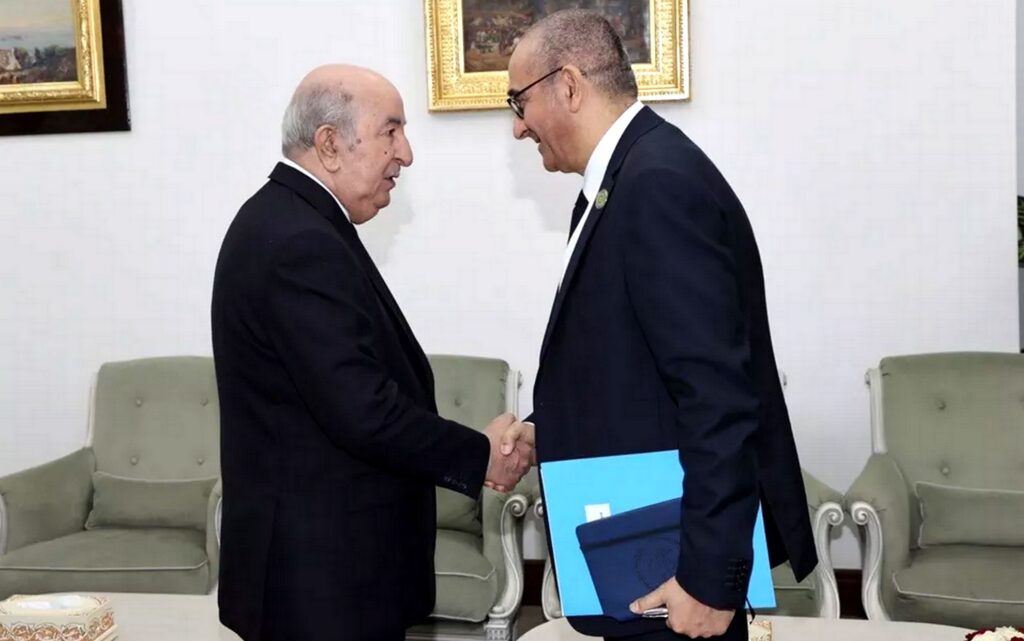
Algeria and Paris agreed to reactivate security and intelligence co-operation during French Interior Minister Laurent Nunez’s visit to Algiers on Monday and Tuesday, in a sign of a breakthrough to the unprecedented bilateral crisis that has been ongoing since the summer of 2024.
Laurent Nunez confirmed that he and his Algerian counterpart Said Saïd agreed to reactivate high-level security co-operation, following his meeting with President Abdelmadjid Tebboune on the second day of his visit.
The French minister said he had worked with his counterpart and Algerian officials to reactivate a high-level security cooperation mechanism with the aim of resuming normal security relations… and strengthening them at the level of the judiciary, police and intelligence.
“Of course, as interior minister, I am satisfied with that,” he said.
The Algerian president received the French minister in the presence of the interior minister, as well as the presidential diplomatic affairs adviser Ammar Abba, and the director general of internal security, Major General Abdelkader Ait Orabi.
On the French side, Nunez was accompanied by French Director General of Internal Security Céline Berthon, who was also involved in Monday’s meeting with Algerian Interior Minister Said Sayoud, according to the Algerian presidency.
After thanking Tebboune for receiving him, Nunez said that the Algerian president asked his agencies to work with the French agencies to significantly improve our cooperation in the police and judicial fields, as well as in the field of re-admission, i.e. the acceptance of Algerians who have been deported from France.
“All of this will begin to be implemented as soon as possible,” he said, expressing satisfaction with the return of security co-operation and in the field of migration.
This highly sensitive visit was announced after an invitation by the Algerian interior minister to his French counterpart several months ago.
Despite its delay, it appears to be the first indication of a breakthrough in relations.
Laurent Nunez had made it clear before his trip to Algeria that all security issues would be discussed during the working meeting, most notably the fight against terrorism, drug trafficking and irregular migration.
“I’ve always been confident that security relations with Algeria can be restored… This visit is the culmination of this attitude of continuing dialogue with the Algerian authorities on security issues… In my opinion, this is indispensable”.
The French interior minister began his visit to Algeria on Monday at a time of diplomatic tensions between the two countries.
Nunez spent the entire day in extensive working sessions with the Algerian interior minister and security and intelligence officials.
Relations between the two countries have deteriorated sharply since the summer of 2024, with France recognizing Morocco’s autonomy plan for Western Sahara, which has been in dispute for 50 years between Rabat and the Algerian-backed Polisario Front.
Tensions followed, from the kidnapping of Algerian opposition activist Amir Boukhares in France in April 2024, to the arrest of French-Algerian writer Boualem Sansal in November 2024, before he received a presidential pardon a year later, to the April 2025 accusation of an Algerian consular officer of involvement in the kidnapping of Boukhares, to the expulsion of 12 employees of the French embassy in Algeria a few days later.
The French minister didn’t say whether he was referring to Christophe Glaze, a French journalist who was arrested in May 2024 in Kabylie and sentenced on appeal in early December to seven years in prison for glorifying terrorism.
Another sign of a breakthrough in the crisis was a multi-day visit to Algeria at the end of January by former French minister Ségolène Royal, who considered rebuilding bilateral relations a duty.
The former minister received permission from the Algerian president to visit and check on him, as well as the Algerian Ministry of Justice’s approval to transfer him to a prison in the capital instead of the city of Tizi Ouzou, 100 km away.