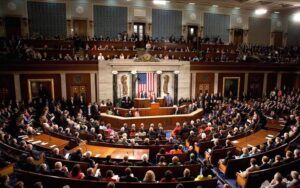
More than US 50 fighter jets arrive in the Middle East within 24 hours to strike Iran
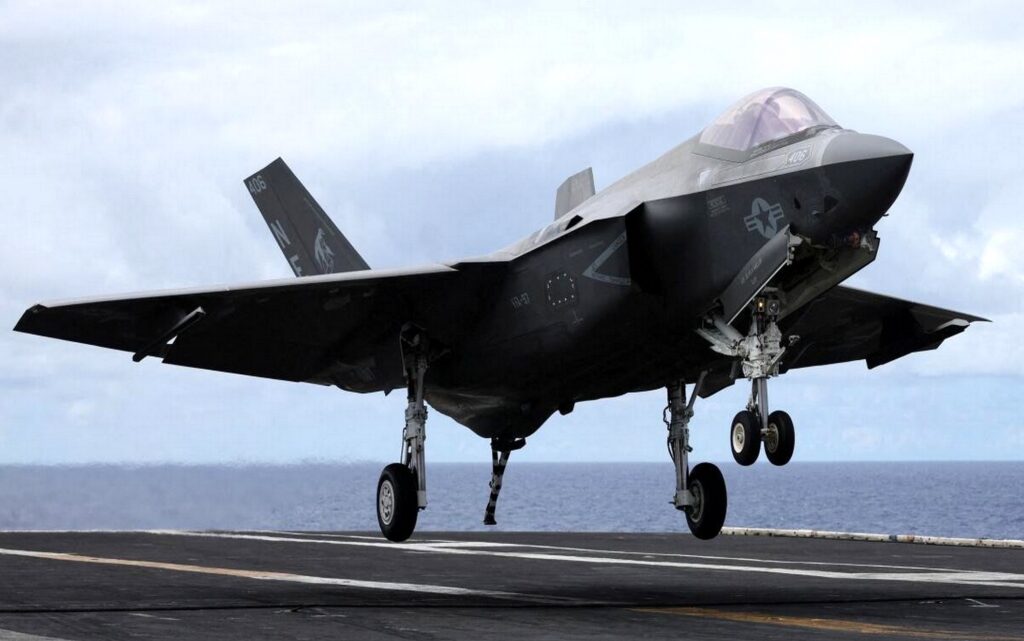
More than 50 F-35, F-22 and F-16 fighter jets have flown to the Middle East in the past 24 hours, flight tracking data and a US official said.
The move reflects a military escalation coinciding with a diplomatic move on Iran’s nuclear issue.
It comes days after US President Donald Trump’s administration sent a second aircraft carrier to the region, in a sign of increased military preparations in anticipation of any possible developments with Iran.
US Vice President J D Vance said that Iran has so far shown no willingness to recognize some of the redlines set by President Donald Trump, foremost of which is preventing Tehran from acquiring a nuclear weapon.
In an interview with Fox News, Vance stressed that Washington’s primary goal is to prevent Iran from becoming a nuclear state, warning that its possession of a nuclear weapon would prompt other countries in the region and beyond to seek it as well.
He noted that all options are still on the table, including the military option, in parallel with the diplomatic track.
The remarks follow a new round of indirect talks between the United States and Iran in Geneva.
Iranian Foreign Minister Abbas Araghchi announced that Tehran and Washington had reached guidelines for a possible nuclear deal, following a three-hour round of negotiations in Geneva with Trump envoys Jared Kushner and Steve Witkoff.
Araghchi described the talks as serious, constructive and positive, stressing that good progress has been made compared to the previous meeting, adding that the two sides have reached a general understanding of a set of guiding principles that will be built on to begin drafting the text of a possible agreement, considering that the road has started but does not mean reaching a final agreement quickly.
Omani Foreign Minister Badr al Busaidi, who acted as a mediator, said the second round ended with good progress towards identifying common objectives and related technical issues, stressing that the atmosphere of the meetings was constructive and that there were clear steps ahead of the next round.
While Tehran talks about negotiating progress, Washington continues to mobilize additional troops in the Middle East, reflecting a dual strategy of military pressure in parallel with the diplomatic track.
According to Araghchi, the two sides agreed to work on written drafts and exchange texts in preparation for setting the date for the third round of negotiations, while a US official said the talks went as expected.
These developments show a complex regional scene, where the US military escalation intersects with signs of political openness, amid anticipation of the outcome of the next rounds of negotiations.