Poll: Half of Europeans see the possibility of war with Russia as possible
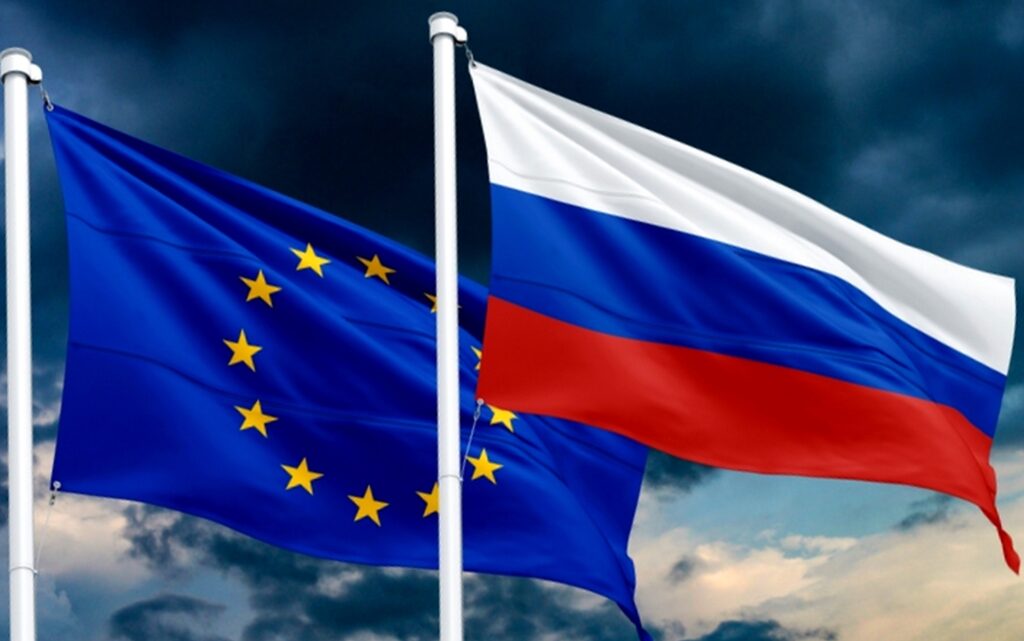
A recent poll suggests that more than half of Europeans see the possibility of war with Russia as a possibility, according to results published in early December.
The climate of military anxiety is intensifying in Europe, with warnings mounting that the old continent could slide into an armed confrontation with Russia.
European capitals are receiving almost daily warnings about the dangers of a large-scale conflict, sometimes from heads of state and sometimes from military commanders.
In France, General Fabien Mandon warned in late November of the deteriorating security environment and the need to prepare for a war scenario, while this week the chief of staff of the British army, Richard Knighton, called for more citizens to be “ready to fight”.
More than half of Europeans consider the possibility of war with Russian President Vladimir Putin’s forces a possibility, according to results published in early December.
In a related context, the French Le Parisien newspaper published a report that relied on military and international experts to identify the most vulnerable European regions to a possible attack from Russia, highlighting potential weaknesses and scenarios that Moscow might resort to without fighting an all-out war.
The experts on whom the French newspaper’s report was based agree that the most likely scenario is a ground incursion into one of the Baltic states bordering Russia, specifically Latvia or Estonia, with Latvia as the “weakest link”.
In Latvia, Le Parisien notes that NATO’s multinational brigade, led by Canada, is not among the readiest units.
The Russian-speaking eastern regions remain virtually cut off from the capital, Riga, giving Moscow ample leeway to stoke domestic tensions that could be used to justify military intervention.
In Estonia, the border town of Narva remains a sensitive point, as the area has recently witnessed repeated provocations, including the crossing of a Russian border guard boat flying the Wagner flag.
A note from the Montaigne Institute suggests that the scenario of an incursion into Narva tops the list of the most realistic possibilities.
The French report warns of the Sualki Corridor, which stretches about 85 kilometers between Lithuania and Poland and connects Moscow’s ally Belarus with Russia’s Baltic enclave of Kaliningrad; This corridor is seen as a strategic gap.
If Russia takes control of it, it could isolate the Baltic states from the rest of NATO’s forces, making any military move in the region a top priority for Moscow.
In June, former US general and former CIA director David Petraeus predicted a possible Russian invasion of Lithuania by 2029.
If this scenario materializes, Poland will find itself on the front line, especially after Ukrainian President Volodymyr Zelensky recently warned that Warsaw could be attacked by Russia.
Le Parisien’s report points out that Norway’s Svalbard archipelago, despite its geographical isolation, could be targeted as part of a Russian strategy aimed at embarrassing and destabilizing NATO without a direct confrontation.
Finland and Moldova, in contrast, are less likely targets, with the complex terrain and strength of the Finnish army make any direct attack risky, while Russia’s move in Moldova may be limited to the breakaway region of Transnistria, which suffers from a lack of resources and significant supply difficulties.
Russian President Vladimir Putin reiterated during his annual press conference on Friday that Russia won’t attack Europe if it’s treated with respect.
Putin described the talk of war with Europe as illogical, saying: “The ball is completely in the court of our Western adversaries”.