DW: A record wave of bankruptcy as the German economy faces tough test
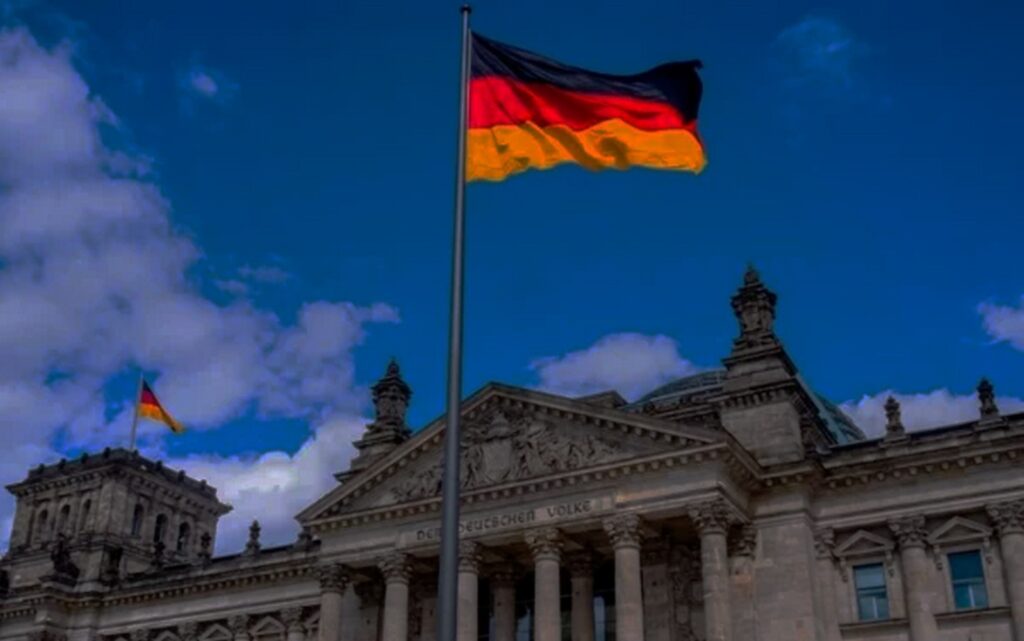
The wave of bankruptcies continues; Small and medium-sized businesses in particular are struggling.
A survey by the German Chamber of Industry and Commerce showed that nearly a third of companies, with fewer than 20 employees, feared a deterioration in their business situation.
These companies account for about 85% of all companies in the country.
On the same day, the Federal Statistical Office announced that German courts had registered 18,125 corporate bankruptcy applications as of the end of September, an increase of nearly 12% from the same period last year.
The number of corporate bankruptcies in Germany in the first three quarters of 2025 reached an 11-year high.
Professor Steffen Müller emphasizes that small businesses are particularly vulnerable.
Speaking to DW, the head of bankruptcy research at the Leibniz Institute for Economic Research in Halle stressed that bankruptcies mostly occur in the small business sector.
The average number of employees in these companies is “10 employees per medium-sized company, but most of them are smaller”.
Although it plays no role in this perspective, the current wave of bankruptcies is also showing in the private sector: in Germany, the number of private bankruptcies also rose last year: in the first three quarters of this year there were 57,824 consumer bankruptcies, an increase of more than 8% from the same period last year.
Although bankruptcy is most threatening small businesses with few employees, the rise in the number of bankruptcies among individual companies and joint stock companies has led to a significant increase in the number of jobs lost or at high risk.
This is the conclusion of the Leibniz Institute for Economic Research, as the institute has identified 170,000 affected jobs for this year, as before the pandemic, the number of jobs was not even up to 100,000.
Klaus Heiner Röhl, an economist at the German Institute of Economics in Cologne, doesn’t want to overestimate the effects on the labor market.
“Bankruptcies contribute to a slight increase in unemployment, but the development isn’t dramatic,” he said.
Steffen Müller, also sees it a little differently, as according to the calculations of the head of the bankruptcy research department at the German Institute of Economics, the number of jobs affected in 2025 is expected to reach around 200,000 jobs, which is a relatively large number.
In the years before the pandemic, that number was about half, with some of the affected jobs are likely to already be canceled, as bankruptcies lead to the closure of businesses.
“But it also suggests that many jobs will be created elsewhere,” Müller says, adding, “the effects of the labor market are generally manageable… And we shouldn’t forget that the market correction process often leads to the transition of employees from weak companies to good companies”.
For Stephen Müller, the current figures weren’t entirely surprising: “In general, the bankruptcy figures were expected to rise… But the magnitude of this rise was a bit surprising”.
Klaus Heiner Röhl wasn’t surprised, as he wrote to us: “In principle this development was expected and given the continued weakness in the economy the bankruptcy figures could have been higher”.
Röhl doesn’t see the causes of multiple bankruptcies as just on the business side: “The main reason is probably an economic recession that lasted for about three years with an economy that was stagnant or slightly down”.
“Energy prices, Russia’s war in Ukraine, and the shift to climate neutrality are also contributing to the difficulties faced by businesses… But, it’s hard to say how much politics has contributed to these problems by delaying reforms and some companies by delaying transfers,” Röhl says.
Steffen Müller doesn’t want to blame anyone alone for the wave of bankruptcies: “The causes of bankruptcy are always quite individual”.
Difficulties often arise due to wrong individual developments such as the wrong product selection, disputes between management and employees, and disputes with important owners or other stakeholders.
“When you add to that high costs, structural changes, geopolitical instability and tariffs, individual weaknesses and mistakes lead to bankruptcy faster,” Muller adds.
“Well-sound, well-positioned companies that are among the best in their sector are unlikely to be forced out of the market simply because of poor general conditions,” he concludes.
The Association of Insolvency Managers and Governors of Germany considers the current situation to be relatively comfortable.
Christoph Nehring, president of the association said: “After the effects of the coronavirus phase and the associated rise in insolvency cases, things have returned to normal… However, this isn’t a shift in direction, but a light at the end of the tunnel”.
Steffen Müller expressed a similar view: “In 2026 we are likely to be at the same high level as we were in 2025… But this is good news on one condition, because we have slowly reached the red zone… So things shouldn’t get any worse, because a look at the crucial group of personal enterprises and capitalist firms shows: “We were last here 20 years ago at similar levels”.
Klaus Heiner Röhl, an economist at the Institute for Industrial Research, sees a glimmer of hope: “If the economy grows by about 1% next year, as various institutions predict, bankruptcies are likely to decline”.
However, a decline in bankruptcies isn’t a foregone conclusion: “Structural problems such as US tariffs, Chinese competition, and energy costs remain”.