Middle East Eye: Syria and Israeli game
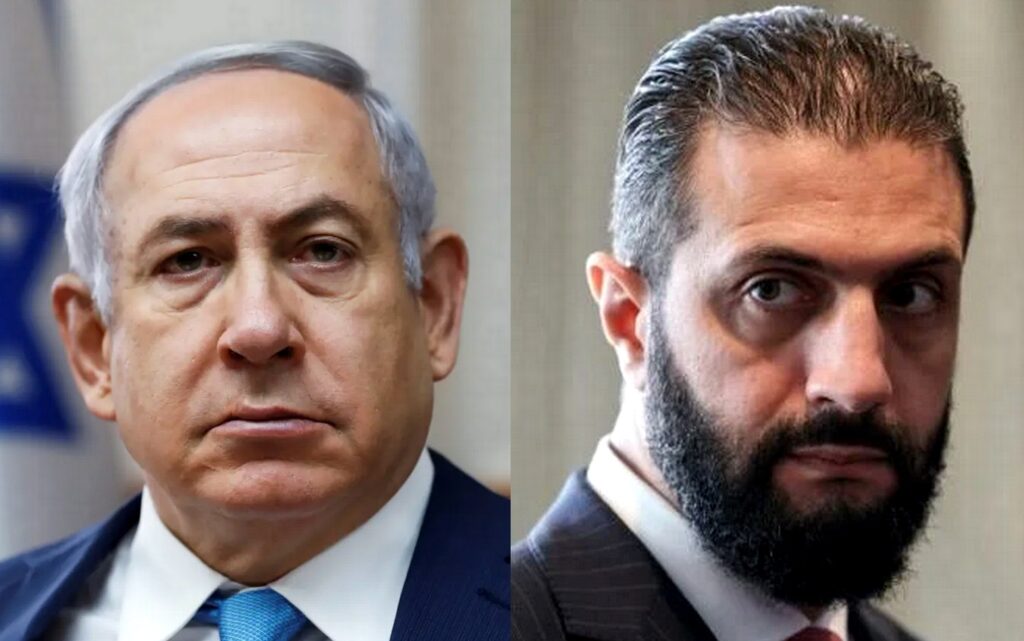
A report by the British, Middle East Eye website revealed the scenes of Israel’s accelerated moves in Syria following the fall of Assad’s regime and the assumption of power by Ahmed al Sharaa.
While the world was waiting for the shape of the new relations, Israel chose the language of all-out military escalation to destroy Syria’s strategic capabilities and impose a new geographical reality.
Israel not only paralyzed the movement of the Syrian air force and naval fleet, but also quickly moved to a ground invasion in the south, controlling vast areas beyond the Gaza Strip.
Although Israeli Defense Minister Israel Katz has claimed that the operations are aimed at protecting the settlements, the analysis points to a deeper agenda that includes:
- Weakening the Syrian state: turning Syria into rival sectarian provinces (the Libyan model).
- Cutting off the artery of the resistance: Ending the Iranian arms supply lines passing through Syria.
- Encirclement of Turkish influence: Removing Ankara from the northern Syrian scene.
- Air Control: Providing a permanent air corridor to target Iranian depth.
- The Minorities issue and Playing on the Sectarian issue.
The report pointed to Israeli attempts to woo the Druze in the south and the Kurds in the north as strategic allies.
In this context, the position of the Druze leader, Sheikh Hikmat al Hijri, who moved from rejecting the Israeli occupation to adopting a separatist rhetoric calling for international intervention in Sweida, describing it by its Hebrew name “Jabal Bashan”, was highlighted after bloody clashes with Bedouin groups that led to the withdrawal of government forces.
The Middle East Eye has revealed a hidden battle between Türkiye and Israel for control of vital air bases such as the T4 base and Palmyra airport.
While Ankara sought to install advanced air defense systems as part of a defense agreement with Damascus, Israel repeatedly bombed these sites to thwart the Turkish plan.
Despite diplomatic tension and the issuance of Turkish arrest warrants against Netanyahu and his ministers, Ankara’s military stance on the ground was characterized by extreme caution, allowing Israel to fill the military vacuum in the south.
Under this military blockade, Syria’s transitional president, Ahmed al Sharaa, turned to Saudi Arabia and the United States for support.
While Donald Trump and his envoy Tom Barrack have expressed support for lifting sanctions under the Caesar Act and building a prosperous Syrian state, the Israeli military seems to view this rapprochement with suspicion, arguing that Syria isn’t a historic country but just a gathering of sects.
The report concludes by pointing out that the euphoria of Israeli military victories on several fronts (Lebanon, Gaza, and Iran) may push it beyond its realistic capabilities.
With Netanyahu’s insistence not to withdraw from southern Syria, the Syrian arena may turn from an opportunity for hegemony to a tipping point that puts an end to Israel’s expansionist military ambitions.