Merkel writes in her memoirs about Putin’s qualities and the dilemma of dealing with Trump
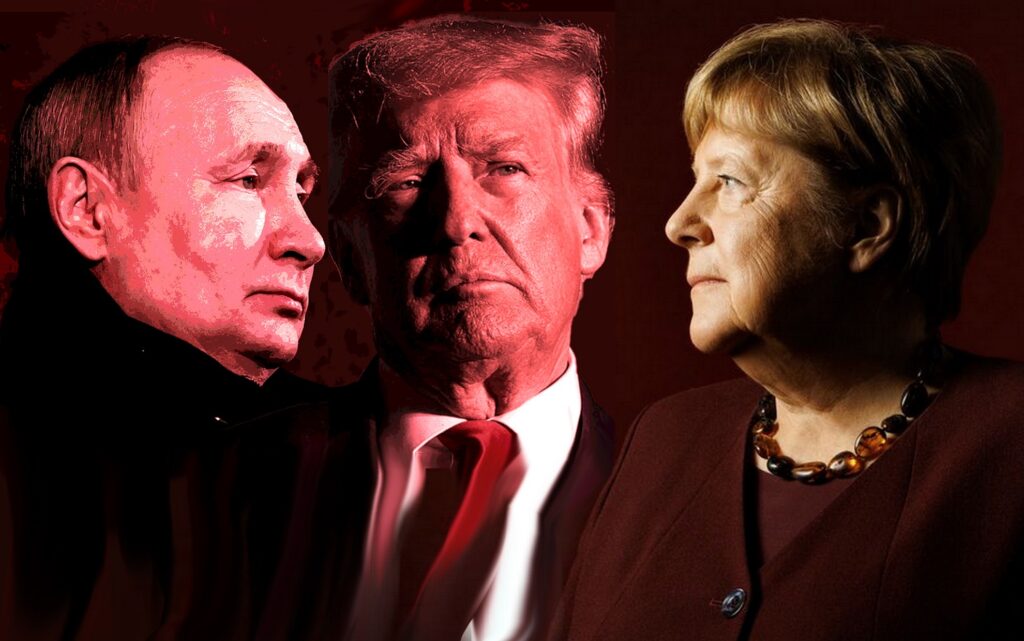
When Donald Trump was first elected president in 2016, former German Chancellor Angela Merkel asked Pope Francis for advice on how to deal with the man, hoping to find ways to persuade him not to withdraw from the Paris climate agreement.
Merkel wrote in her memoirs, excerpts of which were published in the German weekly Die Zeit on Wednesday, that Trump seemed to her to admire Russian President Vladimir Putin and other authoritarian leaders.
“He saw everything from the perspective of a real estate developer, which was his profession before entering politics,” she wrote.
“A piece of land could only be sold once, and if he didn’t get it, someone else would… That’s how he saw the world”.
Merkel wrote that when she asked Pope Francis for advice on dealing with people with completely different views, he immediately recognized that she was talking about Trump and his desire to withdraw from the Paris Agreement, and told her, “Tighten, tighten, tighten, but don’t cut”.
When Trump took office in early 2017, Merkel was among the longest-serving elected leaders.
At a time of global tension over Trump’s presidency, the German chancellor kept her cool and focused on repeatedly invoking values like freedom and human rights, leading some to describe her as the true leader of the free world, a title usually reserved for US presidents.
On the other hand, the former German Chancellor admitted that she sought to slow down Ukraine’s efforts to quickly join NATO, due to fears of a possible military response from Russia.
In her memoirs, Merkel spoke about the NATO summit held in Bucharest in 2008, which discussed the applications of Ukraine and Georgia to join the alliance.
She noted a strong desire among Central and Eastern European countries to join NATO quickly, but made clear that she believed that expanding NATO membership should enhance security not only for those countries, but for the alliance as a whole.
She wrote that only a small percentage of the Ukrainian population supported joining NATO at the time, which reinforced her concerns, however, her stance on Ukraine faces continued criticism in Kiev.
In her memoirs who was published last week, Merkel talked about her many experiences with the Russian president, Vladimir Putin, describing him as having seemed to her “a man who desperately wanted to be taken seriously”.
“I experienced him as someone who didn’t want to be despised, ready to attack at all times,” she wrote.
“You may find that childish and contemptuous, you may shake your head at that, but that means that Russia never disappeared from the map”.
In an indirect reference to Putin deciding to invade Ukraine after she left her post as German chancellor, she quoted the Russian president as saying, “You won’t always be chancellor, and they will join NATO… I want to prevent that,” referring to Ukraine.
Merkel was the first woman to hold the position of Chancellor of Germany, and led Europe’s largest economy for 16 years between 2005 and 2021.
Her memoirs, “Freedom: Memories 1954-2021,” will be published in more than 30 countries around the world, according to the publisher.
She will launch the book in the United States a week later at an event in Washington with former President Barack Obama, with whom she has established a close political relationship.