India is forced to import grain 4 months after declaring that it will feed the world
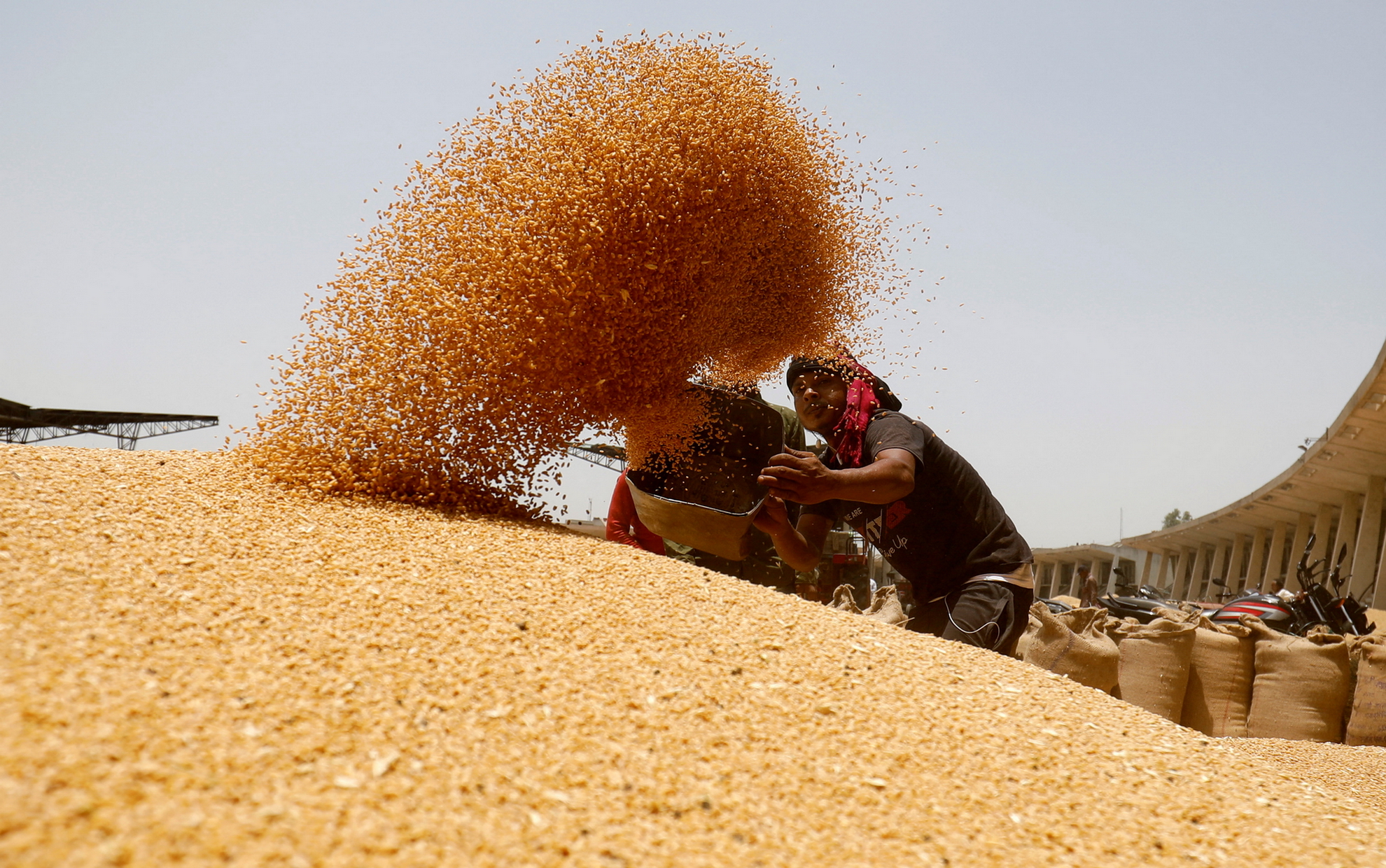
It has only been four months since India’s Prime Minister Narendra Modi announced that his country was ready to “feed the world” following the Russian invasion of Ukraine.
Now India finds itself in an embarrassing position after these confident and proud statements, the data shows that its grain production will not be enough and it will end up importing from abroad.
After a record heat wave reduced production and raised local prices, the necessities of daily life became more expensive for hundreds of millions of Indians who depend on grains for basic foods such as naan bread and chapattis.
Official data not only show that a bumper wheat harvest will not be achieved, but at the same time warn that the country’s reserves of this basic commodity will fall to the lowest level in 14 years this August, according to India’s Food Corp.
All of these dead end methods end with one result, which is “purchasing from abroad”.
But India’s high import taxes on wheat, which may have been put in place to prevent competition for local produce, remains another barrier to imports.
Based on this, government officials are studying whether the import tax will be reduced or eliminated by 40%, in order to help flour mills in some areas import grain, according to people familiar with the matter, who requested anonymity due to the privacy of the talks, according to the Bloomberg.
It is perhaps worth noting in this regard that although India is the second largest wheat producing country in the world, with an annual production of 103 million tons, it has never been a major exporter.
So her statements about feeding the world can be seen as nothing more than overconfidence and obvious recklessness.
But the people of India never had to import, except in negligible quantities, as the foreign purchases of the Indians amounted to about 0.02% of the production annually.
The country is largely self-sufficient in grain.
The authorities currently expect the harvest of the 2021/22 season to reach about 107 million tons, down from last February’s estimate of 111 million, while traders and mills expect between 98 million to 102 million tons, which makes government estimates more optimistic.
When wheat prices swell and its supplies become less and more expensive, the tide is tilted toward rice, the alternative crop to wheat.
People, on the whole, eat mainly bread or rice.
But the bad news here is that the world is heading to face a major shortage in rice supplies this year and thus a rise in its prices, to add this distress to the wheat price crisis that hit many countries in the past months, and caused the high prices of bread and a high global inflation rate.
The rice scarcity crisis, which will raise its prices, according to the expectations of experts and specialized institutions, is due to the global wave of floods and droughts that have reduced agricultural areas in many major rice-producing countries, including India, China, Italy and Spain.
The Indian company, Sponge Enterprise, specialized in trading and exporting rice, expected the price of a metric ton of rice to rise to $400 during the month of September from its current levels of $365 per metric ton last week.
Previous forecasts at the beginning of this year and before the wave of floods and droughts were optimistic, and indicated that the world would be able to produce a crop that far exceeds global consumption this year, but the bad weather conditions that the world witnessed this summer led to the evaporation of these expectations.
In India, for example, which is one of the largest exporters of rice, the US Department of Agriculture expects in its latest report that the area planted for the rice crop will shrink by 13%, after floods and droughts hit the main rice-growing areas in the country.
Although India is not the first producer of the rice crop, it is the largest exporter of it and exports about 40% of the total global exports to the global rice market, whose financial size is estimated at $287.45 billion.