Haaretz: Israeli soldiers says… We’re exhausted and our hope is to escape the hell of Gaza
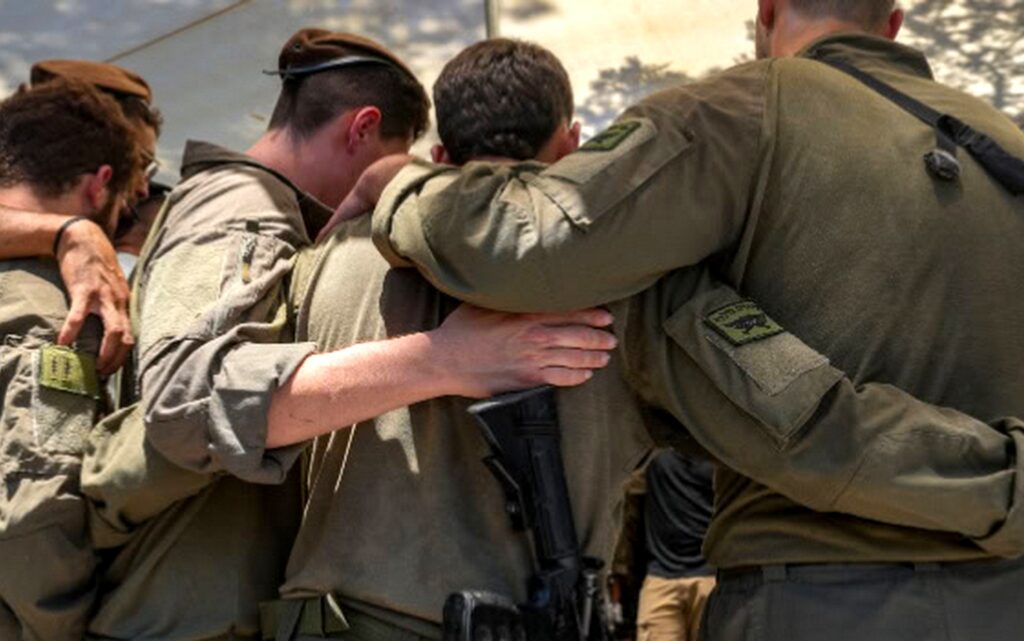
“We’re living in a state of extreme stress… Don’t forget to talk about us,” was the summary of a conversation several Israeli occupation army soldiers gave to the Israeli Haaretz newspaper, during a tour organized by the army for Israeli journalists to specific areas in the Gaza Strip, which has been witnessing a war of extermination since October 2023.
In a report by Yaniv Kubovich, Haaretz cited testimonies from reserve soldiers and officers in the northern Gaza Strip city of Beit Hanoun, depicting a grim picture of extreme psychological stress and skepticism about the effectiveness of operations, amid growing talk of “collective exhaustion” among soldiers and officers.
Haaretz said that during the tour of Beit Hanoun, which had been transformed into a completely destroyed city, the voices of exhausted soldiers were more prominent than the statements of the commanders.
A reserve soldier from the engineering corps told the newspaper, “Don’t forget to write about us, about the soldiers who were truly under extreme stress… We don’t need a few hours of sleep; we need to get out of this hell… After this tour, I’ll never return to Gaza again”.
Another soldier, a software engineer in his civilian life, adds, “Most of those here are what they call mercenaries—people from West Bank settlements who don’t have permanent jobs and are looking for temporary salaries in the field”.
Haaretz continued, saying that a reserve soldier approached some journalists and told them: “Don’t forget us and the regular soldiers here… People are exhausted, there aren’t enough forces to carry out the missions… Tell people outside what we’re going through… The situation is explosive”.
Haaretz said that soldiers and officers who didn’t explicitly reveal the extreme psychological stress they were experiencing, in turn demonstrated it indirectly during the tour.
Haaretz revealed that the city of Beit Hanoun, which was once teeming with life, was now emptied of its residents, and the houses were reduced to rubble.
“Don’t forget us and the regular soldiers here… People are exhausted, there aren’t enough forces to carry out the missions… Tell the people outside what we’re going through. The situation is explosive”.
A reserve soldier who serves as director of a civilian charity was quoted as saying, “I served more than 450 days, and so do our employees… We’re now asking them not to go on additional tours, because we are about to lose them… Our responsibility today isn’t only here, but also to families threatened by poverty inside Israel”.
Haaretz reported that during a press briefing, Givati Brigade commander Colonel Netanel Shamaka announced that his forces had killed 201 Palestinian fighters during the 73 days of Operation Gideon, but soldiers and officers on the ground questioned these figures.
One of them told Haaretz, “We haven’t seen a gunman approach us for weeks… Most of the strikes are carried out by drones, and we only verify the identities of those killed later”.
He added, “Some estimates say there are only 10 to 18 fighters left in Beit Hanoun, all of them underground, but here we are with two massive military forces, destroying homes and razing the city to the ground”.
So far, the Givati Brigade alone has destroyed more than 650 buildings in northern Gaza, according to army sources.
The primary mission now appears to be, as soldiers have stated, “protecting demolition equipment rather than fighting militants”.
Haaretz reported that in a striking scene, during a press briefing on the roof of a destroyed house, officers radioed instructions for controlled firing to add a warlike soundtrack to the videos.
When the soldiers were asked if it was a theatrical performance, they couldn’t hold back their smiles.
In his report, the Haaretz journalist revealed that he saw a tattoo of the name of a comrade killed by friendly fire in Gaza on the arm of one of the armored personnel carrier drivers.
He said he was part of the team that attempted to rescue him.
Another soldier’s arm bore a tattoo of the name of a previous battle.
Haaretz says that repeated accounts confirm that tattoos have become a means of immortalizing unforgettable, and perhaps incurable, moments.
Haaretz explained that as the operations continue, Gaza—specifically Beit Hanoun—remains a focal point for what Israeli soldiers describe as a war that exhausts them more than their enemy.