Germany ambition for large military and armament… what does this mean for today’s allies and yesterday’s enemies in Europe?
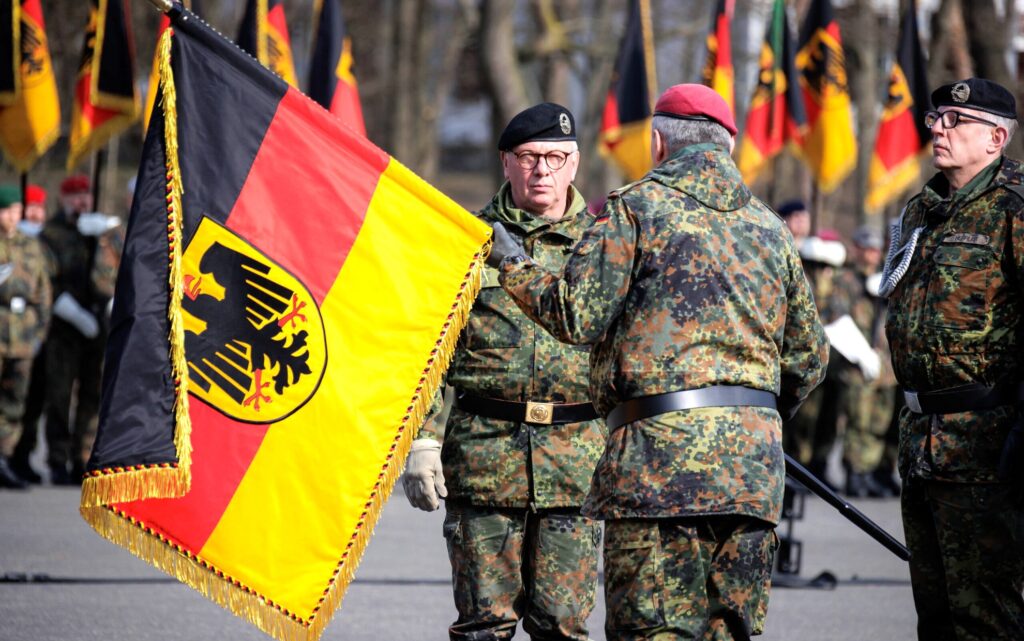
The balance of power within Europe is undergoing a profound shift, with Germany rushing toward the continent’s most powerful military position, a development that is confusing France and has traditionally alarmed Poland.
For many years, there was an unspoken understanding that the German economy was leading Europe financially, while France was taking the military role.
But this balance began to change as Berlin entered a massive and unprecedented phase of rearmament, bringing back to the fore historical questions that Europeans have overcome since the end of World War II.
Paris is running to maintain its military position, while Warsaw finds itself between anxiety and welcome; cooperation with Germany may be a logical solution to confront Russia, but the historical memory remains heavy between the two sides.
Christoph Schmidt, a member of the German Bundestag’s defense committee, said: “From the Baltics to Asia, everyone is asking Germany to take more responsibility… The world expects us to link our economic power to a parallel defense force”.
Today, Germany is poised to have one of the largest militaries in Europe, backed by state-of-the-art tanks, fighter jets and defense systems.
By 2029, Berlin is expected to spend about €153 billion a year on defense — equivalent to 3.5% of GDP — in the biggest military expansion since reunification.
On the other hand: France will allocate around €80 billion by 2030.
Poland is also continuing the arms race with €44 billion this year, becoming the highest spender within NATO.
But France’s large fiscal deficit, in contrast to Germany’s ability to borrow and inject financing, deepens the gap between the two powers.
A senior EU official described the shift as a real earthquake, stressing that what is happening is the most important change the EU is currently undergoing.
The data indicate that Germany is reformulating its defense strategy with a full focus on the national interest.
It rejects the expansion of the European Commission’s role in arms deals and invokes article 346, which allows it to award contracts within its borders.
Berlin plans to pass €83 billion worth of defense contracts before the end of 2026, including tanks, frigates, satellites, drones and radar systems.
But this is only the first payment, as the Bundeswehr has an additional list of €377 billion that includes more than 320 new armaments projects.
Less than 10% of the contracts will go to US companies, a sign of the decline in traditional dependence on Washington.
French politicians view this German leap with a mixture of caution and awe… “In France, the military is the heart of the political system… In Germany, it’s not part of the national identity”.
A French defense official warns that the upcoming German dominance could make military cooperation more difficult, questioning whether Chancellor Friedrich Merz will be able to fill the human shortage within a massive army under construction.
France also fears that Germany’s economic and military power will turn into a difficult to balance influence, especially in light of the defense industry race within the European Union.
The European Joint Future Fighter Project (FCAS) — supposedly a model of military cooperation — has become a source of tension between Paris and Berlin over a dispute over quotas and frequent delays.
There is talk in Germany of looking for alternative partnerships with Sweden or Britain or even just cooperating with Spain, which is of great concern in Paris, which sees the project as part of its strategic deterrence system.
Unlike France, Poland has tacitly welcomed this German expansion, seeing it as a necessary step to deter Russia.
“We can’t ask Europe to increase defense spending, and then exclude Germany,” says Magirowski, a former Polish ambassador.
But history doesn’t leave Warsaw completely reassured: whenever military power meets Germany’s economy; the Eastern European Party pays the price.
The rise of the far-right Alternative for Germany (AfD) party is also adding to the concern, especially with its leaders’ statements about relations with Russia and the restoration of Polish territory — a rhetoric that brings back painful memories.