German Chancellor Inaugurate the first floating units to receive gas in the North Sea
Germany launched on Saturday, the first floating unit to receive liquefied gas, with the aim of avoiding shortages and abandoning Russian shipments that were stopped by the war in Ukraine, but the supply of this material in the short term is still uncertain.
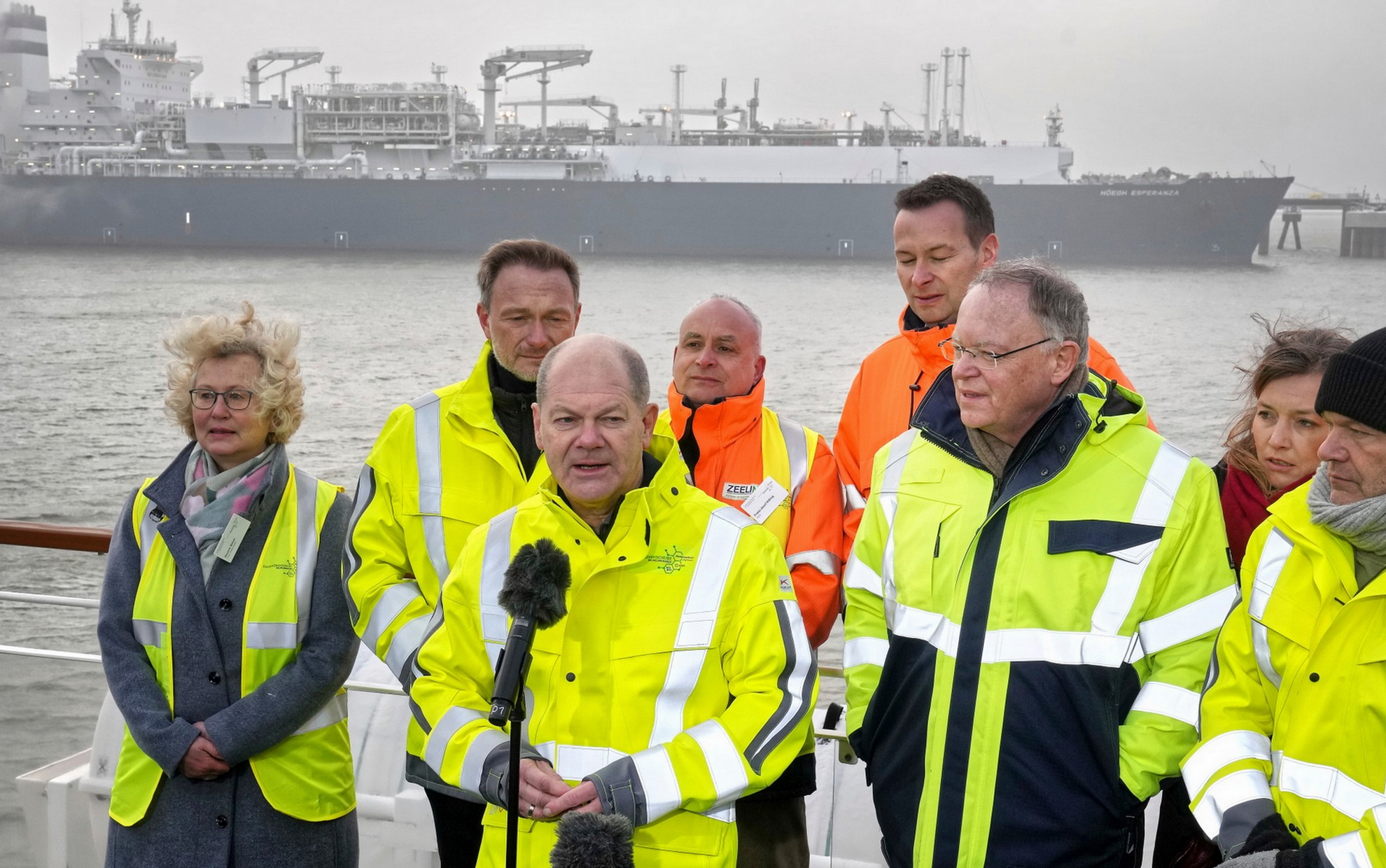
“It’s a good day for our country and a signal to the whole world that the German economy can stay strong,” Chancellor Olaf Scholz said, wearing a yellow jacket on deck a few meters from Wilhelmshaven station on the North Sea shore.
The floating storage and re-gasification unit ship Ho Esperanza, which has been anchored since last Thursday about 300 meters from it, blew its whistle as the advisor approached, in cold and foggy weather.
The majestic ship, which is 300 meters long, is loaded with enough Nigerian gas to consume “50,000 homes” for a year, and its delivery will begin on December 22.
“This is the new pace now in Germany, with which we are strengthening the infrastructure, which should serve as an example… Not only for this facility, but also for many, many other facilities,” Scholz said during the opening ceremony of the station.
It is expected that a special project of the French group Total Energy will be launched soon in Lubmin, in northern Germany.
These facilities will provide a third of the country’s gas needs, i.e. 30 billion cubic meters of gas annually, thus avoiding for the time being the massive fuel shortage that it feared until a few months ago.
And 5 more floating stations will be established during the current year, after construction works that took place thanks to the billions of euros allocated by Berlin for this purpose.
Scholz stated that the terminal in Wilhelmshaven is “a very important contribution to our security,” adding that after Russia’s war of aggression against Ukraine, the German government quickly decided to build an infrastructure for LNG terminals in order to make energy supply independent of the gas pipeline from Russia, expressing his thanks to the workers, engineers, companies and organizations that contributed to building the station.
Within a few months, a new pipeline, about 26 kilometers long, and a new berth were built at an already existing handling facility in the north of the deep water port Jade Weser Port.