Financial Times: The events in Sweida may determine the future of Ahmed al Sharaa
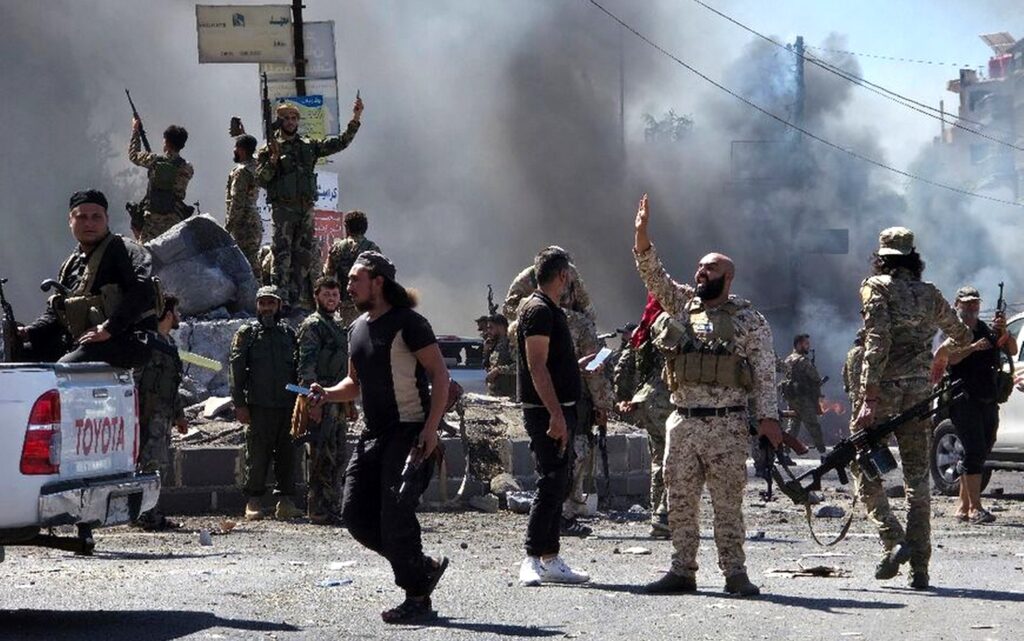
The Financial Times newspaper considered the recent escalation in the Druze-majority province of Sweida to be the most serious test facing the new Syrian president, Ahmed al Sharaa, less than a year after assuming power following the ouster of Bashar al Assad.
The British newspaper explained that al Sharaa now faces two critical choices: either back down from his attempt to impose control over southern Syria, which would undermine his project to unify the country, or engage in a direct confrontation with Israel, which is monitoring the situation with concern.
The Financial Times newspaper quoted London-based Syrian analyst Malik al Abdeh as saying that what is happening in Sweida “may be President Shaaraa’s first major strategic mistake,” noting that the crisis has exposed the fragility of the political transition in Syria, despite recent foreign policy achievements, such as the lifting of sanctions and improved relations with Washington.
These developments come about eight months after al Sharaa led a military campaign that led to the overthrow of the former regime and the end of a 14-year civil war.
However, the situation in Sweida threatens to reignite sectarian tensions, especially after hundreds of people were killed in clashes between Bedouin tribes and Druze factions.
According to the Financial Times newspaper, the recently reached ceasefire agreement remains fragile and vulnerable to collapse, while Druze leaders have expressed fears of losing the autonomy, they enjoyed during the Assad era in exchange for remaining neutral.
The Transitional President has acknowledged violations in Sweida, pledging to hold those responsible accountable.
However, analysts have indicated that this incident, which follows similar clashes on the Syrian coast last March, could undermine his image as a trusted military leader and hinder his attempts to gain the trust of other components, such as the Kurds in the northeast.
In the same context, Issam al Rayyes, a military advisor at the Etana Center, warned of the spread of tensions, saying, “The recent actions weren’t defensive, as happened on the coast, but rather an open conflict that could cause the Druze to lose confidence in the state’s center and push them to seek protection from external powers”.
Reports have indicated calls for an economic boycott of Sweida by Sunni groups, indicating growing divisions amid warnings of a new social disintegration that could undermine what remains of the country’s unity.