Maariv: Beyond Iran… a new devastating war threatens the world!
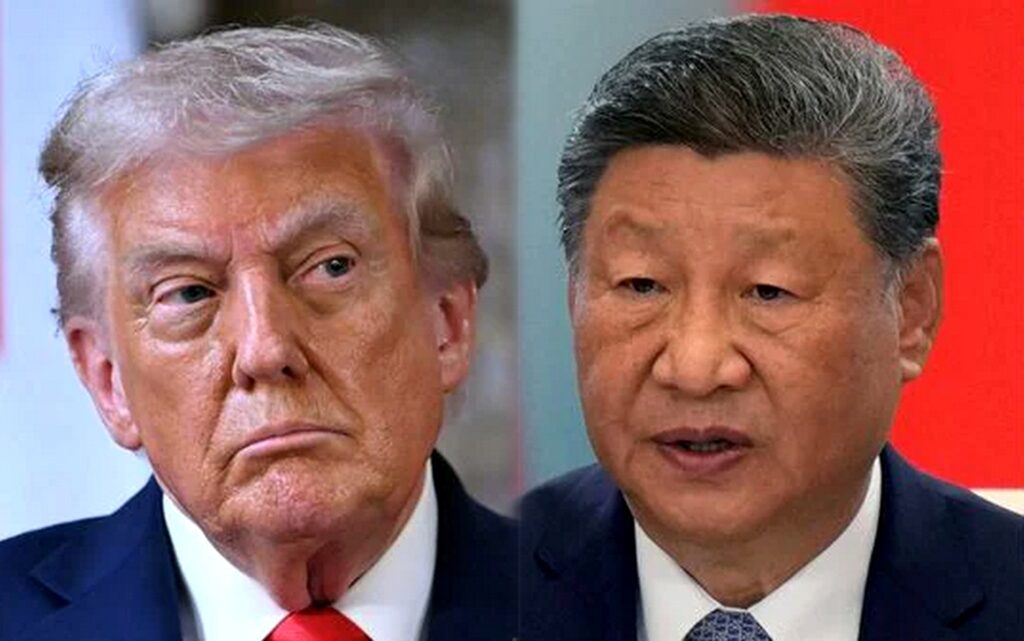
The Maariv newspaper believes that international attention is turning towards a new conflict whose repercussions may be more widespread than any traditional military confrontation, namely the escalation of economic tension between the United States and China.
According to the report, the anticipated meeting between US President Donald Trump and his Chinese counterpart Xi Jinping will outwardly carry diplomatic messages calling for stability and cooperation, but behind these official statements, intensive preparations are underway for an economic confrontation that could cause widespread disruption in global markets.
The newspaper, citing a report published by the New York Times, stated that both countries are working to identify the other side’s weaknesses, while developing economic and trade pressure tools aimed at inflicting as much damage as possible on the competitor.
In recent weeks, Beijing has taken a series of steps indicating its readiness to respond forcefully to US pressure, including: Activating new legal mechanisms to counter US sanctions, blocking Meta’s acquisition of an AI startup.
Issuing regulations targeting foreign companies cooperating with Western efforts to relocate supply chains outside of China.
These measures are part of a broader Chinese strategy aimed at countering what Beijing sees as American attempts to contain its economic and technological growth.
Over the past year, the two sides have exchanged high tariffs, tightened restrictions on exports of rare metals and sensitive technology, and imposed sanctions on major industrial companies.
Experts believe that China has become more willing to use its economic tools directly, after years of limited and symbolic responses.
Last April, Beijing issued new regulations giving local authorities broad powers to investigate foreign companies, including reviewing records, questioning employees, and even preventing some managers from leaving the country if they are found to be contributing to the transfer of production lines to other countries.
These measures have placed many international companies in front of a complex legal dilemma: complying with US laws or complying with Chinese legislation.
PVH, the owner of Calvin Klein and Tommy Hilfiger, was a prime example, after China opened an investigation into the company following its suspension of cotton imports from the Xinjiang region.
This month saw a new escalation when Washington imposed sanctions on five Chinese refineries, including Hengli Petrochemical, because of their business dealings with Iran.
Beijing responded by instructing local companies to ignore these sanctions, while activating the law on countering foreign sanctions that it passed in 2021.
The People’s Daily also criticized the US policy, arguing that it targets Chinese companies and harms their legitimate trade rights.
Amid these tensions, members of the US Congress are pressuring the Trump administration to approve a $14 billion arms deal for Taiwan.
This issue is considered one of the most sensitive in relations between Washington and Beijing, as China repeatedly affirms that it will take all necessary measures to preserve its sovereignty and territorial integrity.
The Taiwanese parliament recently approved an extraordinary $25 billion defense budget aimed at bolstering the island’s defense capabilities through the purchase of advanced American systems, including anti-drone technologies.
Observers believe that the growing tension between the United States and China is no longer just a trade dispute, but has become a comprehensive strategic conflict that extends to technology, energy, and global supply chains.
If the current pace of escalation continues, the world may face a new phase of economic instability, the effects of which will be felt in international trade, financial markets and commodity prices around the world.