European Gas Map: Russia and the possible alternative sources
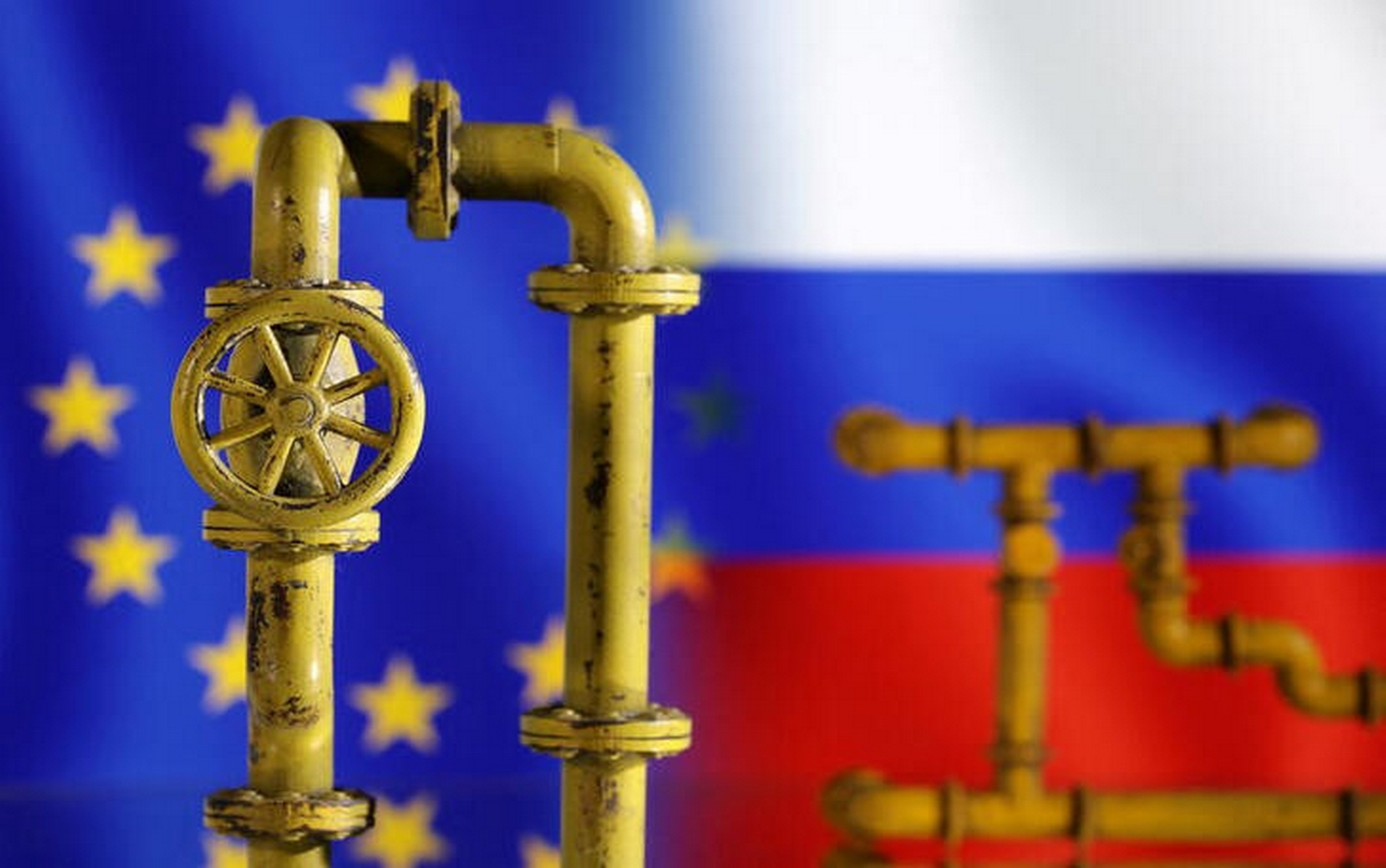
With the beginning of the Russian military operation in Ukraine on February 24, 2022, talk returned, with more seriousness, about the need to diversify European energy sources and reduce dependence on Russian gas.
So far, assessments of Europe’s actual capabilities and the length of time it needs to reach its goal in alternative options vary, but there is consensus that any alternative to Russian gas will take time and will be more expensive than Russian gas.
Russia realizes the importance of its advanced position in the energy sector in general and natural gas in particular, and sees the increasing reliance of Europe on Russian gas as a geopolitical necessity for it.
Therefore, Russia’s interest requires increasing its influence in gas-exporting countries in order to guarantee its share of any economic projects related to the transportation of gas to Europe.
In this context, the presence of Russia in the Caspian Sea, the Black Sea and the CIS countries is very important to pass its interests when discussing any new economic project.
But it seems that Europe is faced with two options, the best of which is bitter.
Starting projects and investments to secure new pipelines with more than one supplier, which means that they will need a lot of time to benefit from them and will result in continuous construction and maintenance costs.
Or adopting liquefied natural gas from more than one supplier, which means additional costs that you will incur due to the need to build huge LNG plants to absorb the quantities.
Europe consumes about 503 billion cubic meters of gas annually, part of which is imported and part is produced locally.
These quantities are used by 32% for power generation, 26% for industry, and 38% for residential and commercial buildings.
Russian gas imported to Europe via pipelines represents about 46% of the total European gas imports, equivalent to 155 billion cubic meters, compared to 20.5% from Norway, 11.6% from Algeria, 6.3% from America, and 4.3% From Qatar, and small quantities from Britain, Holland, Nigeria, Libya and Azerbaijan.
One of the most important strengths that the Russian possesses in its conflict with the European is that his country is linked to Europe through a set of pipelines that can pump large quantities of gas that meet most of Europe’s gas needs at a low cost compared to other sources.
Existing lines can pump 273.5 billion cubic meters of gas annually – this is more than half of what Europe consumes in a year – distributed as follows: “Nord Stream 1 and 2”, and each line can pump 55 billion cubic meters annually.
As for Blue Stream, it can pump 16 billion cubic meters annually.
TurkStream can pump 31.5 billion cubic meters annually, and «Yamal» can pump 16 billion cubic meters annually.
Through Ukraine, it can pump more than 100 billion cubic meters annually.
The gas imported to Europe by pipelines represents 74% of the total natural gas imports in 2020, compared to 26% for liquefied natural gas, knowing that the gas imported to Europe by pipelines comes from Russia, Norway, Libya, Algeria and Azerbaijan, and by sea mainly from America, Qatar and Nigeria.
So, there are two alternative groups; The first is a pipe-related group, and the second is a liquefied gas-related group.
The first group
* There are challenges that prevent the increase of gas exports through pipelines from Norway, Libya, Algeria and Azerbaijan:
1- Norway: Although the domestic consumption of gas in Norway is very low, which allows the export of 95% of the gas produced in the country, the Norwegian gas fields and pipelines are currently operating at their maximum capacity, meaning that they will not be able to increase the quantities of gas exported, while gas production will decrease dramatically.
Large from 2030 unless new fields are discovered and developed.
In 2021, Norway exported, via pipelines, about 113 billion cubic meters of natural gas to the European Union and Britain.
2- Algeria: It is the largest gas exporter from Africa, and Europe accounts for 83% of its exports, especially Spain and Italy as the two main destinations, which in 2021 accounted for 65% of the total Algerian gas exports.
Natural gas is transported from Algeria to Europe by three main pipelines; Medgas can pump 10.7 billion cubic meters annually.
And “Transmed” can pump 33.5 billion cubic meters annually, and the “Morocco-European Gas Pipeline,” which can pump 10.3 billion cubic meters annually.
Algeria suffers from the increasing domestic consumption of gas, as it is expected to exceed 55% of production, in addition to the positive relations between Russia and Algeria, in contrast to the tension with Morocco, which prompted Algeria to stop work on the Moroccan-European gas pipeline in October 2021.
The United States may work To restore the relationship between Morocco and Algeria so that the pipeline to Spain can be restarted.
3- Libya: Libya is connected to Europe through the Green Stream pipeline, which can pump 11 billion cubic meters annually.
However, the weak production and the conflict in the country made this line completely unfeasible, as supplies through it stopped from time to time.
4- Azerbaijan: The main problem facing the export of Azerbaijani gas to Europe is that Asian countries are competing with Europeans to obtain new contracts.
In addition, the increase in gas pumping from Azerbaijan to Europe requires the development of pipelines to increase their capacity by 10 billion cubic meters annually, and this requires a minimum of 5 years.
The Second group
* Challenges of the US, Qatar and Nigeria that prevent increasing exports to Europe
1- Qatar: Many experts expect that Qatar will transfer between 8% and 10% of liquefied natural gas to Europe, but it will take longer than it to Asia, Qatar’s production capacity is approaching its maximum limit.
Although Qatar plans to increase its production by 40% through the North Field expansion project, it will not be able to start producing gas from this field until 2026.
It is noteworthy that Qatar is linked to long-term contracts with Asian countries.
According to estimates, these contracts are divided into long-term contracts with a rate of 90%-95% and spot contracts with a rate of 5%-10%, as well as a high cost due to shipping and liquidation.
2- The USA: The production capacity of the United States is almost complete now, and its increase takes years, in addition to that it is also linked to long-term contracts, and the cost of importing from it is high due to shipping and liquefaction.
The amount of LNG sent from the US to Europe has not increased significantly since the start of the war in Ukraine, although Washington seeks to export 50 billion cubic meters of gas in 2030, nearly 10% of Europe’s need today.
3- Nigeria: In 2021, Nigeria’s exports of liquefied gas to Europe amounted to 12.63 billion cubic meters.
Currently, Nigeria consumes about half of its production and exports the other half, and an increase in domestic consumption is expected in the future. In 2009, it was agreed on a trans-Saharan pipeline project that would transport 30 billion cubic meters of Nigerian gas to Europe via Algeria and Niger, but work on the project was stopped several times due to security problems in Africa, so there is no specific date for the completion of the project.
What are the options for Europe?
There does not appear to be much choice for Europe to reduce its dependence on Russian gas.
There is an option to increase the import of liquefied natural gas, transported by sea or land from Norway, Nigeria, Qatar, the US, Iran, Egypt and Iraq.
There is the option of investing in gas projects to help countries increase their production of natural gas, or to build pipelines between Europe and gas exporting countries.
Both options increase the cost of imported gas, and their implementation takes a lot of time.
These are challenging choices; Relying on the countries of the Middle East and North Africa is an option that is located in a region that may be subject to security shocks at any time, and this may affect energy supplies at any moment of tension.
This also does not eliminate the existence of a higher cost of liquefied gas, which increases the burdens on the economies of European countries in light of the massive inflation wave that the world is facing.
Such an option requires investing money in building new liquefied gas stations, or in developing existing stations and increasing their capacity.
The most affected here is Germany, which does not currently own any LNG plant, but rather plans to build two plants, knowing that it was forced to stop the Nord Stream 2 pipeline project, which was supposed to supply 55 billion cubic meters of Russian gas in 2022.
Options
1- Egypt: Egypt consumes 158 million cubic meters of gas per day, compared to the daily consumption of Qatar and Algeria of 96 million cubic meters and 118 million cubic meters, respectively.
Also, the costs of producing Egyptian gas are higher than others, so the high price of LNG globally is beneficial to Egypt.
63% of Egyptian gas goes to Asia, 31% goes to Europe, including Türkiye, and the remaining 6% goes to Kuwait.
Egypt’s geographical proximity to Cyprus and Israel, which aspire to export their surplus production to Europe, encouraged them to conclude agreements between each of them and Egypt.
The agreements stipulate that Cyprus and Israel will export their surplus to the Egyptian gas liquefaction stations in Idku and Damietta, and then Egypt will liquefy it and export it to the European Union.
These agreements could help turn Egypt into a regional gas export hub from the Eastern Mediterranean.
Currently, Egypt imports about 450 million cubic feet of Israeli gas daily for the purpose of re-export, and this quantity is expected to increase.
As for Cyprus, it has agreed with Egypt to build an undersea pipeline to bring quantities from the Aphrodite gas field to the Idku export facility, but Cyprus is still in the drilling stage for Aphrodite.
2- Türkiye: Türkiye in the Black Sea: In 2020, Turkish President Recep Tayyip Erdogan announced the discovery of the Sakarya gas field in the western Black Sea.
Türkiye needs years to start extracting and exporting gas from this field to produce 20 billion cubic meters of gas annually by 2028.
The entire project is expected to cover about 30% of domestic demand for natural gas.
Therefore, Europe is not expected to benefit from the Turkish gas explored in the Black Sea, because the existing quantity will only reduce consumption.
3- Iran: Iran is one of the most gas consuming countries.
The volume of Iranian gas exports represents only 7% of the total domestic consumption.
One of the reasons for the large internal consumption of gas in Iran, according to experts in the field of energy, is that Iran’s energy strategy was based on increasing gas consumption to reduce its dependence on oil in domestic consumption in exchange for increased exports.
The most European countries importing gas from Russia are Germany, Italy, France and the Netherlands, which will face greater difficulties in searching for alternative sources.
Iran has discovered a huge deposit of gas in the Chalus field in the Caspian Sea.
According to available reports and information, Iran, Russia and China have reached a 20-year cooperation agreement in this field, where Gazprom and Rosneft will own 40% of the project, compared to 28% for China National Petroleum Corporation (CNPC) and China National Offshore Oil Corporation (CNOOC), and 25% for the Iranian KEPCO.
In this way, the Chinese companies will finance the project and prepare the necessary infrastructure for it, and the Russian companies will transport the produced gas.
Thus, Russia is a partner in this field.
Finally, the sanctions imposed by the United States on any country or entity that deals with Iran have marginalized its role as an exporter of oil and gas to Europe.
Therefore, Iran needs investments and technology from global companies to help it increase exports.
Therefore, for Iran to be able to transport large quantities of gas, it will take years.
In all cases, the US sanctions against Iran must first be lifted in order for it to be able to export gas to Europe.
Egypt’s geographical proximity to Cyprus and Israel, which aspire to export their surplus production to Europe, encouraged them to conclude agreements with it.
4- Iraq: weak production, as Iraq produces only 6 thousand tons of liquefied natural gas per day, or 2.19 million tons annually.
This small amount produced is not even enough for internal consumption, and therefore Iraq imports its remaining gas needs from Iran.
Also, the political differences inside Iraq prevent the benefit from the natural gas located in the Kurdistan region of Iraq.
Finally, Iraq needs years to implement the announced projects aimed at increasing natural gas production in order to be able to export some of these resources.
5- Israel: In 2021, Israel produced about 19.5 billion cubic meters of gas, exported between 8 and 10 billion cubic meters of it and consumed the rest of the natural gas produced.
It must be noted that an important part of the exported gas goes to Egypt through a pipeline between the two parties, while Egypt liquefies this gas and exports it for its own account, not for Israel, to Europe via the sea.
Therefore, there are three obstacles to increasing Israeli gas exports to Europe:
Demarcation of the maritime border with Lebanon, in order to be able to extract gas from the fields located in the sea between occupied Palestine and Lebanon.
Its problems with Türkiye prevent agreement on gas transportation projects from the eastern Mediterranean to Türkiye and ending with Europe.
The economic feasibility of the project to transport Israeli gas to Greece, as the EastMed pipeline, which costs 6.1 billion dollars.
The Israeli infrastructure was built to benefit from it at home, and therefore converting gas to export is not an easy matter for it and requires investments.
European gasification plants
In addition to pipelined natural gas, Europe imports liquefied natural gas (LNG) that is in its natural state, cooled to a liquid state at -260 degrees Fahrenheit, stored in containers, and transported on ships or overland to regasification stations, or what is called “gasification”.
The cost of liquefied gas is higher because it requires the presence of two cooling and gasification plants in the exporting country and the receiving country.
Currently, there are 29 LNG stations in Europe that receive quantities and return them to their gaseous state in preparation for use.
Therefore, a country that does not have an LNG plant imports only pipeline gas, such as Germany, which does not have gasification plants, bearing in mind that LNG plants in Europe have limited available capacity to absorb additional supplies if the gas from Russia stops.
Europe imports liquefied natural gas from Qatar, The US and Nigeria, but the prices are not only related to Europe’s desires to replace Russian pipeline gas, knowing that this is a reason for high prices, but there is an additional reason related to China, which records a high demand for liquefied gas, which means that the prices of liquefied gas will remain high for internal European reasons, and external reasons.