Deutsche Welle: Germany intends to allow dual citizenship
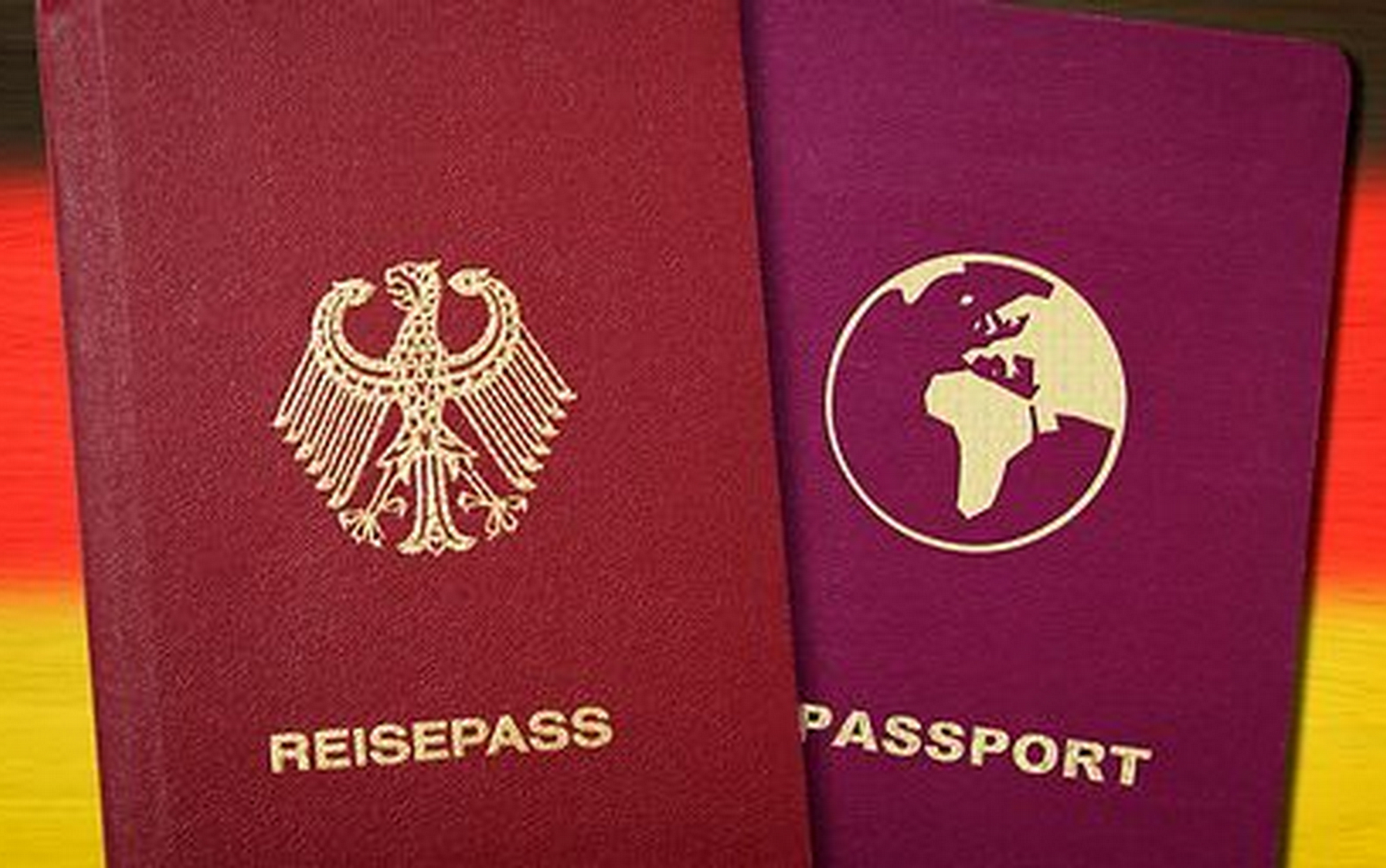
Germany’s plans to allow dual citizenship.
The reforms are being planned by the Social Democrat-led government, which is part of a comprehensive reform of German immigration law whose main aim is to encourage more skilled workers to come to Germany and fill a huge labor shortage in the labor market.
The changes in the Naturalization Law can be summed up in three main points:
Firstly, immigrants who live in Germany legally will be allowed to apply for citizenship after only five years instead of eight as is currently the case.
Second: Children born in Germany will automatically acquire German citizenship, provided that at least one of the parents has lived legally in the country for five years or more.
Third, immigrants will be allowed multiple nationalities.
The Centre-right opposition Christian Democratic Union (CDU), which has consistently blocked any such reforms in the past, clearly opposed Scholz’s plans.
“German citizenship is a very valuable thing, and one must approach this subject with great caution,” party leader Friedrich Merz said last week in a statement to ARD.
Migrants who are currently entitled to dual citizenship in Germany are EU citizens, Swiss, whose country of origin doesn’t allow renunciation of citizenship (eg Iran, Afghanistan, and Morocco), children of parents with German and other nationalities, and refugees who are threatened with persecution in their home country, and the Israelis.
The Syrians who came to Germany as refugees and were able to integrate well will obtain German citizenship faster than others.
This reform will bring German laws into line and similar to their counterparts in other European countries.
In the European Union, Sweden had the highest naturalization rate in 2020, with 8.6% of all foreigners living there being naturalized. In Germany, the rate was only 1.1%.
Greta Agostini, a German lawyer specializing in immigration, explained in a statement on the subject to DW: “The German nationality law is based on the principle of avoiding multiple nationalities, while other European countries, such as Italy, Sweden, Ireland, France and others, allow dual citizenship and have less bureaucratic laws regarding on this subject”.
According to the German Federal Statistical Office, there are about 2.9 million people with more than one nationality living in Germany, or about 3.5% of the population.
And 69% of German citizens who acquired citizenship in recent years keep their original passport.
Top of the list are holders of Polish, Russian and Turkish passports.
The impact of German nationality laws will be greatly reflected in the Turkish community, from which large numbers of workers came in the 1960s, when West Germany signed deals with several countries to bring in “guest workers”, mainly to work in the then-rising industry.
Now in Germany there are an estimated 3 million people of Turkish descent, 1.45 million of whom still hold Turkish citizenship.
For many Turks of this generation, reforms came “too late,” said Aslihan Yesilkaya Yurtbay, a member of the Turkish Community in Germany (TGD), but “better late than never”.
“For the generation of guest workers, this reform means recognition and respect for their life and work in and for this country,” according to the spokeswoman, who emphasized that “many Turks of the second and third generations will feel comfortable, because they have always had an identity crisis”.
In the view of Aslihan Yesilkaya Yurtbay, Germany would have been a different country had reform been introduced earlier: “Immigrants would have been more interested in politics and more active in society if this opportunity had been available 20 or 30 years ago”.
The Turkish Community in Germany (TGD) has condemned many of the statements made by the CDU this week as “ill-considered” and “racist”.
Asilhan commented on her, saying: “Frankly, I was shocked by these racist voices…Their arguments aren’t based on facts, and I think they are very dangerous for society… They stir up negative feelings among people in the country”.
Mark Young says his own experience has given him an idea of what people of Turkish descent have had to put up with for decades.
He, too, has raised his children in Germany and has no intention of leaving, and is likely to apply for German citizenship once the Scholz government reforms are passed: “I’ll apply if Germany allows dual citizenship, I’ve paid my taxes and one day I’ll be retired in Germany whether the leader of CDU Friedrich Meretz likes it or not”.