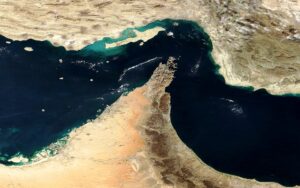
Bloomberg: 5 Questions about what would happen if Iran closed the Strait of Hormuz
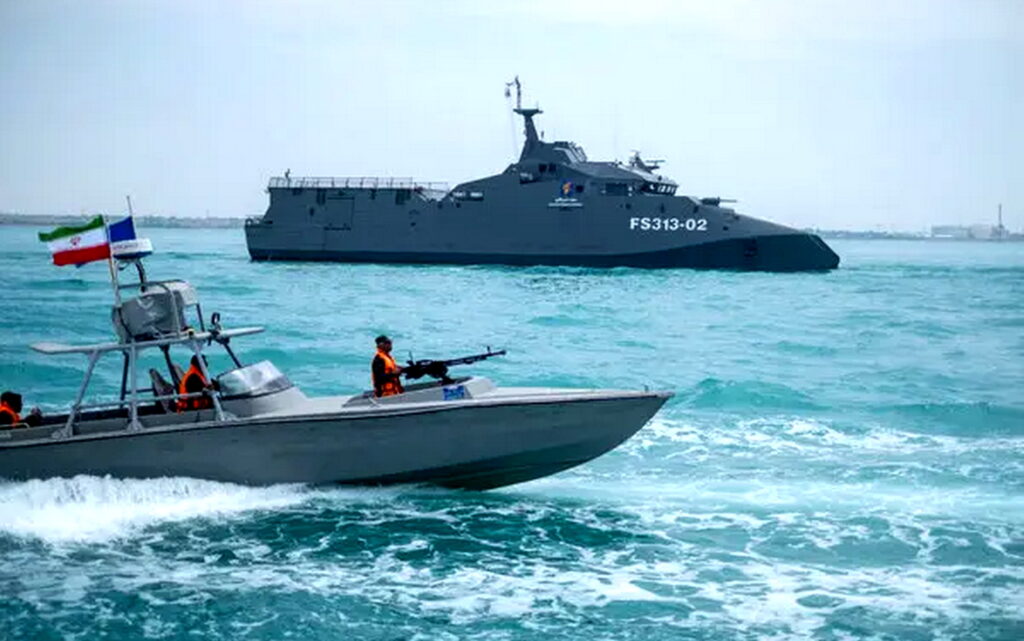
According to Bloomberg, the Israeli airstrikes eliminated part of Iran’s ballistic missile capabilities and killed a number of its military leaders.
This was followed by the US bombing of Iran’s nuclear sites.
Bloomberg recalled that Supreme Leader Ali Khamenei had threatened the United States with “irreparable damage” if it intervened in the conflict in support of its ally.
According to an explanatory article in Bloomberg, this statement fueled speculation that the Iranian leadership may resort to another means to curb its enemies: closing the Strait of Hormuz to shipping, or effectively closing it.
According to Oil strategist Julian Lee, nearly a quarter of global oil trade passes through this narrow waterway at the entrance to the Gulf.
If Iran prevents supertankers carrying oil and gas to China, Europe, and other major energy-consuming regions from accessing the Gulf, it will lead to a dramatic and rapid rise in oil prices and potentially destabilize the global economy.
And this plus waterway which connects the Gulf to the Indian Ocean, with Iran to the north and the United Arab Emirates and Oman to the south.
Its 161 kilometers long and approximately 32 kilometers wide at its narrowest point, with the width of the shipping lanes in each direction being just over 3 kilometers.
However, its shallow depths make ships sailing its waters vulnerable to mines, and its proximity to land—and Iran in particular—makes ships vulnerable to missiles launched from the shore or interception by patrol boats and helicopters.
Reflecting the importance of the Strait of Hormuz, giant ships transported nearly 16.5 million barrels per day of crude oil and condensates from Saudi Arabia, Iraq, Kuwait, the UAE, and Iran through it in 2024 alone, according to data compiled by Bloomberg.
More than a fifth of the world’s gas supplies—mostly from Qatar—also passed through it during the same period.
According to the article, Iran doesn’t have the legal right to halt traffic through the strait, so it would have to use force or threaten to do so.
If its naval forces attempt to block access to the strait, they will likely face a strong response from the US Fifth Fleet and other Western navies patrolling the area, potentially making navigation perilous for commercial vessels that might venture through it.
Closing the Strait of Hormuz would quickly damage Iran’s economy, preventing it from exporting its oil.
Has Iran ever obstructed maritime shipping?
The article cites instances of Iranian harassment of ships in the Gulf over the past decades.
In April 2024, the Iranian Revolutionary Guard Corps seized an Israeli-linked container ship near the strait, hours before launching a drone attack on the occupying state.
In April 2023, Iran also detained an American oil tanker, alleging that it collided with another vessel, and two Greek oil tankers in May 2022 for six months before releasing them.
The countries that rely most on the strait for their oil exports are those bordering it.
Saudi Arabia exports most of its oil through it, but it can divert its shipments to Europe using a pipeline of approximately 1,200 kilometers through the kingdom to a terminal on the Red Sea, allowing it to bypass both the Strait of Hormuz and the southern Red Sea.
The UAE can export some of its crude oil without relying on the strait, by sending 1.5 million barrels per day via a pipeline from its oil fields to the port of Fujairah on the Gulf of Oman, south of Hormuz.
With the closure of the oil pipeline to the Mediterranean, Iraq now relies heavily on the Strait of Hormuz for all its oil exports.
Kuwait, Qatar, and Bahrain have no choice but to ship their oil through the waterway, while Iran also depends entirely on it.