Axios: Trump and Netanyahu reached an understanding regarding Iran
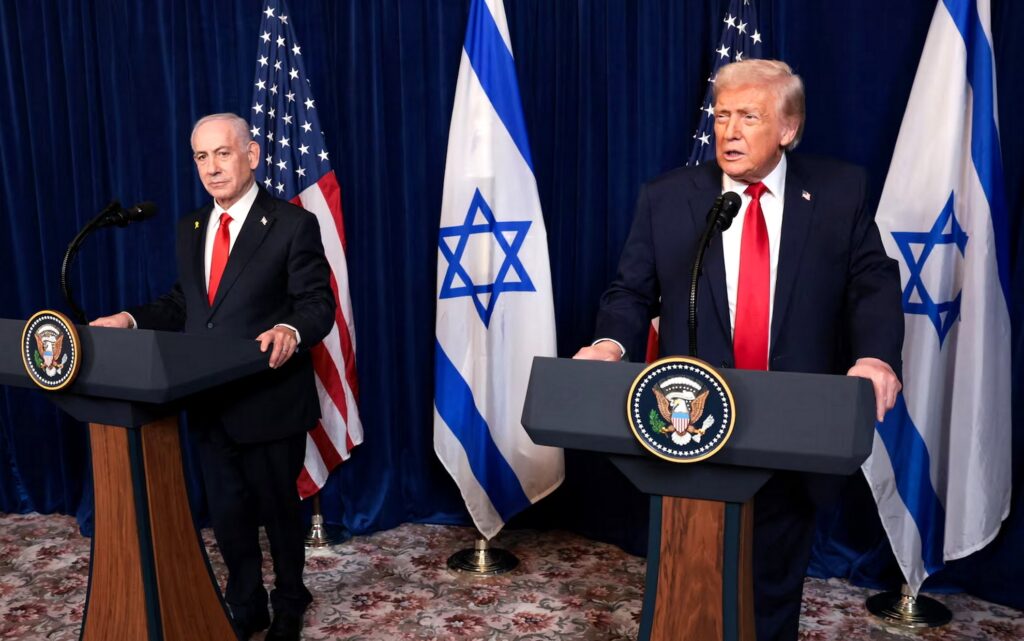
Axios revealed that US President Donald Trump and Israeli Prime Minister Benjamin Netanyahu reached an understanding, during a meeting at the White House last week, on escalating economic pressure on Tehran, while keeping the door for negotiations open.
The two sides agreed to work to reduce Iran’s oil exports, especially to China, which is Tehran’s most important trading partner in this sector.
It’s estimated that more than 80% of Iran’s oil is sold to Beijing, which doesn’t recognize US sanctions and has adopted alternative financial arrangements with Iran to the US dollar, including the use of the Chinese yuan and intermediary networks to circumvent the Western financial system.
The US-Israeli bet is that stifling oil revenues could prompt Iran to make broader concessions on its nuclear issue.
This comes in parallel with the continuation of US military reinforcements in the Middle East, in anticipation of the possible collapse of the diplomatic track.
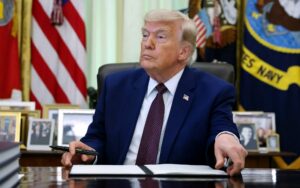
In this context, Trump signed an executive order a few days ago that allows for the imposition of 25% tariffs on countries that have trade relations with Iran, a move that could expand the circle of economic pressure outside the traditional framework of sanctions.
Thus, any escalation targeting Iranian exports to China could have a negative impact on the already tense US-Chinese relations.
This dimension is becoming more sensitive as a summit in Beijing between Trump and Chinese President Xi Jinping is expected to take place in April, where trade and energy are expected to top the agenda.
Although Trump and Netanyahu agreed on the strategic goal of preventing Iran from acquiring a nuclear weapon, disagreement arose over how to achieve this.
From his part, Netanyahu told Trump that reaching a good deal with Iran is almost impossible, considering that Tehran won’t abide by any pledges even if they are signed.
Trump, on the other hand, has shown a degree of pragmatism, noting that he sees a chance, albeit a limited one, to test the possibility of a compromise, saying, “Let’s see if it’s possible”.
During internal consultations, Trump asked his advisers Steve Witkoff and Jared Kushner about the chances of reaching a deal with Tehran.
They told the president that the task is difficult in light of past experiences, but it’s not entirely impossible, especially since recent Iranian messages contain relatively positive signals.
However, they stressed the need to adhere to a rigorous negotiating position and not make gratuitous concessions.
Preparations are currently underway to hold direct talks between Washington and Tehran in Geneva mediated by Oman, following an earlier round of indirect negotiations hosted by Muscat on February 6.
The meetings are expected to focus on the nuclear issue and de-escalation measures.
The United States and Israel accuse Iran of seeking to develop nuclear military capabilities, while Tehran maintains that its program is intended for peaceful purposes, such as power generation.
The Iranian leadership believes that the pressures and sanctions are aimed at undermining its sovereignty and creating justifications for any possible military intervention, and links any restrictions on its nuclear program to the lifting of economic sanctions imposed on it.
In the end, it seems that the next stage will witness a double test: escalating economic pressure on the one hand, and a fragile negotiating track on the other, while the prospects of settlement or escalation remain subject to complex calculations that go beyond the limits of the nuclear issue to the regional and international balances of power.