Foreign Affairs: Syria faces two options, one of which could save it from a civil war
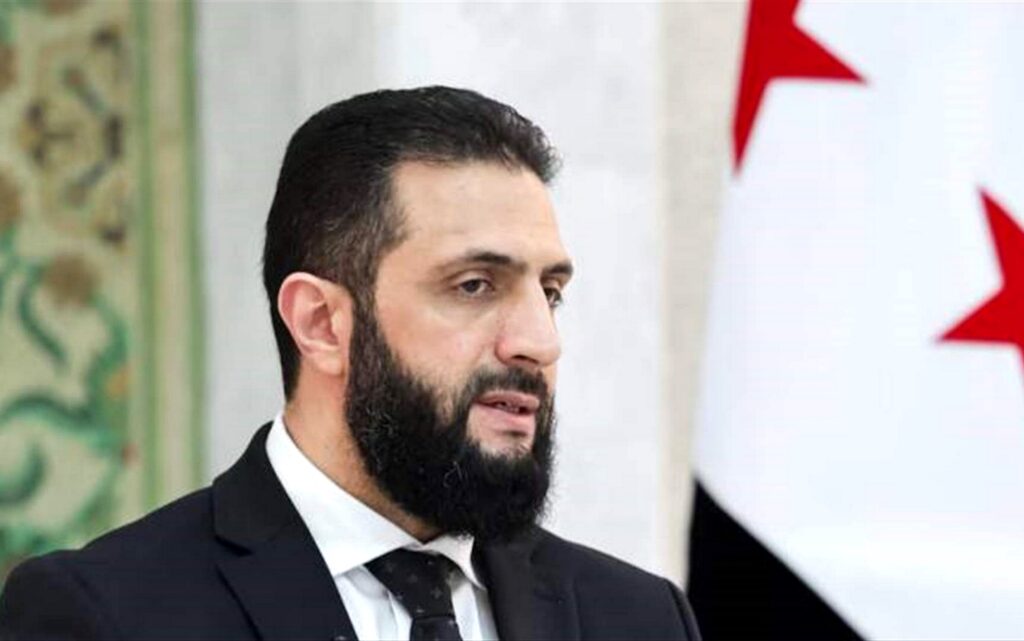
The Foreign Affairs magazine believes that Syria today stands at a critical crossroads, facing only two options: either slipping back into the throes of civil war, or adopting a new, more inclusive form of governance that guarantees a degree of stability and prevents the disintegration of the state.
The Foreign Affairs stated that nine months after the fall of former President Bashar al Assad, the country remains in a state of suspense and anxiety, amid an extremely complex political and security landscape that threatens to spark a new wave of sectarian and political violence.
The magazine explained that current President Ahmed al Sharaa, who previously rose to prominence as the leader of Hay’at Tahrir al Sham (HTS), now stands at the heart of this complex equation, having re-presented himself with a new political face based on rejecting “global jihad” and advocating pluralism and openness.
This sudden shift, according to the report, prompted US President Donald Trump to offer him unexpected political support, a move the magazine considered evidence of international confusion over Syria’s future.
But this support didn’t last long, as al Sharaa’s transitional government quickly ran into protests from minorities and deep internal divisions, leaving the country on the brink of yet another collapse.
The Foreign Affairs reported that Sharaa had managed to seize control of Damascus last December through his alliance with Hayat Tahrir al Sham, ousting Assad.
He then formed an interim government, through which he sought to open a new transitional page.
At the time, he delivered a moderate speech in which he spoke of pluralism and his willingness to engage in dialogue with regional and international powers.
He even hinted at the possibility of establishing normal relations with Israel, which encouraged some US circles to consider him a viable bet.
However, Foreign Affairs warned that this shift remains superficial.
The new government includes hardline figures, and the inner circle surrounding Sharaa is more inclined to monopolize power than to share it.
The report indicated that the rejection of federalism is at the heart of the current crisis, as Washington rejects any decentralized form of governance, while Damascus adheres to centralization and considers federalism a threat to the country’s unity.
But this insistence on centralization exacerbated tensions with minorities.
Last March, the Alawite-majority Syrian coast witnessed massacres that claimed the lives of more than 1,500 people, while in July, interim government forces, backed by Bedouin tribes, launched bloody attacks on Druze villages in Sweida, resulting in hundreds of deaths and a crippling siege of the region.
These events deepened minority fears that the new regime was merely another version of the old oppression.
They also prompted Israel to intervene directly with airstrikes targeting Bedouin fighters and the Syrian Ministry of Defense, in an attempt to deter attacks targeting the Druze, whom it considers a protected minority.
The Kurds weren’t immune to these unrests, as the Syria Democratic Forces, which played a pivotal role in defeating ISIS, now view the Sharaa government as an adversary rather than a partner.
These forces have rejected government demands to disarm and integrate them into a new national army, particularly following the scenes of killing and displacement in Sweida and the Alawite regions.
According to the Foreign Affairs magazine, negotiations that were supposed to take place in Paris this summer collapsed following Damascus’ withdrawal, declaring that the decisive outcome will be on the ground.
Despite the image Sharaa is trying to promote of his army’s strength, the Foreign Affairs magazine says its military capabilities are exaggerated and don’t appear capable of breaking the cohesive Kurdish forces.
Foreign Affairs believes that the Syrian government’s insistence on centralized governance will only fuel further conflict, while federalism may represent the only lifeline to avoid state collapse.
According to the report, federalism allows minorities to exercise local autonomy in their regions, while major sovereign decisions, such as foreign policy and defense, remain in the hands of the central government.
Analysts believe that this model could spare Syria the paralysis of the Lebanese model or economic conflicts similar to the Iraqi model.
The Foreign Affairs magazine noted that some voices in Washington have begun to realize that something less than federalism may be a realistic way out, despite the Trump administration’s reluctance to embrace this approach.