Austria plans to cut financial support for Ukrainians who left their country by their vehicles
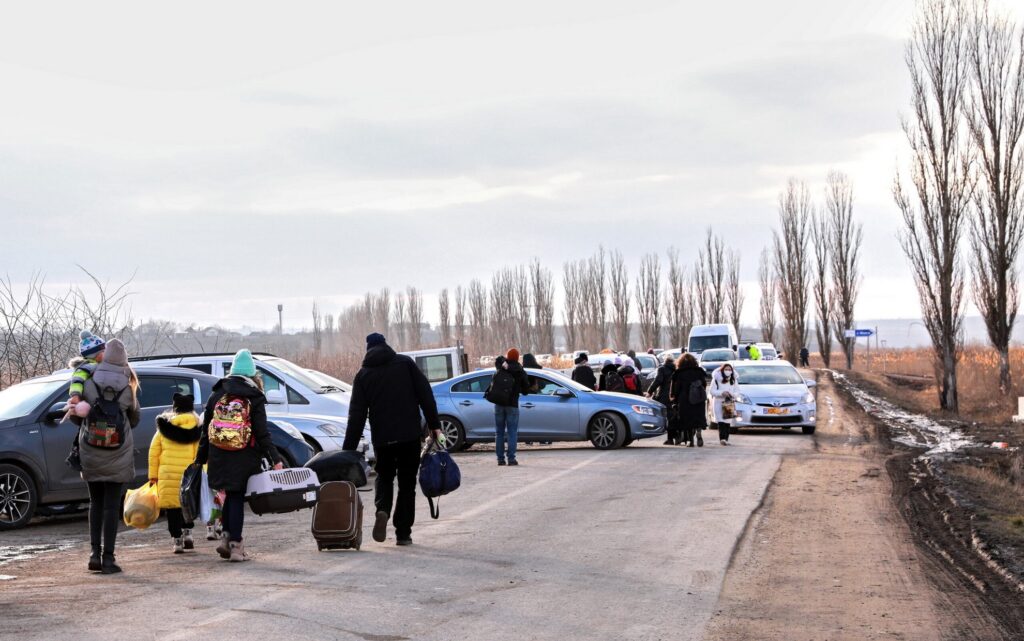
In Austria, there is discussion about cutting basic aid to Ukrainian refugees who fled their homeland.
The decision on whether they must liquidate their assets, including their cars, before receiving financial support is left to the states.
According to a report from the Kronen Zeitung, each case will be assessed individually in Vienna.
Therefore, someone who owns a luxury car may not qualify for basic assistance.
Other states, however, see simply owning a car as an indication of having sufficient resources.
In Germany, the Ukrainian refugee receives 563 Euros in monthly assistance if he lives alone, 506 Euros for a partner, and up to 471 Euros for children and adolescents.
In addition, the state covers the costs of accommodation, heating, hot water, furniture, and household appliances.
This puts Ukrainian refugees in a better financial position compared to asylum seekers from other countries.
They also have the right to work immediately upon arrival in Germany.
However, according to May 2024 statistics from the German Employment Agency, only a fifth of the 1.2 million Ukrainians living in Germany are employed.
In Ukraine, the luxury car market is booming, with imports increasing by 112% in the first months of last year, according to Oleg Omelnytsky, director of the Ukrainian AUTO-Consulting Group.
But driving a Lexus and receiving state aid at the same time?
That’s frustrating, especially when compared to the conditions for Germans receiving monthly assistance (Bürgergeld), where they are not allowed to own a car worth more than 15,000 Euros or other assets that exceed that limit.
Since the start of the Russian invasion of Ukraine nearly three years ago, about ten million Ukrainians have fled their homes, including 6.2 million who have sought refuge abroad.
In this context, raising the issue of envy as is happening in Austria is unjustified.
It’s true that Ukrainian refugees receive preferential treatment compared to other refugees, but the aim was to speed up their integration.
In addition, many refugees consider their cars one of the few possessions they were able to take with them when they fled.
According to a survey conducted by the United Nations High Commissioner for Refugees, two-thirds of refugees want to return to their home countries after the war ends.
In this sense, their cars and possessions are seen as a means of starting over in Ukraine.