Foreign Policy: How the European friendly mood changed towards Israel?
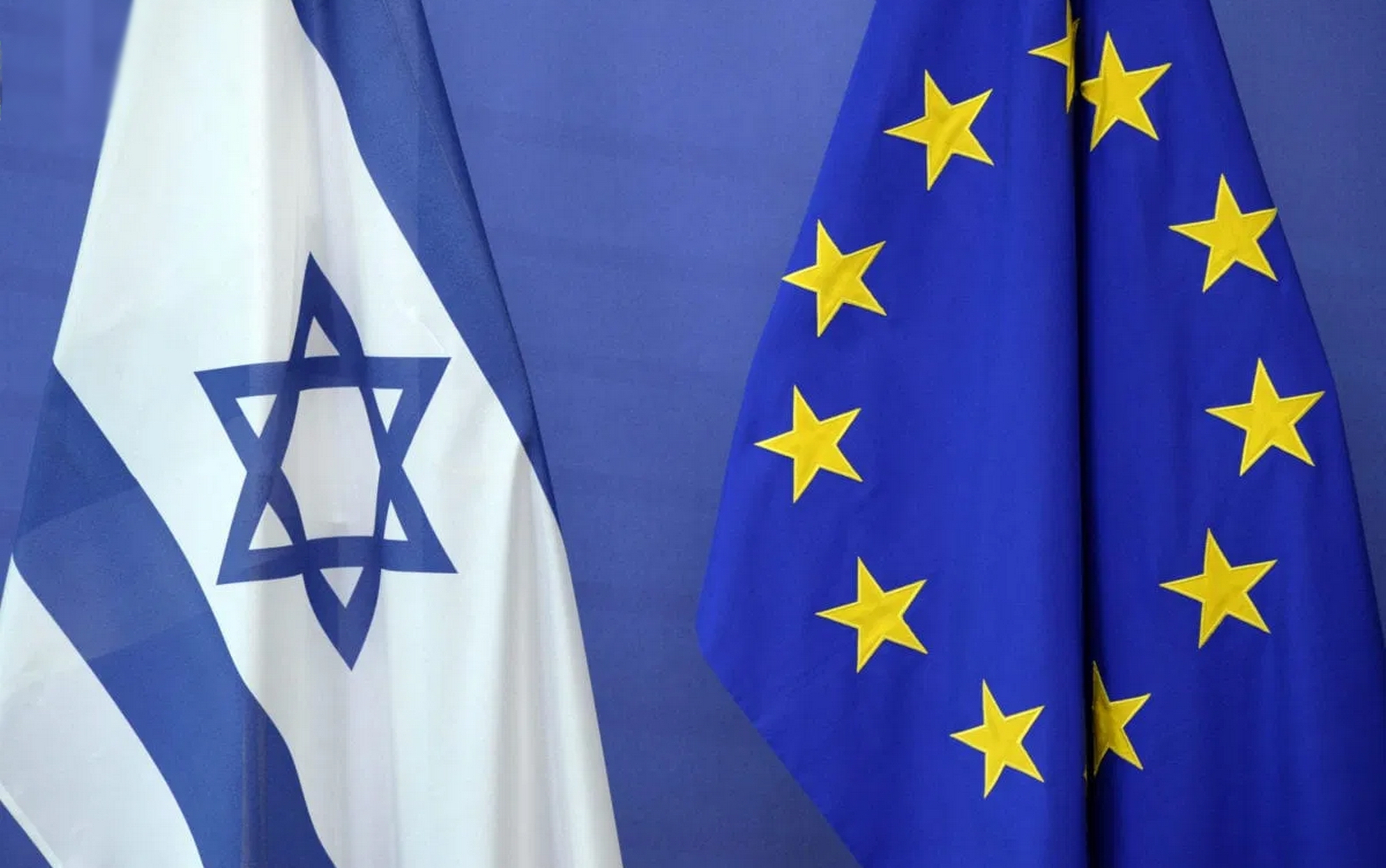
A report by the Foreign Policy magazine, asked whether the economic and technological performance of Israel was behind the European interest in it, or whether the European community began to view it as a country facing similar challenges and terrorist attacks.
The magazine pointed out, in a report published on Thursday, that “the recent fighting with the Palestinians revealed a fundamental change in European foreign policy towards Israel, which took years to create”.
Last week, Austrian Prime Minister Sebastian Curtis allowed the raising of the Israeli flag over government buildings in solidarity with the country that faced missile attacks by Hamas on its cities.
“I condemn with the utmost firmness the attacks against Israel from the Gaza Strip, and Israel has the right to defend itself against these attacks,” the conservative advisor said, while Curtis was known to be against Israel in the past few years.
On Wednesday, the European Council with the exception of Hungary approved a resolution calling for a ceasefire, but the Austrian chancellor is not far from European leaders in expressing their support for Israel.
The ceasefire agreement between Israel and the Palestinian factions began at 2:00 local time in the Gaza Strip on Friday dawn.
The report stated that “since the beginning of the new round of violence between Israel and Hamas, European leaders have been vocal in expressing their support for Israel’s right to defend its citizens”.
For example, German Chancellor Angela Merkel described Hamas’s missiles as “terrorist attacks,” in addition to asserting the German political class, from left and right, in the midst of a parliamentary campaign, their support for Israel.
For his part, Israeli Prime Minister Benjamin Netanyahu appreciated these supportive statements, and thanked US President Joe Biden, as well as European leaders, specifically “French President Emmanuel Macron, British Prime Minister Boris Johnson, the Chancellor of Austria, the German Chancellor, and others”.
The magazine reported that “this was not the case, as the European Union’s relations with Israel have been known to be cold for decades, and during the Second Intifada, the Europeans made an effort to balance the Bush administration’s embrace of the government of then Israeli Prime Minister Ariel Sharon, and public opinion was hostile to Israeli moves in Palestine”.
In a poll in 2003, which sparked much controversy, 59% of Europeans described Israel as the most serious threat to world peace, while protests and calls for a boycott were common.
However, the mood is changing, according to the same report.
The Foreign Policy magazine report added, “Netanyahu has worked in recent years actively to develop relations with European leaders, especially on the illiberal side, as he considered them natural allies”.
In the same context, Hungarian Prime Minister Viktor Orban received a warm welcome in Jerusalem in 2018, a visit that was criticized locally because of the far-right man’s history of courting anti-Semitic trends and the Nazi Holocaust.
Other European populist leaders, such as then Italian Deputy Prime Minister Matteo Salvini, visited Israel in 2018.
Israeli historian Ze’ev Sternhell condemned, at the time, what he considered Netanyahu’s desire to see himself “as an integral part of this anti-liberal bloc”.
The Foreign Policy emphasized that the friendlier European accent towards Israel cannot be explained only through Netanyahu’s close relationship with a few illiberal European leaders such as Orban.
The report concluded that “a combination of European economic, geopolitical and domestic causes can explain this gradual and undeniable transformation”.
The Foreign Policy magazine continued: “The Europeans have not changed their official position on the Israeli-Palestinian conflict, and they still support the resumption of the peace process, an end to the occupation, and a two-state solution on the 1967 borders as a way forward”.
The European Union is also the most important provider of aid to the United Nations Relief and Works Agency for Palestine Refugees in the Near East (UNRWA) and the Palestinian National Authority.
The report continued that “the Palestinian issue is no longer a priority in the overall relationship, despite the fact that 9 European countries recognize Palestine as a state, except for the Czech Republic and Hungary, which followed the step of former US President Donald Trump to recognize Jerusalem as the capital of Israel”.
Foreign Policy attributed this in the first place to the changing nature of the Middle East, as the Arab Spring in 2010, the Syrian war and its consequences on Europe (terrorist attacks and increased immigration), and the Iranian nuclear file led to a change of priorities in the Middle East.
Despite the recent escalation of aggression on the Gaza Strip and the West Bank, it is rare today to find a European diplomat who claims that the Israeli-Palestinian conflict is the key to resolving all tensions and conflicts in the region, according to the same source.
The report added that “many European diplomats have privately admitted that the Abraham accords added another nail in the coffin of Europe’s focus on Israel and Palestine.
After the agreements last year, Israeli Foreign Minister Gabi Ashkenazi was invited to attend the European Council in the German capital Berlin, It is the first time that this honor is given to an Israeli diplomat”.
The Foreign Policy magazine also mentioned that “energy discoveries in the eastern Mediterranean” stimulated deep cooperation within the framework of efforts to exploit resources between Greece, Cyprus, Israel and Egypt against the demands of the Turkish neighbor.
On April 18, Israel and Greece signed a defense deal worth $ 1.65 billion between the two countries, after a meeting between the foreign ministers of the United Arab Emirates, Greece, Cyprus and Israel.
The economic and technological performance of Israel has started to attract European attention, as it was the first non-European country to be associated with a series of scientific bodies in the European Union, according to the report.
Examples of such bodies are the “Framework Programs for Research and Technological Development” and the “European Organization for Nuclear Research” (CERN) as well as the global navigation system “Galileo”, all of which are affiliated with the European Union.
In 2011, France announced the purchase of “Heron” drones worth $ 500 million, in violation of the 44-year-old embargo on Israeli weapons, which was initiated by then French President Charles de Gaulle after the Six-Day War (setback) in 1967.
Shortly after the election of French President Emmanuel Macron in 2017, the Minister of Economy and Digital Affairs visited the Israeli Innovation Festival in Tel Aviv, months before the French Foreign Minister visited Israel.
Like France, Germany concluded a 9-year lease of Israeli drones in 2018, worth $ 1.2 billion, after approval by Parliament, which Netanyahu praised as “contributing to European security”.
“In 2020, the European Union commissioned Airbus, along with two Israeli aviation and space companies, to fly drones over the Mediterranean Sea to monitor migrant smuggling ships,” the magazine explained.
The report considered that “the main change (toward Tel Aviv) came from European societies themselves, which is a symbol of something deeper” than the change at the level of political systems.
Over the past few years, Europeans have viewed Israel as a country facing similar challenges in the face of terrorist attacks.
This convergence is evidenced by the statement by Aurore Bergier, MP for Macron’s “Republic Forward” party and chair of the French-Israeli Friendship Group, that “we have a common front with Israel: the struggle against Islamic terrorism”.
“More than ever, this is what brings us closer and explains the diplomatic shift in Europe toward Israel,” added Bergé, according to the Foreign Policy magazine.
The report quoted Damir Marusik, a senior fellow at the Atlantic Council think tank (Washington), in an article entitled: “Between Brussels and Jerusalem”.
“The two capitals embodied competing notions of the West’s sense of history and the meaning of World War II and the Holocaust”.
While the disasters of World War II called on Europe to cooperate and pursue technocratic rule, the tragic fate of the Jews in Europe was a reason for their tendency to overcome their historical impotence and build a strong Jewish nation supported by strong borders and an army.
The magazine pointed out that “the Europeans viewed their successful model as a future model for the rest of the world,” wondering, “Is there a better place to apply the European model than to reconciliation between Israel and Palestine?”
According to the report, things did not turn out this way.
15 years ago, observers were warning of the increasing Israeli diplomatic isolation if it failed to find a lasting and peaceful solution to the Palestinian issue.
But these predictions of isolation have not only been fulfilled with Europe and the United States, but Israel has also forged new partnerships with India, Russia and Africa, and has more economic and diplomatic partners than ever before.
The report finds that with the increasing “terrorist attacks, identity concerns, immigration and the free fall of center-left parties such as the French Socialist Party or the German Social Democratic Party, Europeans have become suspicious of their model”.
In conclusion, the Foreign Policy magazine asked whether the historical feeling of the European nation tends toward Israel in the end?
Until the time of publication of the report, there was no comment from the European side or any of the countries mentioned in Foreign Policy magazine report.