Whats is behind the Russian struggle to counter Ukrainian incursion in Kursk?
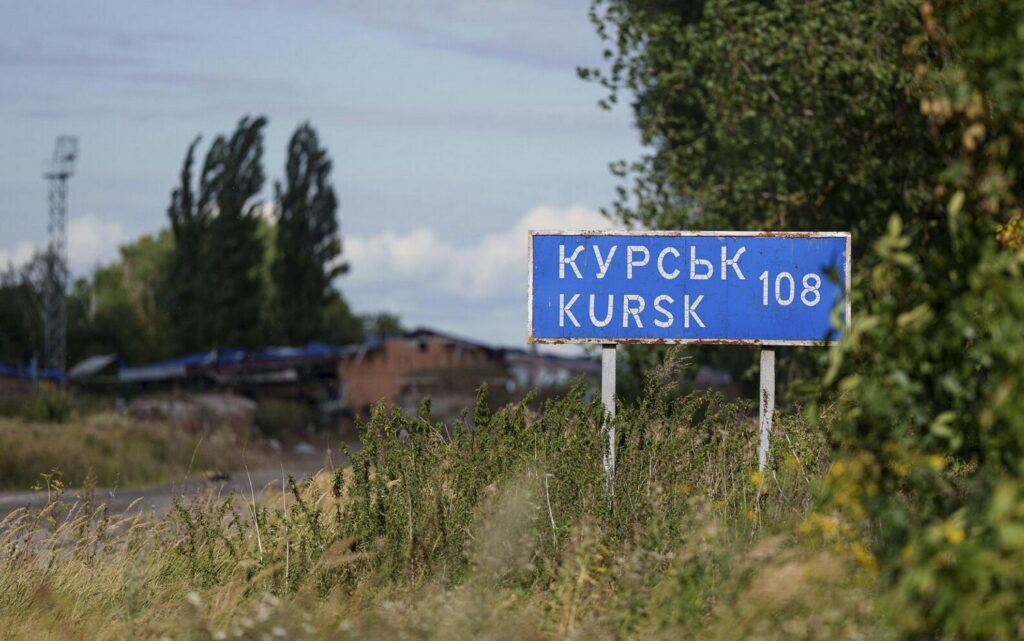
After three weeks of fighting, seemingly, Russia is still struggling to dislodge Ukrainian forces from the Kursk region, in a slow and ineffective response to the first occupation of part of its territory since World War II.
Because its military is more focused on attacks inside Ukraine, Russia currently seems to be not giving much more seriousness regarding the Ukrainian offensive in Kursk, as President Vladimir Putin doesn’t appear to see an attack on Kursk as a significant threat that would require a drastic measure like transfer forces from the eastern Donbas region to confront the incursion.
Meanwhile, the Kremlin is more interested in continue the advance in the entire eastern front, such as Donetsk, Lugansk, and Karkov, and seemingly hold the lines in the southern front.
According to Nigel Gould-Davies of the International Institute for Strategic Studies, Russia is doing everything it can to avoid withdrawing units from its offensive in Donbas, and believes it can contain the threat on its own territory without affecting its main objectives in Ukraine.
As Ukrainian forces still presence in the areas that it controls in Kursk, Russian forces continue their advance in several fronts in the east.
Putin described the attack on Kursk as an attempt by Kyiv to slow down the Russian campaign in the Donbas, and noted that Russian advances in the Donbas had accelerated despite the events in Kursk.
In this context, Russia has launched a sustained bombardment of the Ukrainian power grid, causing widespread power outages and exposing gaps in Ukraine’s air defenses.
Ukrainian military commander General Oleksandr Syrskyi said his forces control about 1,300 square kilometers and about 100 settlements in the Kursk region, a claim that hasn’t been independently verified.
Given the changing situation in Kursk, Ukrainian forces may be able to move around the region without establishing a permanent presence in many settlements.
Observers have noted that Russia lacks the well-coordinated resources to pursue Ukrainian forces in Kursk, Moscow’s efforts to counter the new Ukrainian offensive appear limited to sending in units from across Russia, including militias and irregulars.
President Vladimir Putin has been cautious in using conscripts to avoid a public backlash, with hundreds captured and 115 exchanged for Ukrainian forces.
Putin is also reluctant to call up more reservists, fearing internal instability, as happened with an unpopular mobilization of 300,000 people in 2022.
The Kremlin has since bolstered its forces in Ukraine with volunteers, but the flow has recently slowed.
In contrast, Ukraine’s destruction of bridges across the Sim River has embarrassed the Kremlin and disrupted the logistics of some Russian units, proving what the Ukrainian president, Volodymyr Zelensky said, that Kyiv is seeking for creating what he called it “buffer zone”.
Thus, by this seizing a chunk of Russian territory, Ukraine has embarrassed the Kremlin and reshaped the battlefield, however this move, by diverting some of their most capable forces from the east is a gamble for Ukraine, because it carries all sorts of big risks, especially if trying to stretch Russian forces out of proportion will stretch smaller Ukrainian forces.