What went at the fifth round of the Syrian-Israeli talks in Paris?

The negotiations between Syria and Israel, hosted by Paris, are no longer just technical rounds conducted quietly behind closed doors, but have turned into a broad regional test to reset one of the Middle East’s most sensitive fronts.
At a regional moment full of pressures, the latest round of talks reflected the shift of the Syrian-Israeli issue from a narrow margin of engagement to the top of political and security calculations.
Far from the traditional image of a slow and open negotiation process, diplomatic data reveal that what happened in Paris was the result of an integrated political process, in which coordinated Arab and Turkish pressure on Washington overlapped with a growing US desire to end the state of attrition in southern Syria, which has become a direct threat to any regional stabilization project or a rearrangement of influence.
In this context, Paris emerged as a testing ground for the seriousness of the parties, not only through the content of the discussions, but also through the changes that affected the composition of the Israeli delegation, the escalating US role, and the regional presence on the sidelines of the negotiations.
The replacement of the head of the Israeli delegation, the raising of the level of security representation, and the entry of the White House with its political weight are all indications that the process has passed the stage of maneuvering to a moment of decision.
The fifth round of the Syrian-Israeli negotiations held in Paris on January 5 and 6 weren’t transient technical meetings, but came as a result of an integrated regional political process, interspersed with coordinated Arab and Turkish pressure on the US administration, to push towards reaching a security agreement between the two sides that puts an end to the ongoing state of attrition on the ground and in southern Syria, and limits Israel’s continued obstruction of the process Syrian stability.
A number of Arab countries, along with Türkiye, have clearly informed Washington that the continuation of the status quo in southern Syria is no longer containable, and that leaving the region open to chaos, limited clashes, and separatist projects will undermine any attempt to restore stability to Syria or adjust regional balances.
These pressures didn’t remain in the theoretical political framework however, but were accompanied by a direct regional presence on the sidelines of the Paris rounds.
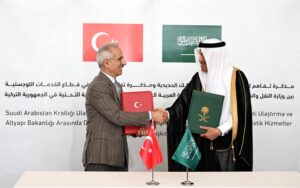
The negotiations took place with direct Turkish-Saudi accompaniment, as Turkish Foreign Minister Hakan Fidan arrived in Paris at the same time as the rounds of negotiations, while a high-ranking Saudi official also attended, within the framework of unannounced coordination aimed at securing a regional umbrella that supports the US track, and ensuring that the negotiations don’t deviate towards arrangements that reproduce chaos or division in southern Syria.
The Turkish-Saudi role wasn’t interfering in the details of the negotiations between Syria and Israel, but was limited to controlling the regional political rhythm and stressing that any security understanding must serve the stability of the Syrian state, not opening new channels of influence or consecrating areas outside of control.
The Syrian side, through the US Special Envoy Tom Barrack, conveyed sharp remarks to the US administration regarding the performance of the former head of the Israeli delegation, Ron Dermer, considering that he didn’t show real seriousness in the course of negotiations between Syria and Israel, and treated the previous rounds as a space for political maneuvering, through repeated coups against verbal understandings reached, which practically disrupted any chance of an agreement.
The Syrian characterization resonated within the US administration, which in turn had recorded similar remarks about Dermer’s handling of the dossier in a way that serves Israel’s internal calculations more than serves the goal of reaching a stable understanding.
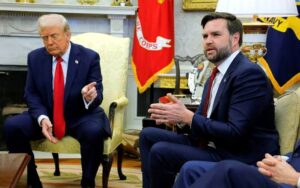
US Envoy Tom Barrack exerted direct pressure to change the head of the Israeli delegation, before this pressure moved to a higher level with the entry of US President Donald Trump during his communication with Israeli Prime Minister Benjamin Netanyahu.
As a result, Israel’s ambassador to the United States, Yehiel Leiter, was assigned to head the Israeli delegation, with the participation of Maj. Gen. Roman Goffman, the prime minister’s military secretary, as well as high-level representatives of the Shin Bet and Mossad, in a move that the source interpreted as a serious attempt to get the negotiations out of the narrow political calculations and put them in the custody of the security establishment.
The US administration sent to Damascus Admiral Brad Cooper, commander of the US Central Command (CENTCOM), who informed the delegations that President Trump has decided to raise the level of US involvement in this track, by assigning Steve Witkoff to follow up on the Syrian-Israeli Issue directly, with the aim of moving from an open negotiation management to an attempt to produce an actual understanding.
During his meeting with Netanyahu in late December 2025, Trump exerted great pressure to convince him of the need to reach a security agreement with Damascus, with an initial perception of the possibility of building on this agreement later through limited or undeclared economic approaches, if the political and security conditions are met.
The Syrian delegation entered the negotiations with a clear ceiling of demands, which included an Israeli withdrawal from all Syrian territory, with a gradual withdrawal to the borders of Mount Hermon in the first phase, the cessation of any support for separatist projects in Swaida and the areas of southern Syria, the cessation of the training or support of members of the Syria Democratic Forces (SDF), in addition to the cessation of any communication or coordination with the remnants of the former Assad regime.
The Syrian side also stressed its rejection of any expanded demilitarized zone formula, and the rejection of the reduction of Syrian sovereignty through foreign bases or the introduction of advanced military technologies to Damascus by Arab or regional parties, including Türkiye, stressing that any security understanding must be based on the principle of full sovereignty.
The discussions in the closed sessions entered into delicate technical-political details, which went beyond the general headlines, and focused on the reactivation of the 1974 disengagement agreement, while discussing practical amendments that take into account the transformations on the ground that Syria has witnessed since 2011.
Maps of troop deployments, monitoring mechanisms, and the role of the United Nations were discussed, in exchange for a gradual Israeli withdrawal from advanced points in the south, especially in the vicinity of Mount Hermon.
The Syrian delegation stressed that any formula that doesn’t include a clear and time-bound withdrawal will be rejected.
US forces in Syria also strongly attended the issue of Swaida and southern Syria, where the Syrian side demanded the cessation of any direct or indirect Israeli contact with local groups, and considered the use of the protection card or separation as a red line that cannot be separated from Syrian national security.
On the other hand, the Israeli side tried to link this issue to what it called long-term security guarantees, without providing written commitments.
The discussion also dealt with the issue of the Syria Democratic Forces, where the Syrian side presented a direct objection to any support, training, or channels of communication with them, and linked this issue to stopping any use of the remnants of the former Assad regime as an internal pressure card.
the Israeli side has expressed readiness to review its previous approaches within a broader basket of understandings.
The issue of regional influence in Syria was also on the table, as Damascus stressed its refusal to turn the security agreement into a gateway to redistribute influence or impose new realities, which was discussed at length in light of the Turkish-Saudi accompaniment to the process.
Steve Witkoff’s presence on the second day of the negotiations changed the tone of the sessions, as they moved from exchanging general positions to discussing executive scenarios, related to the gradual steps, guarantees of commitment, and US follow-up mechanisms, while stressing that Trump wants an implementable agreement, not an open negotiation with no horizon.
Assessments within the Israeli security establishment indicate that reaching an agreement with Syria serves Israel’s strategic interest in the medium term, as it forces the repositioning of a future Syria within more controllable equations, in contrast to Benjamin Netanyahu’s political bets that tend to manage the conflict rather than resolve it.
US President Donald Trump has told Arab and Western leaders that he wants Syria and Israel to sign an agreement before the middle of this month, and that he is striving with all his might to achieve this.
The latest round of negotiations between Syria and Israel concluded with the establishment of a liaison cell to share intelligence and de-escalate militarily.
A joint Israeli-Syrian statement issued by the US State Department said senior officials from Israel and Syria met in Paris and reaffirmed their commitment to reaching lasting arrangements for the security and stability of the two countries.
The joint statement added that the leadership of US President Donald Trump has allowed for fruitful discussions on respect for Syria’s sovereignty and Israel’s security.
The statement revealed the establishment of a joint integration mechanism as a liaison cell for immediate intelligence coordination and de-escalation, and the joint mechanism also includes diplomatic and commercial engagement under US supervision.
The statement noted that the Syrian-Israeli Joint Mechanism will be a platform to quickly address any differences.
The statement said that Washington appreciates the positive steps between Syria and Israel and affirms its commitment to support their implementation, and that the Paris meeting indicates the determination of Syria and Israel to turn over a new leaf.