Wall Street Journal: An imminent deal between Syria and Russia guarantees Moscow’s retention of the Hmeimim and Tartus bases

The Wall Street Journal reported that Syria is close to signing a deal with Russia that would guarantee Moscow’s retention of the Hmeimim and Tartus bases.
If the move happens, it would reflect the new administration in Damascus’ desire to open up to regional and international powers away from Türkiye, given the ambiguity of the US position.
The news comes after reports that Israel has been making intensive diplomatic efforts to convince the United States to keep Syria weak and disintegrating, while ensuring that Russia maintains its military bases there, in an effort to curb growing Turkish influence in the region.
Sources said to the WSJ that the relationship between Israel and Türkiye, which has always been tense, had witnessed a sharp escalation during the war on Gaza.
Israeli officials informed Washington that the new regime in Syria, supported by Ankara, posed a direct threat to Israel’s borders.
Later, the Wall Street Journal said that Moscow had shown goodwill and a serious willingness to cooperate with Syria’s new rulers, amidst the hesitation of neighboring countries.
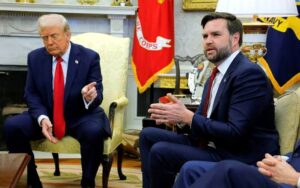
US President Donald Trump’s ambiguous stance toward Damascus has prompted some countries to hesitate in offering assistance, fearing sanctions.
Over the past month, Russia has delivered the equivalent of $23 million in Syrian currency at official rates to the central bank in Damascus.
Syrian and European officials told the Wall Street Journal that Moscow printed banknotes for Syria’s cash-starved economy when Qatar and Saudi Arabia refused to provide millions of dollars in financial aid to the new regime, arguing that these countries were waiting for clarification from Washington about whether US sanctions on the armed opposition factions that hold power would be lifted.
Moscow, by contrast, has no such concerns, as its already under US and European sanctions over its war in Ukraine, and has nothing to prevent it from engaging with Syria or consulting with other countries, according to Anna Borshchevskaya, a fellow at the Washington Institute who focuses on Moscow’s Middle East policy.
She pointed out that there is an important problem in this regard: How will the West present itself as an alternative to Russia to reduce dependence on it?
Moscow is expecting a price for its services that includes keeping its military bases, which is being negotiated along with several other issues, including billions of dollars in cash and investments in gas fields and ports, a possible apology from Moscow for its role in bombing civilians, and even the issue of the new Syrian authorities demanding the extradition of ousted President Bashar al Assad.
But Putin refused to hand over Assad, sources familiar with the talks told the Wall Street Journal.
The WSJ notes that serious Syrian-Russian negotiations began after Mikhail Bogdanov, Russian Deputy Foreign Minister, and Alexander Lavrentiev, Moscow’s envoy to Syria, visited Damascus in January.
The meeting was initially intended to discuss the future of the Hmeimim air and naval base in Tartus, but the talks quickly evolved into broader economic ties, according to people familiar with the negotiations.
The talks covered political, trade and economic relations, including Russia’s readiness to “improve the social and economic situation in Syria,” a Kremlin statement said.
A few days later, Moscow sent a planeload of cash, demanding that Damascus return the money the former regime had transferred to Russia, the WSJ reported.
That included about $250 million that had been transferred to a state-owned bank in Moscow, as well as the Assad family’s fortunes, which have bought luxury apartments worth more than $40 million, according to a 2019 report by the anti-corruption watchdog Global Witness.
Some observers believe that Damascus wants to diversify its allies outside Ankara’s circle, at least partially, while the opening of Syria’s new rulers to Putin restores his broad and long-term economic ambitions in the country.
Work has already begun on contracts including the construction of the suspended port of Tartus, the development of giant offshore natural gas concessions, phosphate mines and hydrocarbon fields in the Palmyra area, as well as the construction of a fertilizer plant in Homs in central Syria.