Vladimir Putin to be inaugurated president for a fifth term
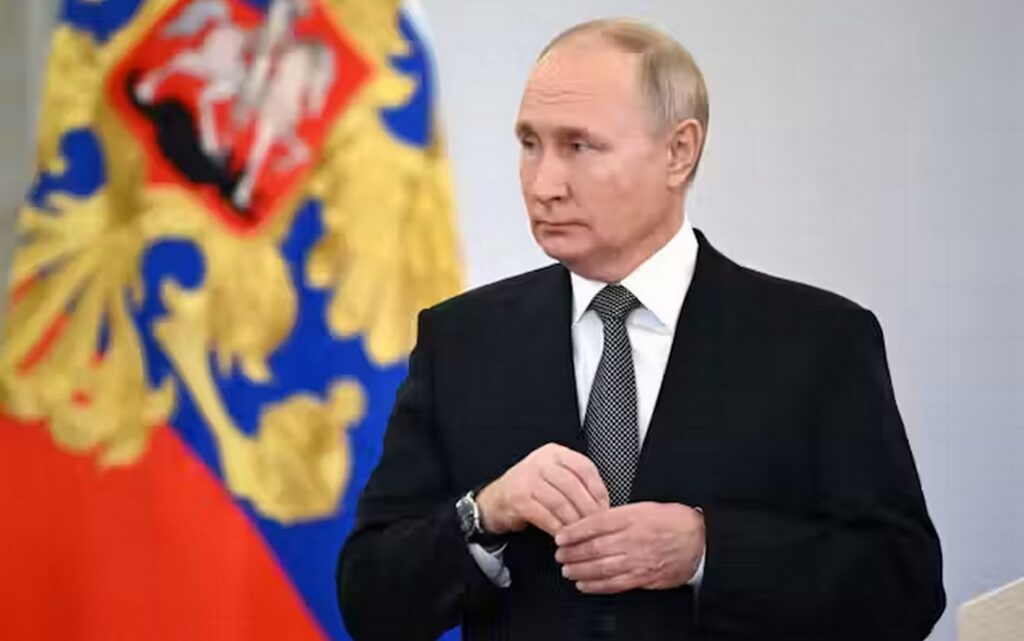
Vladimir Putin will be sworn in Tuesday for a fifth term as Russia’s president, wielding absolute power while cracking down on dissent as Russian forces make advances on the Ukrainian front.
Nearly two months after being re-elected in the absence of opposition candidates, the 71-year-old Russian president, who has ruled the country for nearly a quarter of a century, will take power until at least 2030.
In 2020, the constitution was amended to enable him to stay in power for two more six-year terms, until 2036 when he turned eighty-six.
In the Kremlin, in the presence of the country’s political elite and foreign representatives, including the French ambassador, the inauguration ceremony begins at 12:00 local time (9 GMT), and will last an hour.
Other European countries, including Poland, Germany and the Czech Republic, have said they will not send representatives to the ceremony to express their opposition to the Kremlin’s policy.
During the ceremony, Putin will be sworn in before delivering a short address to the nation.
The speech comes two days before the anniversary of the Soviet victory over Nazi Germany on May 9.
The commemoration is one of the pillars of Vladimir Putin’s power and influence policy, which asserts that he is waging war against “neo-Nazis” in Ukraine.
The inauguration ceremony coincides with an improved position for the Russian military on the front after humiliating setbacks in the spring and fall of 2022 during the first months of a large-scale invasion of Ukraine.
In recent weeks, Russian attacks in eastern Ukraine have intensified and allowed several towns to be seized, particularly around the strategic city of Avdiivka, which the Russians captured in mid-February.
Ukrainian forces, on the other hand, are suffering from a shortage of ammunition and many after their failed counteroffensive in the summer of 2023.
It’s waiting for new U.S. assistance, while Russia’s defense industries are fully operational.
In central Moscow, several barricades have been erected along main streets in preparation for the inauguration and military parade to mark the ninth of May.
From its part, the Ukrainian Foreign Ministry said Monday that it aimed to “give the impression of legitimacy” of Putin’s continued rule, saying that the latter had turned Russia “into an aggressor state” and the existing regime “into a dictatorship”.
In mid-March, after a ballot he officially won with more than 87% of the vote, Vladimir Putin spoke of a united Russia behind him and the military.
Western countries, led by the United States, denounced the election, which was fought without any opposition, just weeks after Russia’s main opposition figure Alexei Navalny died in prison under mysterious circumstances.
Russia’s main dissidents are in exile or in prison, like many ordinary citizens who have voiced opposition to Russia’s invasion of neighboring Ukraine.
The authorities have also cracked down on sexual minorities already severely targeted and are paying the price for promoting the “traditional values” that Putin defends.
Last year, the Russian president also suppressed an attempted mutiny by former head of Russia’s Wagner militant group, Yevgeny Prigozhin, who was later killed in a plane crash.
However, Vladimir Putin faces several challenges, especially in the economic field, while the outcome of the war in Ukraine remains unresolved.
Inflation continues due to a surge in the federal budget caused by military expenditures, worrying a population whose purchasing power has been hit hard by the fallout from Western sanctions on the country.
Russia’s economy, which relies heavily on hydrocarbon revenues, is supposed to turn to Asia at the behest of Vladimir Putin himself, but the necessary infrastructure, which is expensive and takes many years to build, is still lacking.