US Reports: Thousands of Marines on their way to the Middle East

US media reported that the United States has sent additional military reinforcements to the Middle East, including US Marines and a number of warships, about two weeks after the outbreak of military confrontations involving Washington alongside Israel against Iran.
Reports quoted US officials as saying that about 2,500 Marines are heading to the region on three warships coming from the Indo-Pacific range.
The officials also explained that the Japan-based amphibious assault ship USS Tripoli (LHA-7) has begun moving toward the Middle East with Marines on board.
These forces will join the more than 50,000 US troops already deployed in the region.
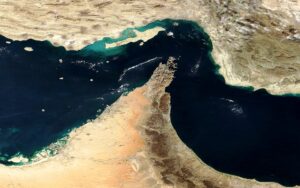
This military deployment comes in light of the escalation of tension in the Strait of Hormuz region, following Iranian attacks that targeted the vicinity of the strait and disrupted navigation in one of the most important sea lanes for transporting oil in the world, which reflected on global markets.
The specific role of these new forces isn’t yet clear, but their presence provides additional options for the US military command.
According to CNN, the force is a naval expeditionary unit that typically includes about 2,500 Marines and sailors.
The call for these reinforcements came from the US Central Command (CENTCOM), and was approved by US Secretary of War Pete Higgseth.
ABC News revealed that about 2,200 Marines were sent to the Middle East aboard three US Navy amphibious landing ships.
The force deployed is the 31st Marine Expeditionary Unit (31st MEU), which is typically stationed in Japan within the scope of US Indo-Pacific command.
The deployment of the force doesn’t necessarily mean that it will be used as a ground force inside Iran, but it does provide a variety of capabilities that include amphibious, air and ground operations that can be used if circumstances warrant it, the officials said.
The unit also includes a squadron of F-35 Lightning II fighters as well as V-22 Osprey military transport aircraft.
The United States and Israel have continued to carry out strikes on targets inside Iran, including positions in Tehran, since the start of military operations on February 28.
According to reports, these attacks caused extensive damage and civilian casualties, in addition to the deaths of Iranian Supreme Leader Ali Khamenei and a number of IRGC commanders.
On the other hand, Iran responded by firing missiles at Israeli territory and US military bases in several countries in the region, including the UAE, Qatar, Bahrain, Kuwait and Saudi Arabia, promising a greater response.
These developments came despite negotiations sponsored by the Sultanate of Oman between Washington and Tehran in Geneva on the Iranian nuclear file before the outbreak of confrontations.