Unity of Europe: Leaders of 44 countries meet in Prague against the Russian President
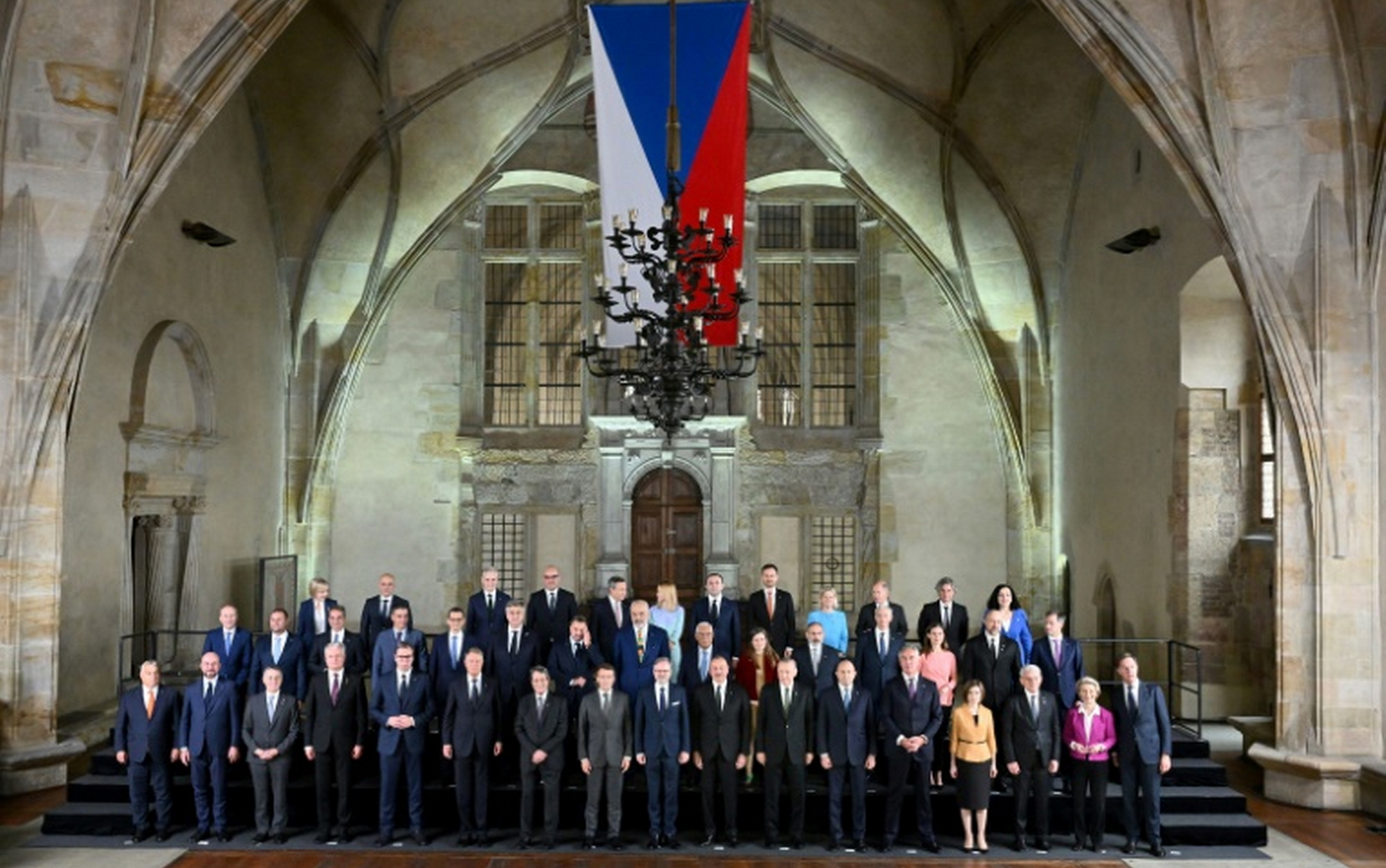
On Thursday, Leaders of 44 countries held a meeting in Prague, the first in the framework of the European political group, in an unprecedented format that carries strong symbolism, seven months after the start of the Russian invasion of Ukraine.
French President Emmanuel Macron, who launched the idea of the rally last May, said it “constitutes a message of the unity of Europe”.
He added that the “European political community” is much larger than the European Union (17 countries were invited in addition to the 27 members of the bloc).
German Chancellor Olaf Scholz welcomed a “great innovation”, which he considered in turn good for “peace”, “security” and “economic development”.
Belgian Prime Minister Alexandre de Croo said upon his arrival that “the whole European continent is gathered here except for two countries: Russia and Belarus.
This shows how isolated these two countries are.
A “family portrait” in Prague’s majestic castle overlooking the Old Town aims to revive morale, while Russian President Vladimir Putin brandishes a new nuclear weapon and the continent faces an unprecedented energy crisis.
On the agenda of this summit are working groups, and a dinner, but no final statement for the participants.
This new formula raises many questions about its role, especially its sustainability.
Behind this grouping, latent differences and countries follow radically different paths towards the European Union, from Norway to Ukraine, Switzerland, Türkiye, UK, Moldova, Serbia and Azerbaijan.
What do the declared impatient candidates have in common with those who realize that the door is closed to them for too long, and the United Kingdom, which six years ago opted out of the European Union with great fanfare?
Will the European Political Community last for a long time, or will it join the long list of short-term projects on the continent such as the European Confederation proposed in 1989 by François Mitterrand?
Could it not become a waiting room for candidates to join the union forever?
France asserts that this idea constitutes a complement and not an alternative to the EU accession process.
Six years after Britons voted to leave the European Union, the slightest gestures of new British Prime Minister Liz Truss in Prague will be the subject of much scrutiny, and she made no statement on her arrival at Prague Palace.
In a bilateral meeting with Czech Prime Minister Petr Viala, the two leaders stressed the importance of forming a United European front in the face of Putin’s violence.
It is a very difficult time in her country and the Prague meeting could allow the Terrace to regain international standing and a form of influence on the continent, Elvir Fabri of the Jacques Delors Institute told AFP.
“Liz Truss also sees this as a short-term interest,” she adds, noting that “the energy situation in the UK needs this space for dialogue”.
The organizers hope to announce possible practical cooperation projects, particularly in the field of energy.
“There is a presentation case against Putin and it is important,” said Elvir Fabry.
She stressed that the image of the 44 leaders assembled is of great importance, but warned that “it won’t be enough.”
After that, France hopes to hold a new meeting in the spring of 2023 with the announcement in Prague of the name of the next host country that won’t be a member of the European Union, and it may be Moldova.