Under US pressure… Syrian-Israeli understandings allow for the deployment of security personnel in the south
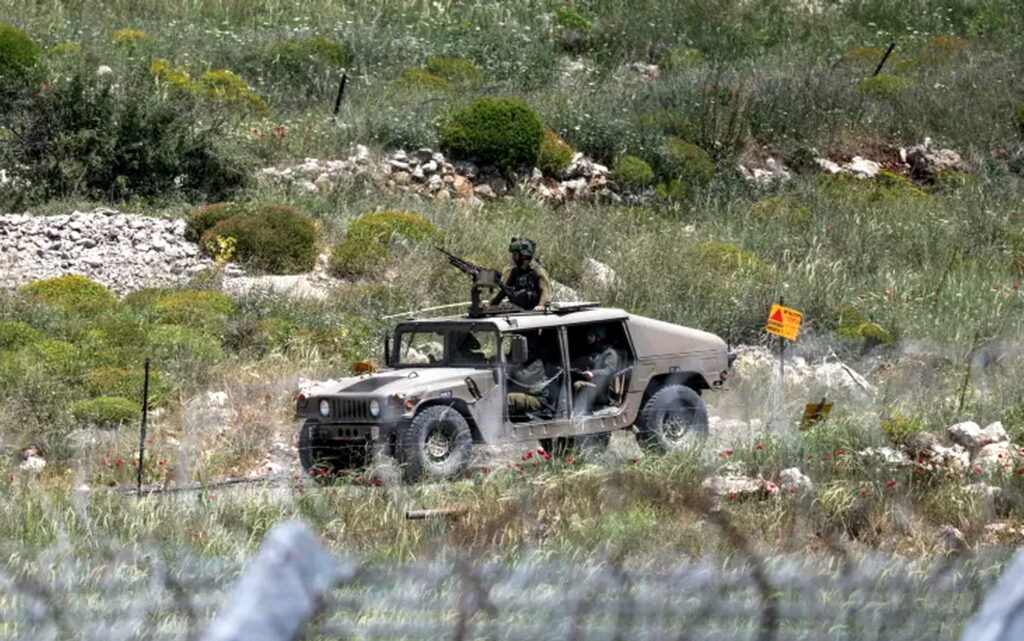
The Syrian General Security has begun deploying units of its personnel in the country’s southern regions, specifically near the border with the buffer zone separating Syria and Israel.
This is the first such move since the fall of the Assad’s regime last December.
According to Syrian political sources, this deployment came after Damascus obtained Israeli approval, as a result of pressure from the US, reflecting a significant shift in regional positions on the security situation in southern Syria.
Syrian security forces will assume responsibility for securing the areas adjacent to the buffer zone, with the aim of preventing any attacks on the Israeli side.
This move follows a series of airstrikes carried out by the Israeli military in response to rockets fired from Syrian territory toward the occupied Golan Heights.
The sources explained that the understandings that allowed the deployment of these forces specified the nature of the weapons permitted, limiting their armament to light weapons only, within a clear framework to reduce the possibility of escalation.
Despite this shift in the Israeli position, sources considered the decision to allow a limited return of Syrian security forces a tactical one, not reflecting a strategic shift in Israeli policy, especially given the continued presence of Israeli forces in the buffer zone and their refusal to withdraw from their positions.
Since Damascus regained control over large areas of the south in December, Israel has refrained from allowing any Syrian military or security presence in cities such as Quneitra and Dara’a, and has sought to disarm the local population in those areas.
In this context, an Israeli security source indicated that there is direct security coordination with the new Syrian government led by Ahmed al Sharaa, allowing the return of security forces to areas near the border.
The source emphasized that the new administration in Damascus isn’t responsible for the recent missile attacks, placing the blame on groups linked to Iran and Hezbollah, as well as remnants of the former regime seeking to sow chaos.
This cooperation between Syria and Israel reflects a significant shift, as both sides seek to prevent any further escalation in the southern regions, which are witnessing increasing security fragility.
The new Syrian administration, led by al Sharaa, has demonstrated a more moderate approach toward Israel, affirming its commitment to the 1974 Disengagement Agreement and its keenness to avoid any new confrontation.
Meanwhile, al Sharaa government faces challenges from groups loyal to Tehran and some remnants of the old regime, who are seeking to ignite unrest in several Syrian provinces, particularly in the south.
The missile attacks targeting the Golan Heights on June 3 sparked widespread concern among the Israeli side, prompting it to reconsider its previous position and open the door to new security arrangements with Damascus as a preemptive step to fill the security vacuum in the region.
Also, Two unidentified gunmen opened fire on Israeli soldiers stationed at a military base in southern Syria, in a new security incident amid escalating tensions in areas bordering the frontier with Israel.
The attack occurred when the two gunmen, riding a motorcycle, approached a barracks located west of the town of Maariyah in the Yarmouk Basin area.
The two gunmen opened fire before fleeing from a direction close to a mortar position west of the town, after that the Israeli forces responded by firing randomly at civilian homes, without recording any injuries or material damage.
In a similar incident a day earlier, two motorcycles approached a military checkpoint near the same barracks, prompting Israeli soldiers to open fire randomly.
These incidents are an extension of the security tension prevailing in southern Syria since the Israeli forces incursion into Syrian territory last December, following the fall of the Assad regime.
Israel has established buffer zones and reinforced its military presence in several locations.
Observers believe that the Israeli intervention has become a major challenge for the new Syrian regime in its efforts to maintain stability.