Under Russian auspices and US approval: Unannounced security talks between Syria and Israel
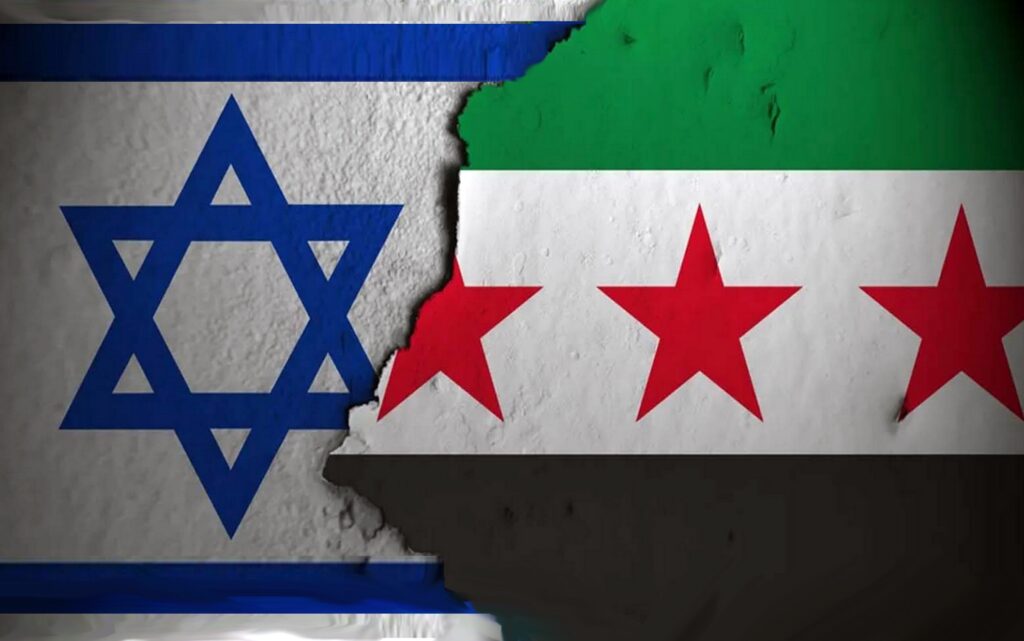
Israeli media have revealed the existence of unannounced security talks between Syria and Israel, conducted under Russian mediation and with the tacit approval of the United States.
According to a senior Israeli security source, Moscow is playing a central role in facilitating indirect communications aimed at reaching undeclared security understandings between the two long-time adversaries, without progressing toward a formal political settlement.
The source indicated that Azerbaijan has emerged as a discreet venue for these talks, with its capital, Baku, hosting a series of closed-door meetings attended by high-level security and military officials from both sides.
The choice of Azerbaijan is reportedly linked to its balanced relations with Russia, Israel, and regional actors, as well as its ability to provide a neutral and low-profile environment for sensitive negotiations.
The discussions are said to focus primarily on security arrangements in southern Syria, particularly areas adjacent to the occupied Golan Heights.
These files include mechanisms to prevent escalation, limit the presence of non-state armed groups, and regulate military deployments in ways that reduce the risk of direct confrontation between Syrian and Israeli forces.
According to the same source, Russia has proposed the redeployment of Syrian Arab Army units closer to the border region as part of a broader effort to reassert state control and stabilize the security situation.
This move is intended to replace irregular forces and allied militias with regular army formations, which Israel reportedly views as more predictable and easier to deter.
The talks have reportedly made tangible progress in recent weeks, although significant gaps remain regarding the scope of deployments and long-term guarantees.
Israeli officials, the source added, prefer the continuation of the Russian military presence in southern Syria, viewing it as a stabilizing factor and a buffer against what they see as more destabilizing alternatives.
In particular, Tel Aviv considers Russian oversight preferable to an expanded Turkish military role in the region, which Israel regards as highly sensitive due to its proximity to strategic areas and existing fault lines.
From Washington’s perspective, the talks align with broader efforts to prevent a new front of escalation in the region, especially amid ongoing tensions across multiple theaters in the Middle East.
While the United States isn’t directly involved in the mediation, its approval reportedly reflects a pragmatic approach focused on conflict management rather than resolution.
Analysts note that these undeclared talks don’t signal a shift toward normalization between Syria and Israel.
Instead, they represent a continuation of indirect security coordination aimed at managing realities on the ground, reducing the likelihood of miscalculation, and preserving a fragile balance of deterrence.
In this context, Russia appears keen to consolidate its role as the primary security broker in Syria, reinforcing its influence while accommodating Israeli and American security concerns.
The talks remain unofficial and unacknowledged by Damascus, consistent with Syria’s long-standing position that any engagement with Israel must be framed within the context of ending occupation and restoring sovereignty.
Nevertheless, the reported meetings underscore the persistence of backchannel diplomacy in one of the region’s most entrenched conflicts, driven less by political rapprochement than by immediate security imperatives.