Trump extends deadline for suspending US tariff increases on EU imports
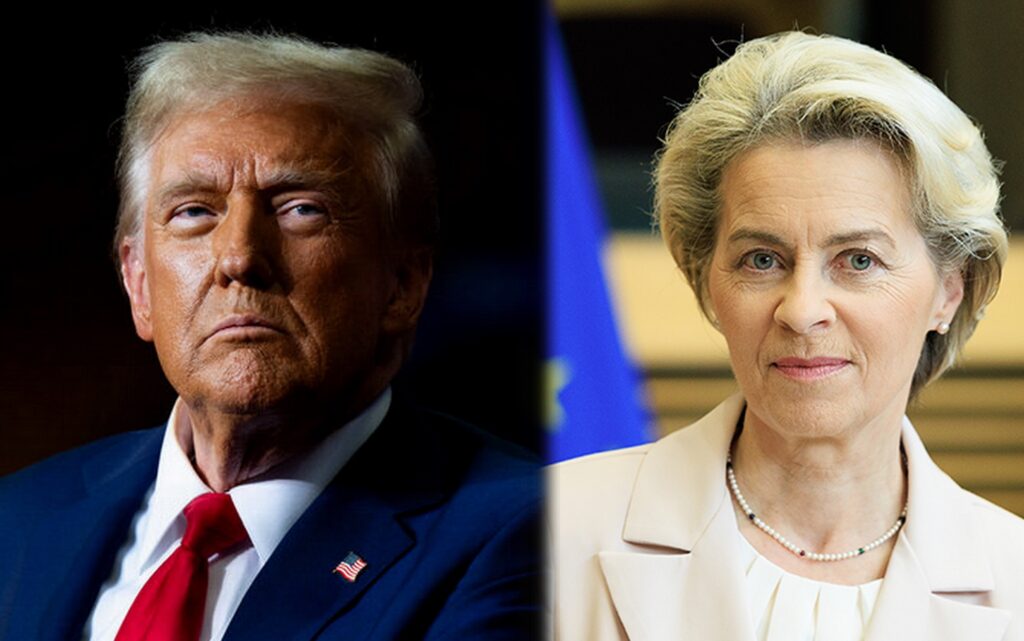
US President Donald Trump and European Commission President Ursula von der Leyen announced on Sunday that they would extend the deadline for suspending the 50% tariff on European imports to the United States until July 9.
Von der Leyen called the US president to discuss the new tariffs, which were scheduled to take effect on June 1.
The European Union has threatened to retaliate against the measure.
“She just called me and asked me to extend the June 1 deadline and said she wants to start serious negotiations,” Trump said before boarding Air Force One to return from New Jersey.
He continued, “The conversation was very good, and she agreed to postpone the deadline to July 9th… I agreed to this, and she told me that we would meet soon in an effort to find a solution”.
Ursula von der Leyen had reported a good call with the US president before Trump’s remarks on Sunday.
She wrote in a post on X that “Europe is ready to advance negotiations quickly and decisively… To reach a good agreement, we will need until July 9th”.
She recalled the most important and strongest trade relations in the world between the European Union and the United States.
Trump said on Friday that he was not seeking a trade deal with the European Union and threatened to impose a 50% tariff on imports from the bloc’s 27 member states, starting June 1.
The European Commission, which is conducting the negotiations on behalf of its member states, responded by calling on Washington to show mutual respect.
“The European Union is fully committed and determined to reach an agreement that benefits both sides,” European Trade Commissioner Maros Sefcovic said via X after talks with US Trade Representative Jamison Greer and Commerce Secretary Howard Lutnick.
He pointed out that trade between the two sides should be based on mutual respect, not threats… We’re ready to defend our interests”.
On Sunday, German Finance Minister Lars Klingbeil urged the United States to engage in serious negotiations.
In an interview published in the Sunday edition of German Bild newspaper, Klingbeil said, “US tariffs put the American, German, and European economies at risk”.
In early May, the European Union threatened to impose tariffs on US imports valued at approximately €95 billion, including cars and aircraft, if trade negotiations with the Trump administration didn’t result in an agreement.
The European Commission announced its intention to refer the case to the World Trade Organization in protest against the US measures taken against it.
In recent months, the European Union has faced three tariff increases from the United States on its products, the first in mid-March at 25% on aluminum and steel, followed by 25% on cars and 20% on all remaining products in April.
The latest tariff increase imposed on EU countries and other countries around the world has been suspended until July 9th pending progress in negotiations.
However, a 10% tariff remains in effect on most European imports into the United States.
Since returning to the White House, Donald Trump has been directing his attacks against the European Union, considering the continental bloc worse than China in terms of trade relations.
The United States estimates its trade deficit with the European Union at approximately $235 billion by 2024, but the European Commission indicates that the current account surplus in services reduces the deficit to €50 billion (approximately $57 billion).