There is a Venezuelan leader who will be an obstacle to Trump’s ambitions in Venezuela after Maduro
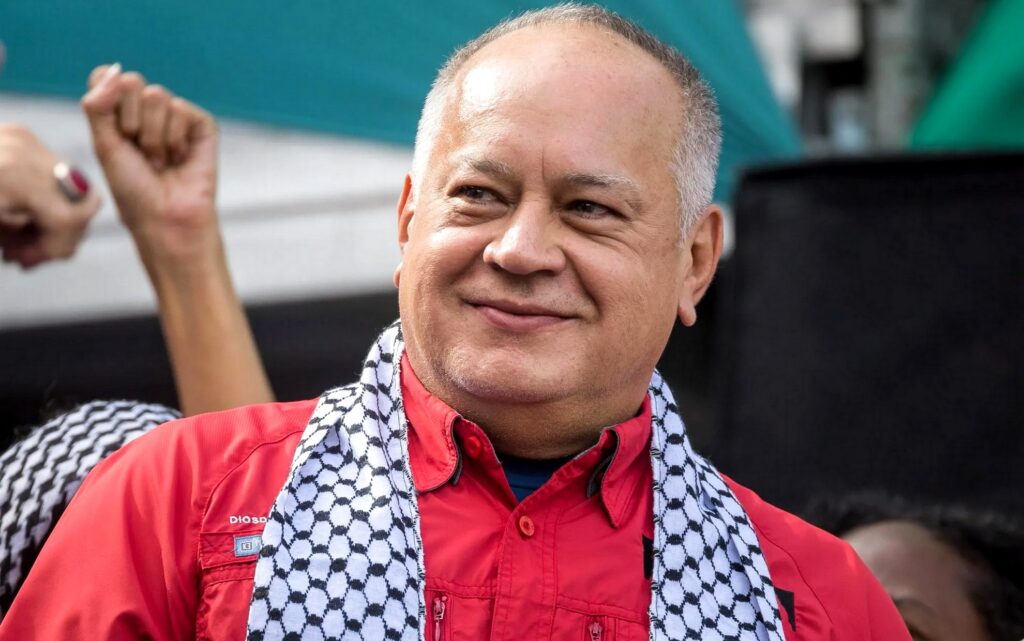
As Washington looks beyond Nicolás Maduro toward reshaping Venezuela’s future, one figure stands out as a major obstacle to President Donald Trump’s ambitions: Diosdado Cabello.
Widely regarded as the de facto commander of Venezuela’s security forces and loyalist militias, Cabello remains one of the most powerful and unpredictable actors in the country’s political landscape—and a potential spoiler for any US-backed transition.
Cabello, a combative and theatrical figure whose first name translates as “God-given,” has long styled himself as the revolution’s most uncompromising defender.
He exerts influence over the colectivos, armed pro-government gangs that have become synonymous with intimidation and repression.
This week, those groups made a conspicuous show of force, racing through Caracas on motorcycles as tensions surged following Maduro’s capture.
Now formally indicted in the United States alongside the ousted president, Cabello faces a pivotal decision.
He can either align himself with the interim administration led by acting President Delcy Rodríguez—his longtime rival—or attempt to seize power himself, a move that could plunge the country into internal conflict and risk a direct confrontation with US forces.
“Cabello has a great deal to lose,” said Daniel Lansberg-Rodriguez of Aurora Macro Strategies. “He’s likely aware that Washington could soon demand his removal as part of any settlement”.
Known for his volatile public persona, Cabello hosts a weekly state television program, Bringing Down the Hammer, which has aired more than 550 episodes.
On the show, he routinely waves a spiked club, rails against alleged conspiracies, and delivers hours-long monologues that blend threats, humor, and political messaging; His unpredictability has long unnerved both allies and opponents.
Officially, Cabello serves as Venezuela’s minister of interior, justice, and peace; In public, he has projected unity since Maduro’s downfall, appearing at Rodríguez’s swearing-in ceremony alongside representatives of various factions within the ruling Socialist Party.
Yet behind the scenes, his actions have suggested a more aggressive posture.
On the night of Rodríguez’s inauguration, Cabello was seen carrying a rifle as he addressed black-clad security forces preparing to patrol Caracas.
“Doubting is treason,” he told them, urging the units to take to the streets for victory and to suppress any signs of dissent.
Following Maduro’s capture, the government declared a state of emergency.
According to decrees published in the Official Gazette, security forces were instructed to identify and detain suspected US sympathizers.
Residents of the capital reported new checkpoints across the city, where masked, armed men stopped civilians and searched their mobile phones for antigovernment messages.
This intensifying campaign of fear appeared to contradict President Trump’s remarks suggesting that Venezuela’s new leadership might be softening its approach.
At a news conference Tuesday, Trump claimed the regime was dismantling some of its most notorious repression tools, including what he described as a torture facility in central Caracas.
Few individuals embody Venezuela’s socialist movement as fully as Cabello; A former army captain, he first forged a close relationship with Hugo Chávez while playing baseball together at the military academy.
That bond later translated into political loyalty. During Chávez’s failed 1992 coup attempt, Cabello commanded tank units in an assault on the presidential palace.
He spent several years in prison before receiving a pardon, and in 2002 he played a key role in restoring Chávez to power after a brief coup ousted the president.
Over time, Cabello’s family became deeply embedded in the state apparatus; At least five relatives have been sanctioned by the US Treasury on allegations of corruption and support for authoritarian rule—claims the family rejects as politically motivated.
Among them are his brother José Cabello, head of the national tax authority, and his daughter Daniella Cabello, who oversees a government-backed initiative promoting Venezuelan exports such as coffee and chocolate.
In 2016, Cabello sued Dow Jones & Co. in New York over a Wall Street Journal report alleging he was under US investigation for drug trafficking and money laundering.
The case was dismissed the following year; He was later formally indicted on narcotics-related charges, which he continues to deny.
Today, Cabello is one of only two senior Venezuelan officials facing criminal drug charges in the United States.
He is listed as a co-defendant in the indictment against Maduro, which was unsealed shortly before the former president was transferred to New York to stand trial.
Cabello’s importance to the regime became especially clear after Venezuela’s disputed July 2024 presidential election.
Despite evidence that opposition candidate Edmundo González had won decisively, Maduro declared victory.
Weeks later, Cabello was appointed interior minister as the government unleashed paramilitary units on poor neighborhoods, arrested human rights advocates, and drove opposition figures into exile, as within Venezuela, his name alone inspires fear.
On Tuesday, many residents declined to speak about him at all, worried about retaliation, as those who did comment often insisted on anonymity.
A woman in her 50s in Maracaibo described Cabello as someone who “knows everything that moves in this country,” fueling speculation that he could attempt to take power outright.
For many Venezuelans, Cabello is a familiar presence, both at public rallies and on television.
His weekly program has run for more than a decade, featuring lengthy monologues punctuated by applause from a small studio audience.
He frequently airs secretly recorded phone calls involving opposition figures and boasts openly about detaining individuals he labels US spies.
In Washington, officials are watching closely to see whether Rodríguez can restrain him.
“The next few days are going to be key,” said Senate Majority Leader John Thune, who described Rodríguez as pragmatic but stopped short of expressing confidence in her ability to consolidate power.
Although Cabello has so far avoided openly challenging the interim leadership, analysts doubt that restraint will last as rival factions maneuver for control.
“Diosdado is the hardest one to deal with,” said Ryan Berg of the Center for Strategic and International Studies, “Nothing about him suggests he’s inclined to negotiate”.
Berg also questioned the durability of any rapprochement between Washington and Rodríguez. “For 27 years, this regime has blamed the United States for everything that’s gone wrong,” he said.
Cabello has repeatedly come close to the presidency… He briefly held the office in April 2002 during the failed coup against Chávez.
In Chávez’s final televised appearance before his death in 2013, Cabello stood alongside Maduro as Chávez urged supporters to back Maduro as his successor.
According to Geoff Ramsey of the Atlantic Council, Cabello has always harbored presidential ambitions, despite being unacceptable to much of the international community.
“He has a reputation as a ruthless, Machiavellian enforcer,” Ramsey said. “It’s difficult to imagine this US administration—or any other—finding common ground with him.
Delcy Rodríguez may have Trump’s attention, but Cabello controls the guns, and he knows it”.